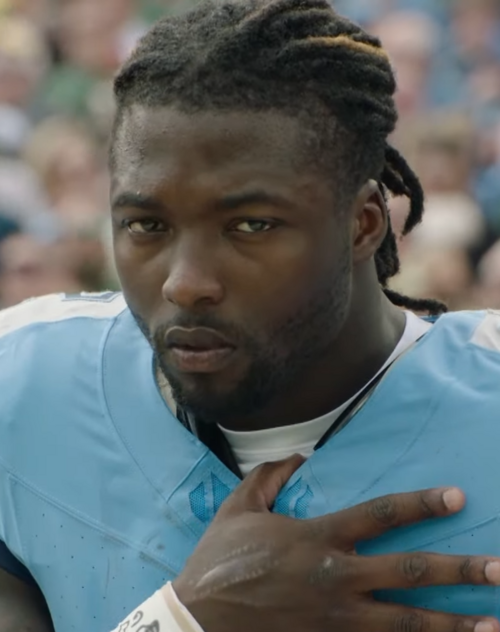
Tyjae Spears is the kind of April pick people love because the story sounds better than the workload.
Tyjae Spears averaged 4.0 targets across the broader sample.
Tennessee's pass-heavy offense still uses its backs in the passing game.
In that same late-season window, Tony Pollard averaged 18.4 carries per game.
Tennessee throws enough to keep a receiving back alive. Tyjae Spears averaged 4.0 targets across the broader sample. Brian Daboll is calling the offense now, and the Titans still need easier answers when the pocket gets messy. That is a real argument.
I still think the sharper Titans back bet is Tony Pollard.
Spears has the pass-game case. Pollard has the job proof. Draft the job, not the storyboard.
State the debate cleanly
The pro-Spears case is not fake. Tennessee posted a 65.58 percent pass rate and a 57.17 percent neutral pass rate last year, so this is not an offense that hides its backs from the passing game. Tyjae Spears also closed with real receiving involvement, averaging 4.0 targets across the broader sample, and his late trend flags at least showed a small rise in snap share.
That matters because the same offense also gave Daboll a pretty clear problem to solve. FFN team tendencies show Tennessee allowed 3.29 sacks per game and finished with a brutal minus-7.8307 passing EPA average. When an offense keeps fighting bad down-to-down rhythm, the receiving back always becomes an easy offseason answer.
The other side of the debate is just as clear. In that same late-season window, Tony Pollard averaged 18.4 carries per game. Tyjae Spears averaged 6.6 carries and posted a 0.46 offensive snap rate. That is not a backfield quietly changing hands. That is a starter keeping the base rushing job while the complement works around him.
Draft action: if you want to bet on Spears, make it a role-growth bet in full PPR, not a blind assumption that Tennessee already chose him. The miss is obvious. If the Titans really do tilt harder toward outlets and space touches, Spears becomes more than a bench stash fast.
The best case for Spears
What worked last year for Spears was not volume in the classic lead-back sense. It was that he stayed involved when the game asked Tennessee to throw. His last-five-game receiving usage says he can live in obvious throwing situations, and that matters in an offense that already threw more than most teams.
What changes the argument now is not magic upside. It is structure. Tennessee has a play caller who should care about helping the quarterback survive ugly snaps, and a team profile that practically begs for easier throws. If Daboll wants quicker answers when protection breaks down, Spears is the back who fits that solution better than Pollard does.
That is the real bullish case. Spears does not need 18 carries to matter. He needs Tennessee to turn him into part of the offense's stress relief. In football terms, that means checkdowns, angle routes, motion touches, and more two-minute work.
Draft action: Spears is defensible as a late bench swing in full PPR if you are explicitly betting on a bigger receiving lane. Failure case: the easy throws do not have to go to the back. They can just as easily go to Wan'Dale Robinson, or stay split enough that Spears remains useful but frustrating.
The best case against Spears
The anti-Spears case starts with the thing people keep trying to draft around. Pollard already owns the part of the backfield that survives almost any game script.
Across the broader sample, Tony Pollard averaged 18.4 carries while Tyjae Spears averaged 6.6. Tony Pollard also played on 56 percent of the offensive snaps over that span, compared to Tyjae Spears at 46 percent. That split matters because the back who owns early downs, normal-down carries, and the staff's trust is still the back who does not need the offense to break exactly right.
The roster context makes Spears harder to force. FFN's availability watch is quiet on both backs, so there is no injury-created shortcut here. Tennessee also has another short-area answer on the roster in Wan'Dale Robinson. Wan'Dale Robinson averaged 10.4 targets per game and a 39.34 percent target share across the broader sample. If Daboll wants to make life easier on the quarterback, some of those easier throws can go to the slot receiver instead of turning Spears into the center of the passing game.
That is why I do not buy Spears as the automatic Titans sleeper. He is being drafted on the version of the offense that looks clean on a whiteboard. Pollard is attached to the version of the offense Tennessee actually showed us.
Draft action: if you want a Titans running back in normal leagues, take Pollard first and let Spears be the contingency swing. Failure case: Pollard is not invincible, and one missed stretch would drag Spears right back into the middle of the conversation.
What changes the answer
This does not need to stay a Pollard article forever. Spears can absolutely change the read. He just needs real signals, not offseason wishcasting.
The first signal would be snap share. If Spears climbs clearly above that 0.46 neighborhood and starts living closer to Pollard's workload, the conversation changes. The second signal would be touch shape. If the receiving role stays real and the carry count rises from changeup volume into something closer to co-lead volume, then the role is actually moving. The third signal would be usage leverage. Two-minute work is nice. Red-zone work is better. If Spears starts getting both, then the ceiling case finally has football support behind it.
There is also a team-level version of the flip. If Daboll gets Tennessee playing cleaner without handing every easy throw to Wan'Dale or Pollard, Spears becomes the back who benefits most from a more functional offense. But until the backfield itself changes, better quarterback play still helps Pollard too.
Draft action: keep Spears on the watch list, especially in full PPR. Just do not draft him like the watch has already turned into evidence. The failure case on this caution is simple. Sometimes the market moves before the usage proof gets obvious.
Final lean
There is a real case for Spears. I just think people are drafting the checkdown story before Tennessee has actually assigned it to him.
Last year told us two things at once. Spears can help in the passing game, and Pollard still owns the workload that pays the bills. Tennessee's pass-heavy tendency keeps Spears relevant. Tennessee's backfield split keeps Pollard safer. FFN's current PPR file matches that read too, with Tony Pollard at No. 78 overall in PPR and Tyjae Spears at No. 161 overall. That gap is the fantasy reflection of which back already owns the carries that keep a player usable before the receiving upside shows up.
So my lean is straightforward. Pollard is still the better Titans running back bet today, especially if you need usable carries instead of a hope-and-see bench spot. Spears is fine as a later stash when you are specifically buying a receiving-role jump, but he is not the back I want to build around.
Do not draft Spears because the offense sounds modern. Draft him only when you are comfortable admitting the role still needs to move. Until it does, Pollard is the one carrying the argument and the football.