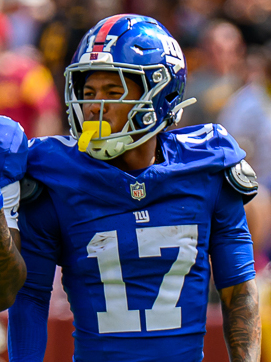
The Tyjae Spears buzz matters, but it should not turn the Titans backfield into a one-button draft answer. Tennessee can talk Spears up near the top of the depth chart and still open September with Tony Pollard taking the carries that keep a weekly running back or flex spot afloat.
FFN's read: draft Pollard first when you need stable running back touches, then take Spears later as a PPR bench target. The Spears case gets a lot more interesting if camp puts him with Cam Ward on third down, in the two-minute drill, or near the goal line. Treat the headline content as information, not a depth-chart command; the draft style stays situation-first until the direction of the snaps changes. Until then, this is a backfield fork, not a takeover.
That is the question for your draft queue: do you need the back who can survive 14 carries and a couple targets, or the back who needs the receiving snaps to hit?
Pollard is still the touch-floor starting point
Pollard is the first name to sort because his 2025 role was easier to picture. In the closing 2025 role-trends sample, he was still getting downhill work between the 20s, including 18.4 carries per game in the broader closing window. That is not exciting copy for a highlight reel. It is useful fantasy football when your roster needs someone who can take the ordinary early-down series.
The coaching change does not erase that. Robert Saleh is now the head coach, Brian Daboll is the offensive coordinator, and Tennessee is not obligated to run back last year's plan. But a new staff usually still wants one back it can trust on first-and-10, second-and-5, and the series after a three-and-out. Pollard's best case is not that the offense freezes in place. It is that he remains the back with the most predictable touch script while the passing game settles around Ward.
As of publish day, FFN's PPR board has Pollard at RB29 with 272 projected carries and 60 projected targets, and the reason he stays ahead is the ordinary football work attached to those numbers. Handoffs on schedule, checkdowns when Ward is pressured, and the first series after halftime are easier to project than a passing-down package that still has to be confirmed. Pollard does not need the backfield to be solved to be usable. Spears does.
Spears is a receiving bet, not just a buzz bet
Spears is playable because his path is specific. He does not have to shove Pollard off the roster. He has to win the snaps that turn a stalled drive into fantasy points: checkdowns against pressure, angle routes from the backfield, hurry-up work when Ward needs an easy throw, and the occasional red-zone touch that keeps him from living on five-yard receptions.
Draft Fork: Pollard or Spears?
| Your Build | Draft Move | What Changes The Call |
|---|---|---|
| You need a weekly running back or flex option | Take Pollard if the tier is still there | Spears getting first-team goal-line or two-minute work |
| You already have two safer backs | Wait and take Spears as a PPR bench swing | Spears missing the third-down package in padded practices |
| You are chasing late receiving upside | Push Spears ahead of flat WR depth | Pollard keeping the passing-down and red-zone snaps |
The 2025 evidence points in that direction without fully closing the argument. Spears' target share rose late in the broader tracked window, and he drew seven targets in Week 18 while playing 46 percent of the offensive snaps. That looks like an outlet role worth chasing in full PPR. It does not look like a confirmed early-down takeover.
That distinction matters because the same-day Spears note is still a low-confidence signal. FFN's public depth chart has Pollard first, Spears second, and Nicholas Singleton behind them. If you draft Spears like Tennessee already handed him the backfield, you are paying for the camp report before the pads have confirmed the job. If you draft him as your fourth or fifth running back after the steadier tier thins, the bet makes sense.
Spears looks best when the roster can wait.
The passing structure is the swing variable
Tennessee threw on 65.6 percent of its plays in the 2025 team tendency profile, so it is easy to talk yourself into the receiving back. The catch is that not every Titans pass attempt belongs to Spears. Some of that easy volume can go to quick outs, slants, screens, and first-read throws to Ridley, Ayomanor, Tate, or Robinson.
Elic Ayomanor is the name to keep in the background. His late-season role trend showed rising targets and a strong recent snap profile, and the current depth chart has him in the receiver rotation behind Carnell Tate, Wan'Dale Robinson, and Calvin Ridley. If Tennessee builds more quick-game answers outside the backfield, Spears needs actual third-down snaps, not just a general pass-heavy environment.

This is where the backfield can get mispriced. A pass-leaning offense helps Spears only if he is the release valve with Ward on the field. If the ball is coming out on a three-step slant to Ridley or a quick sit route to Gunnar Helm, Spears can run the right assignment and still miss the target that pays you.
What breaks this take
What breaks this take is camp giving Spears the expensive snaps: first-team goal-line work, the two-minute series with Ward, and the third-down routes that turn him from outlet into weekly route participant. First goal-line carry with the starters? That matters. Ward looking for him on third-and-6 in team drills? That matters. Spears staying on the field in hurry-up while Pollard watches? That is the kind of practice note that should move a draft plan.
The Pollard side breaks if his role is only ordinary carries with no receiving cushion and no short-yardage claim. A back getting early downs in a low-total offense can turn into a weekly headache if the touchdown chances and pass-game snaps go somewhere else. Pollard is the safer Titans back today because the touch floor is visible, not because his ceiling is special.
The worst version of this backfield for fantasy is a split that gives Pollard the low-value carries, Spears the scattered targets, and Singleton just enough early-down work to annoy everyone. That is why the right move is price discipline, not a hard team take.
Where to draft them
Pollard exposure starts when the draft has moved past the backs attached to stronger offenses and you still need a playable weekly running back or flex. He is not a player to force over higher-ceiling roles, but he belongs ahead of fragile committee backs when your roster needs carries you can project in September.
Spears exposure starts later, after your lineup is not depending on him in Week 1. He fits best as a PPR bench back behind two or three steadier options. If your roster already has floor at running back, Spears gives you a real way to profit from a camp role change. If your roster is already thin, he is too conditional to be the answer.
The final check is simple: watch who plays with Ward on third down, who gets the first goal-line touch in padded work, and whether Spears is rotating or actually taking premium snaps from Pollard. If those answers move toward Spears, bump him before draft prices catch up. Until then, draft Pollard first and make Spears the later PPR swing.