
Seattle's backfield turns on one football question: does Zach Charbonnet still have the health, passing-down trust, and red-zone access to make a late bench spot pay off? He's the only reserve back here with enough recent carries and targets to make that question worth asking.
The move is simple: stash Charbonnet after the safer bench backs are gone, then make Jadarian Price and George Holani earn your attention in camp. This is a situation-and-opportunity call, not a spreadsheet-first projection gap. If Charbonnet's health or passing-game role isn't visible by draft night, don't force the pick. Use the roster spot on a back with a clearer weekly job.
The Bet Starts With Health
Charbonnet's price doesn't need a lecture. Around pick 101, with FFN also sitting him at 101 in the standard board and RB42 by position, the market is treating him like a fair bench back. That matters because fair prices don't create much forgiveness. The role has to do the work.
The first condition is health. Official transaction data has Charbonnet moved to the reserve list on Jan. 23 with a Reserve/Injured tag, so the stash case can't start with blind confidence. It starts with a check: is he full-go enough to keep the role that made him useful late in the tracked sample?
That role did have substance. In Seattle's Week 18 sample against San Francisco, Charbonnet logged 17 carries, 4 targets, and 57 percent of the offensive snaps. Across the closing stretch, his average rose to 14.7 carries and 3.3 targets, with his snap share climbing from 45 percent in the earlier comparison window to 55.3 percent later. That's not just a backup waiting for one injury. That's a back who showed a playable blend when the touches were there.
The catch is obvious, but it's important: useful bench backs have to be available before they can be clever picks.
Charbonnet Stash Checklist
Charbonnet full-go and still catching passes: draft him after steadier bench backs because the tracked role had carries plus targets, not just empty rushing volume.
Price gets buzz without a defined job: wait, because rookie camp noise needs two-minute, red-zone, or designed-touch proof before it changes a pick.
Holani stays in a few-carry reserve role: watch only, because his broader closing sample had 2.4 carries, no targets, and 5.2 percent snaps.
Seattle keeps the backfield vague: pass, because a late bench spot can handle uncertainty, but not fog with no role clue.
Why Charbonnet Still Has a Path
The football case is carries plus receiving work in an offense that gave backs chances near the stripe. Seattle ran on 52.8 percent of tracked red-zone plays last season, and Seattle's Week 18 offense had a 58.3 percent red-zone rush rate. If Charbonnet is healthy and still trusted on passing downs, he doesn't need to become a feature back to matter.
He needs the kind of work that survives a weird game script. A couple of early carries are nice. A target on second-and-long is better. A red-zone carry tells you the staff is willing to let him finish drives. Put those together, and a bench stash can become a usable injury-week or bye-week back before the rest of the league reacts.
That's why the pick is conditional instead of automatic. The useful version is easy to grade: health, passing-down involvement, and enough scoring-area access to matter. The bad version is also easy to cut: a three-man rotation where nobody owns the catches or the goal-line snaps.
Price Has To Win a Job
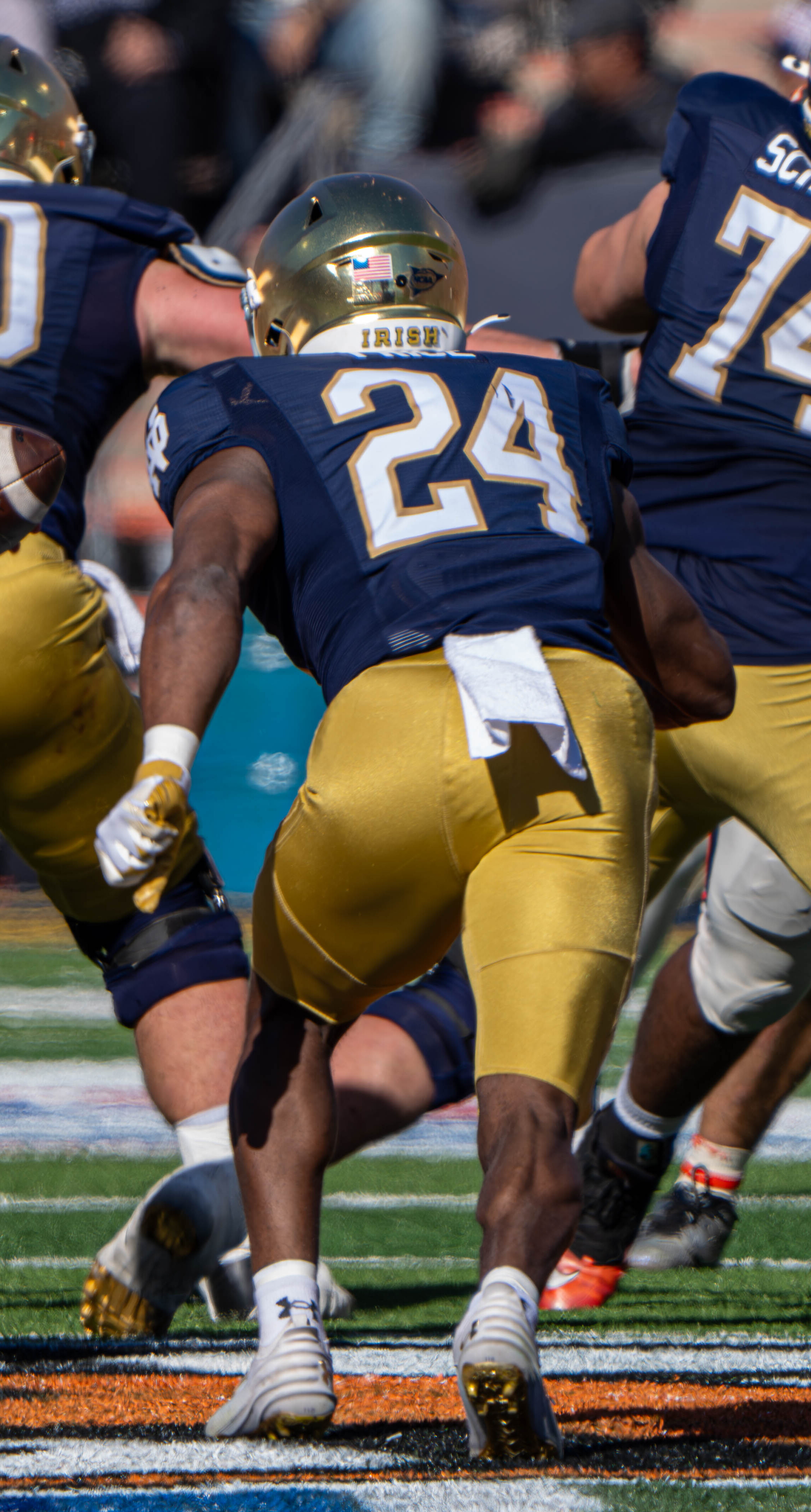
Price is the pressure point here, and he's the reason this can't be a lazy handcuff piece. Seattle lists him as a 22-year-old rookie running back, and the prospect data ties him to Notre Dame with zero NFL experience. That's interesting. It isn't a draftable role by itself.
What would change it? Two-minute work would challenge Charbonnet's PPR floor. Goal-line carries would hit the touchdown path. Designed touches would show Seattle isn't just letting a young back compete, but actually building a weekly job for him.
Until one of those signals appears, Price belongs on the watch list. A normal redraft pick shouldn't go to a rookie backup whose best argument is that the room might get messy. The first camp report that names his job can change the conversation; buzz alone shouldn't.
Holani Needs One Door To Open
Holani is the depth name to keep in the file, not the back to jam into the same draft pocket. FFN role trends have him at 10 tracked weeks, but the fantasy piece was thin: 2.4 carries in the broader closing window, no targets, and a 5.2 percent snap share. That's roster depth, not a standard-league stash.
There is still a path, just a narrow one. Holani would need a specific door, such as protection work in two-minute offense, goal-line snaps, or an injury domino that moves him out of fourth-back duty. Without that kind of job, he's more useful to Seattle than to your bench.
The useful line is simple: if the coachspeak is only about competition, wait. If the usage is about a job, react.
Draft Line
Charbonnet is a reasonable stash at pick 101 only after your roster already has safer weekly touches. That's the January-grade call. If he is healthy and keeps the receiving work, he can beat that price as a usable RB4 who gets spike-week access when Seattle leans on the run. If he loses the passing-down work or the backfield stays cloudy into draft night, he's just a fair-price bench back with more ways to disappoint than help.
So draft him where the bench can absorb a conditional bet. Pass if your roster already has fragile players. Watch Price for a named passing-down or scoring role. Leave Holani for deeper leagues unless the depth chart actually gives him a door.
Charbonnet is the stash because his useful version has already shown up on an NFL field. The draft move is not to pretend that version is safe. It's to wait until the boring backs are gone, buy the conditional profile at a fair price, and stay ready to cut it if the camp evidence doesn't follow.