
Preseason running back debates usually get decided by the wrong snap. A starter takes the first handoff, a rookie breaks a long run against backups, or a veteran sits out and suddenly a depth chart feels settled. None of those moments tells us who will protect the quarterback on third-and-6, release into a route, or remain on the field when a drive reaches the 10-yard line.
RJ Harvey, Omarion Hampton, and Breece Hall present three different decisions. Stash Harvey only if your bench can carry a developing split-backfield option. Keep Hampton in the second running back tier while he controls full drives. Target Hall as a top-14 back as long as his carries remain sturdy and passing-down routes don’t disappear. The useful preseason clue is an assignment that repeats when the situation changes.
Mailbag: Does the first first-team carry matter?
Only when it’s followed by something harder.
Coaches script opening drives for dozens of reasons. They may want to test a blocking combination, rehearse a personnel group, or keep a veteran out of traffic. The player who opens the series can still leave on third down or near the goal line. A back who handles the handoff, protection, route, and scoring-area snap has shown much more.
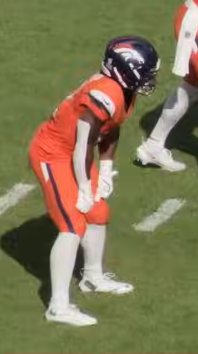
Harvey’s situation makes that distinction important. FFN’s current depth chart lists J.K. Dobbins first and Harvey second in Denver’s backfield. FFN also recorded Dobbins averaging 15.2 carries but only 1.2 targets during his final five games of 2025. Harvey’s best route to weekly value is different. He can pair rushing work with the passing assignments Dobbins didn’t command.
Denver gave us proof that Harvey can fill that job. Over the final month of 2025, he averaged 14.4 carries and 4.4 targets while playing 63.2 percent of the snaps.
Weeks 16-18 brought a shift toward the passing game. His carries fell to 12 per game while his targets climbed to five. The touches changed shape without pushing him off the field.
One first-team handoff won’t settle anything. Watch the next obvious passing down. Harvey has to identify the pressure, stay square in protection, and then earn another chance to release into the pattern. A screen against a vanilla front can be scripted for anyone. Protection followed by a route shows the offense trusts him with a drive.
For fantasy purposes, Harvey remains a patient stash. FFN’s August 12 standard rankings place him at RB31, and the projection includes 57 targets. I’ll keep him in that range if the first-team passing work remains visible. Four targets per game is the line that can support useful weeks beside Dobbins. A preseason role limited to early-down relief would make Harvey much more dependent on touchdowns.
Mailbag: What would secure Hampton’s workload?
Don’t count his touches. Follow the drive.
Hampton already showed he can produce as both a runner and receiver. His final five games of 2025 brought 14 carries and 3.8 targets per appearance. His 52.2 percent snap share was enough to matter, although it still left room for another back to take a meaningful part of the offense.
Week 17 supplies the useful football memory. Hampton played 81 percent of the Chargers’ offensive snaps, handled 14 carries, and drew eight targets. Those assignments arrived in the same game. He didn’t need a single highlight to make the role obvious because the offense kept him on the field as the down and distance changed.
Complete-drive usage matters more now because the Chargers have options behind him. Kimani Vidal is listed second and Keaton Mitchell third. Vidal’s 2025 role also showed that he can take real work. During his final five games, he received 11.8 carries and played 52.4 percent of the snaps, though both his carries and playing time fell sharply in the closing weeks. Mitchell brings a different speed element and a much smaller recent workload.
Hampton doesn’t have to eliminate them. He does have to own the assignments that connect one part of a drive to the next. The Chargers passed on 63.3 percent of their plays in 2025, so giving away two-minute and long-down work would remove a meaningful source of catches. A runner can lead the backfield in carries and still lose the most fantasy-friendly snaps.
FFN ranks Hampton RB17 in standard scoring and RB19 in half-PPR and PPR as of August 12. Draft Hampton in that second running back tier, and hold us to at least 14 carries per game in 2026. Consecutive early-down, third-down, and scoring-area snaps with the starters support the call. Regular substitutions for Vidal or Mitchell on third down would push Hampton below the tier even if he opens every game.
Three clues worth changing a tier for
Use the sequence, then let the box score confirm it:
- Harvey: He handles pass protection and releases into a route with the starting offense. Repeated work there supports the four-target threshold behind his stash case.
- Hampton: He stays through an entire drive, including third down and a snap inside the 20. The receiving and scoring paths needed for his current tier remain intact.
- Hall: He keeps the rushing series and appears in obvious passing situations. Every snap isn’t necessary, but both kinds of work are.
A depth-chart label tells us who stands first in line. The next assignment reveals whether that player gets to stay there.
Mailbag: Does Hall still need to be a workhorse?
No. Hall needs enough carries to establish the week and enough routes to survive when the Jets fall behind.
New York’s 2025 offense gave him the first half of that equation. The Jets posted a 51.5 percent neutral-situation pass rate, creating a run-friendly environment even before game script entered the picture. Hall averaged 15 carries during his final five games. The rushing base can support a strong fantasy role without requiring an old-fashioned 80 percent snap share.
His changing playing time is still the question. Hall’s snap rate went from 78.3 percent across Weeks 12-14 to 55.3 percent during Weeks 15-17. His targets barely moved between those spans, but lower playing time leaves less margin for a missed scoring chance or a difficult rushing matchup. Stable touches can cover a rotation. Vanishing routes can’t.
FFN’s Week 17 role data shows both sides. Hall played only 48 percent of the snaps, yet he handled 14 carries and drew three targets. A split role can still produce. Managers shouldn’t expect efficiency to rescue a half-time job every Sunday.
The better preseason question is whether Hall exits by situation or simply shares drives. If another back handles selected early downs while Hall remains involved on third down, his receiving floor survives. If Hall takes the first two carries and leaves whenever a route or protection assignment is likely, the role has narrowed in the place PPR managers can least afford.
FFN ranks Hall inside the top 14 across the primary scoring formats as of August 12. Draft him in that tier, and hold us to a top-14 finish.
Hall can get there without monopolizing snaps because the Jets’ rushing environment supports volume. The call needs 15 carries per game or compensating receiving work. Losing the carry base and passing situations together would move him down quickly.
What changes these answers
The preseason can expose three narrower jobs than the 2025 evidence suggests.
What breaks this take? All three backs lose the assignments that make them useful. Harvey loses much of his stash appeal if Dobbins owns passing downs and Harvey rotates in only for handoffs. Hampton falls below his current tier if Vidal or Mitchell regularly replaces him when the offense reaches third down or the scoring area. Hall slips outside the top-14 call if his carries decline while another Jet also takes the routes that protect him from negative game scripts.
One isolated series shouldn’t outweigh an established role. Repetition with the starters should. Two appearances showing the same substitution by situation are more useful than a month of reports saying a back “looks explosive.” We’re trying to identify who receives the boring assignments that keep a player available for the valuable ones.
The same standard also prevents overreaction in the other direction. A missed protection can matter without ending a fantasy case. Coaches give players another rep because August is for correction. What matters is whether the back gets another chance, handles it, and remains part of the plan when the situation returns.
Mailbag: Can one big play change the call?
Sometimes, but only when the play answers the question we already had.
A long run can confirm burst or health. It can’t show who owns third down. A touchdown can display finishing ability. It can’t establish whether the same player will remain on the field for the next scoring chance. Highlights tell us what a player can do with an opportunity. Fantasy roles are built by the assignments that create those opportunities again.
Harvey turning protection into a checkdown route would clarify his job. Hampton staying through an entire scoring drive would strengthen his tier. Hall leaving after every second down would lower his outlook. In each case, the value comes from the assignment surrounding the play.
The next backfield update worth using may arrive after the ball is gone: who scans for pressure, who releases late, who hears the next call in the huddle. That quiet snap is often where September work begins.