Same Player, Different Value: 5 Players Your Scoring Format Will Define in 2026
The most expensive mistake in fantasy drafts has nothing to do with reaching or waiting. It's using the same draft board in your PPR league that you built for your standard league.
Brown is a solid but unremarkable WR1, and another version where he's a top-6 pick you build your entire team around.
Brown projects for 190.9 points at 11.23 points per game.
In PPR, that projection jumps to 302.9 points at 17.82 per game -- a 59% increase driven entirely by volume.
Scoring format doesn't change value slightly. It changes it by rounds. Here are five players whose 2026 fantasy value shifts dramatically depending on whether your league awards points per reception.
Amon-Ra St. Brown, WR, Detroit Lions
Standard rank: 14 | Half-PPR rank: 7 | PPR rank: 6
There's a version of your draft where Amon-Ra St. Brown is a solid but unremarkable WR1, and another version where he's a top-6 pick you build your entire team around. The difference is three letters in your league settings.
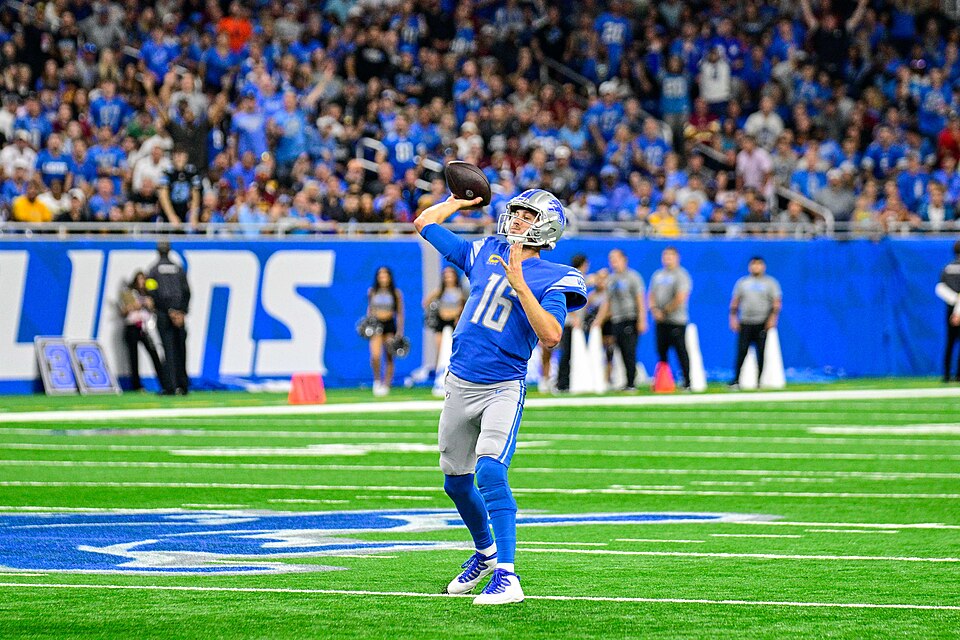
In standard, St. Brown projects for 190.9 points at 11.23 points per game. Fine production for a first-rounder, but nothing that separates him from the pack. In PPR, that projection jumps to 302.9 points at 17.82 per game -- a 59% increase driven entirely by volume. He's projected for roughly 112 receptions running the slot in Jared Goff's short-passing attack, and every one of those catches is a phantom point your standard board ignores.
No other first-round receiver sees that kind of format lift. That is the entire argument.
The verdict: PPR leagues, take him at 6 without blinking. Standard leagues, he slides to the back of Round 1, and that's where he belongs.
Bucky Irving, RB, Tampa Bay Buccaneers
Standard rank: 15 | Half-PPR rank: 28 | PPR rank: 29
Rachaad White is gone. He left for Washington, and Tampa handed the backfield to Bucky Irving with Kenneth Gainwell slotting in as the backup. That sounds like a pure volume spike, and in standard scoring, it is. Irving projects for 196.3 points as a clear RB1 locked into the middle of Round 1.
PPR flips the script. Irving projects for only about 47 receptions. That receiving floor is fine for standard, where rushing volume and goal-line work carry the profile. In PPR, players who catch 80-plus balls vault past him. His rank drops from 15 to 29 -- not because he got worse, but because the format rewards a skill set he doesn't have in volume.
The projection models flag this too. His standard projection rank is 51 with low confidence, meaning the market is already pricing Irving above where the models think he belongs. Add the PPR penalty and the price tag gets harder to justify.
The verdict: Standard league RB1. PPR league, you can wait until Round 3 and still get him.
Chris Godwin, WR, Tampa Bay Buccaneers
Standard projection rank: 54 | PPR projection rank: 16 | Current PPR ADP: 101
This is the biggest format-driven market inefficiency in the 2026 player pool, and it isn't close.
Chris Godwin is 30 years old, and the market has buried him at ADP 101 -- ninth or tenth round territory. The projection models say he belongs at overall rank 16 in PPR. That's an 85-spot gap between where managers are drafting him and where the numbers say he should go.
The mechanism is simple. Godwin is projected for approximately 110 receptions working as Tampa's primary slot target alongside Emeka Egbuka and Baker Mayfield. In standard, those catches are invisible -- he projects for 191 points at rank 120. Not interesting. In PPR, 110 catches become 110 bonus points, pushing his projection to 301 points. That's WR1 production at a WR5 price.
The consensus score tells the same story: 75.5 in PPR versus 100.2 in standard. The market is starting to recognize his slot value, but the adjustment is nowhere near complete. If your league counts receptions, Godwin in the ninth or tenth round is one of the biggest steals available.
The verdict: Standard leagues, he's a bench depth piece. PPR leagues, he's a league-winning value at his current ADP.
Jahmyr Gibbs, RB, Detroit Lions
Standard rank: 4 | Half-PPR rank: 4 | PPR rank: 3
David Montgomery left for Houston. Jahmyr Gibbs now owns the Detroit backfield outright, and the projection models reflect it.
In standard, Gibbs projects for 298.1 points with medium confidence -- elite production, but the models still see some touchdown dependency baked into that number. Move to half-PPR and the confidence band jumps to high with a consensus rank of 2. Full PPR pushes him to 349.1 projected points with high confidence and that same consensus rank of 2.
The receiving work explains the confidence shift. Gibbs projects for roughly 51 receptions -- not elite target volume, but elite for a running back already posting 17.54 points per game in standard. That receiving floor is what separates the medium-confidence standard profile from the high-confidence PPR one. The models trust his PPR floor more than his touchdown-dependent standard ceiling.
His projection alignment tightens by format too: projection rank 6 versus ADP 3 in PPR, compared to projection rank 11 versus ADP 4 in standard. The closer the projection rank gets to the ADP, the fairer the price.
The verdict: First round in every format. But his PPR floor makes him the safest top-5 pick in point-per-reception leagues.
Ricky Pearsall, WR, San Francisco 49ers
Standard rank: 54 | Half-PPR rank: 55 | PPR rank: 49
The market loves Ricky Pearsall. The models do not.
Brandon Aiyuk is still technically on the 49ers roster, but the expectation around the league is that he won't play another down in San Francisco. That expectation has inflated Pearsall's ADP into WR2 territory across all formats -- rank 49 to 55 depending on scoring. The projection models disagree violently. His projection rank is 154 in standard and 141 in PPR. That's a 92-to-100 spot gap between where he's being drafted and where the models think he belongs.
The format doesn't save him. In standard, Pearsall projects for just 102.5 points at 6.03 points per game. Even in PPR with an estimated 51 receptions bumping him to 153.5 points, his 9.03 ppg is borderline startable. The market is pricing in a breakout the projection models don't support at any scoring format.
Low confidence across all three formats. When both the projection gap and the confidence band flash warning signs regardless of scoring settings, that's a signal, not noise.
The verdict: Overpriced in every format. If you're taking the shot, at least do it in PPR where his floor is slightly higher -- but temper expectations.
The Takeaway
Your draft board should never be format-agnostic. The difference between St. Brown at pick 14 in standard and pick 6 in PPR isn't a rounding error -- it's eight picks of value you're leaving on the table. Irving going from pick 15 to pick 29 means you can get him two full rounds later in PPR. And Godwin at ADP 101 in a PPR league with WR1 projections? That's the kind of market disconnect that wins championships.
Know your format. Adjust your board. Draft accordingly.