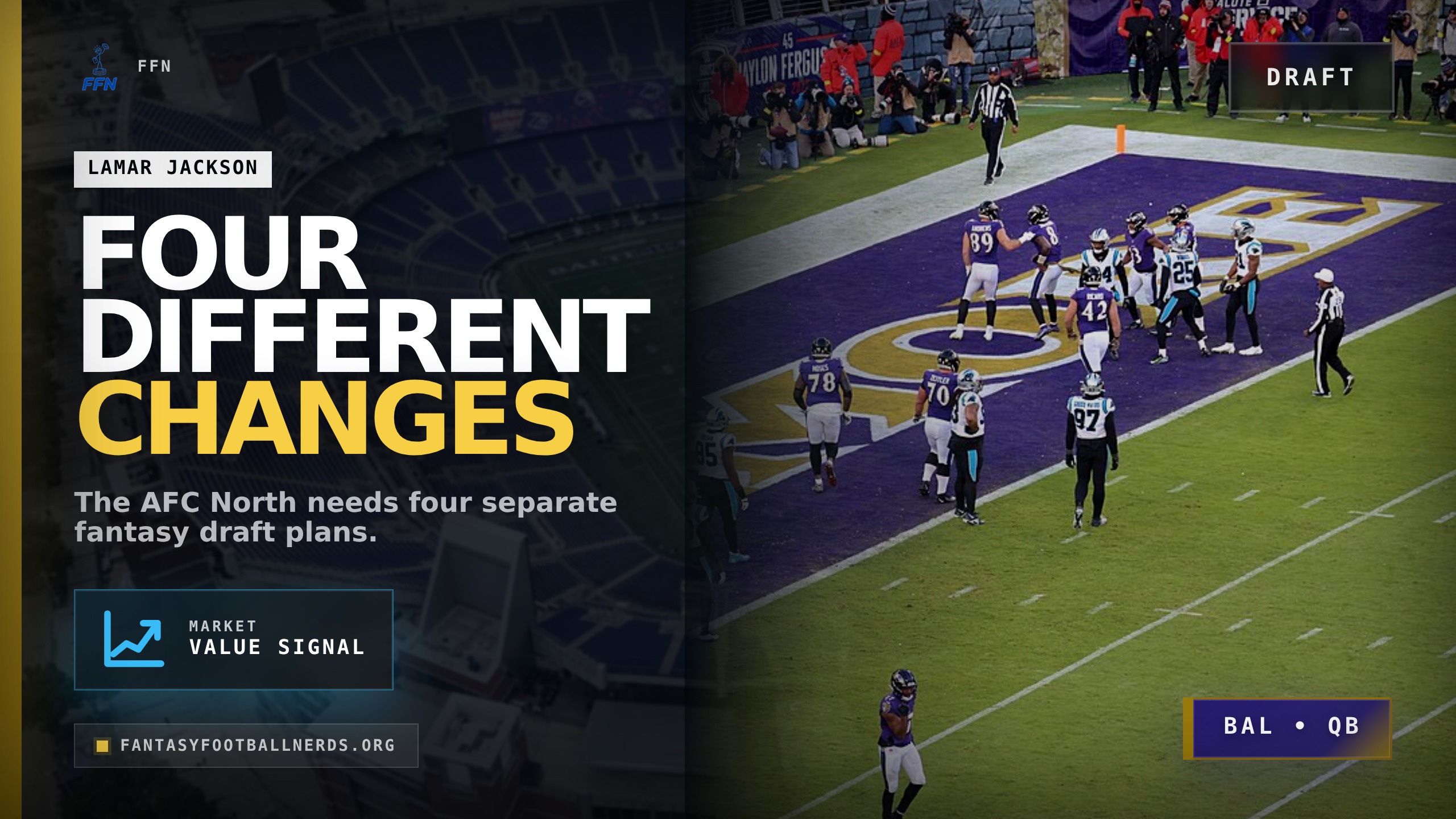
AFC North Draft Calls Under New Coaches
The AFC North creates fantasy volume four different ways. Compare the draft call and football watch point for Baltimore, Cincinnati, Cleveland, and Pittsburgh.
Browse the live FFN story feed, current featured articles, and the public archive year by year.
The AFC North creates fantasy volume four different ways. Compare the draft call and football watch point for Baltimore, Cincinnati, Cleveland, and Pittsburgh.
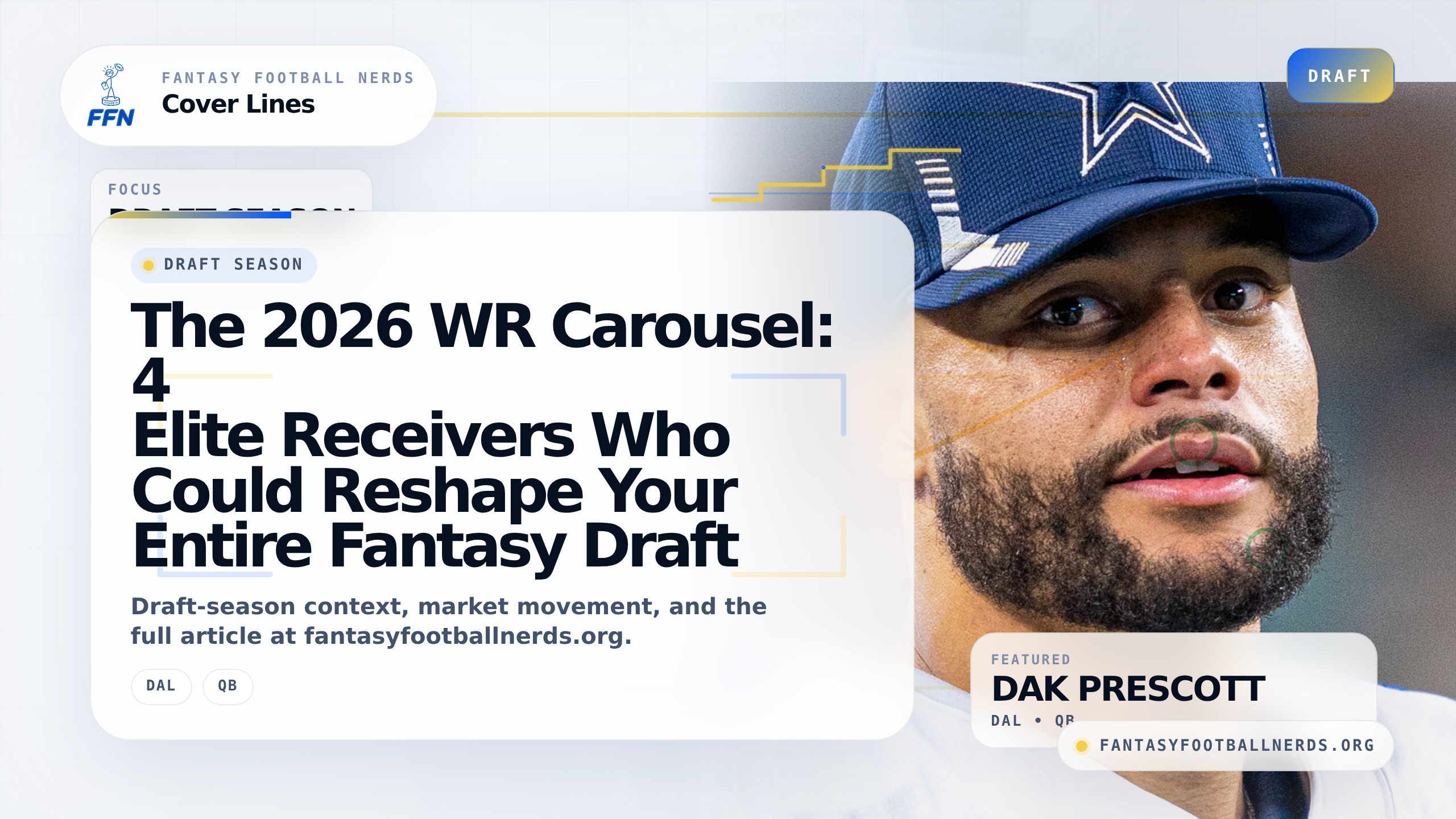
Bijan Robinson, Jahmyr Gibbs, Puka Nacua and Ja'Marr Chase offer different first-round paths. Match the workload to your scoring and roster plan.
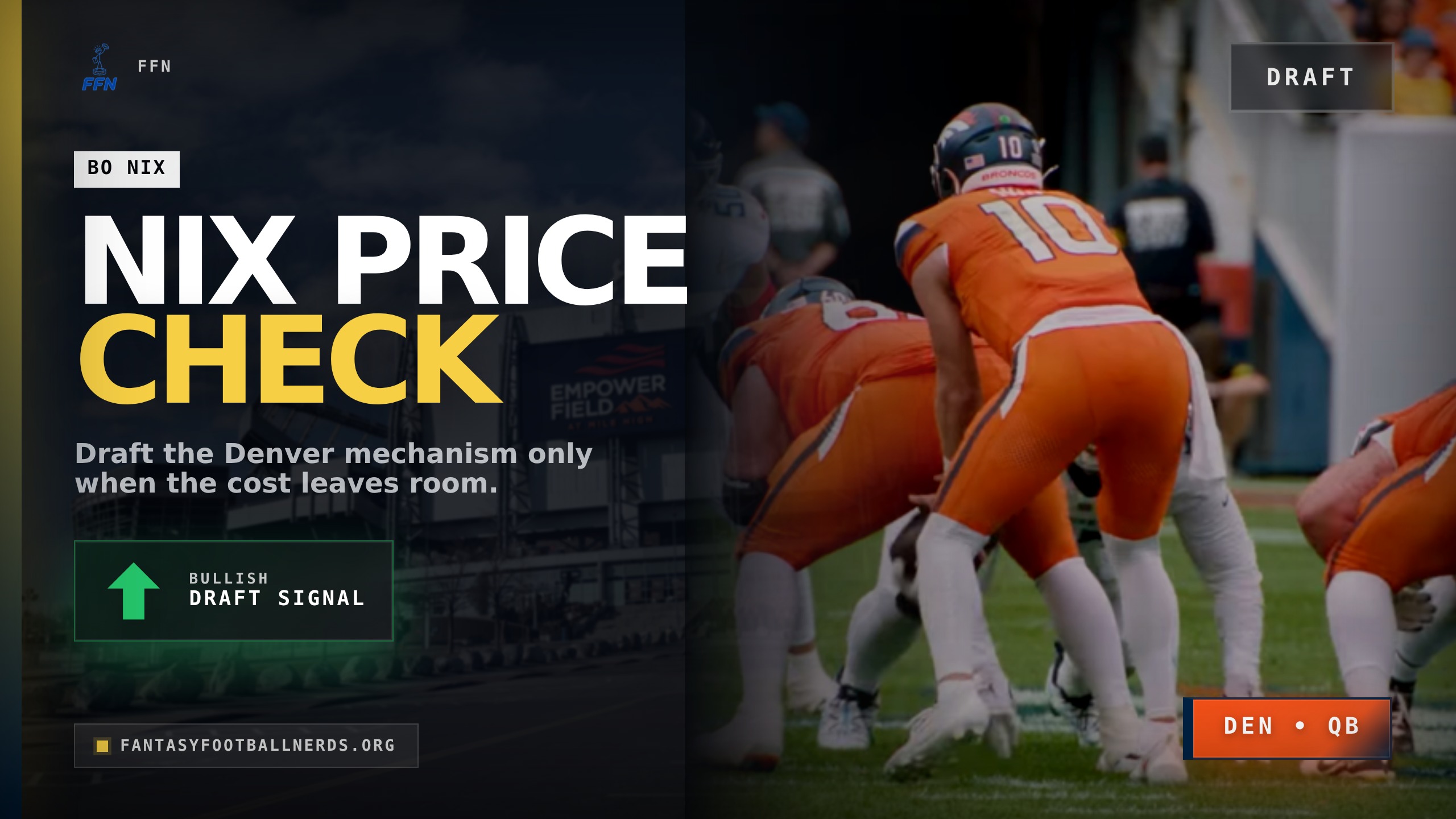
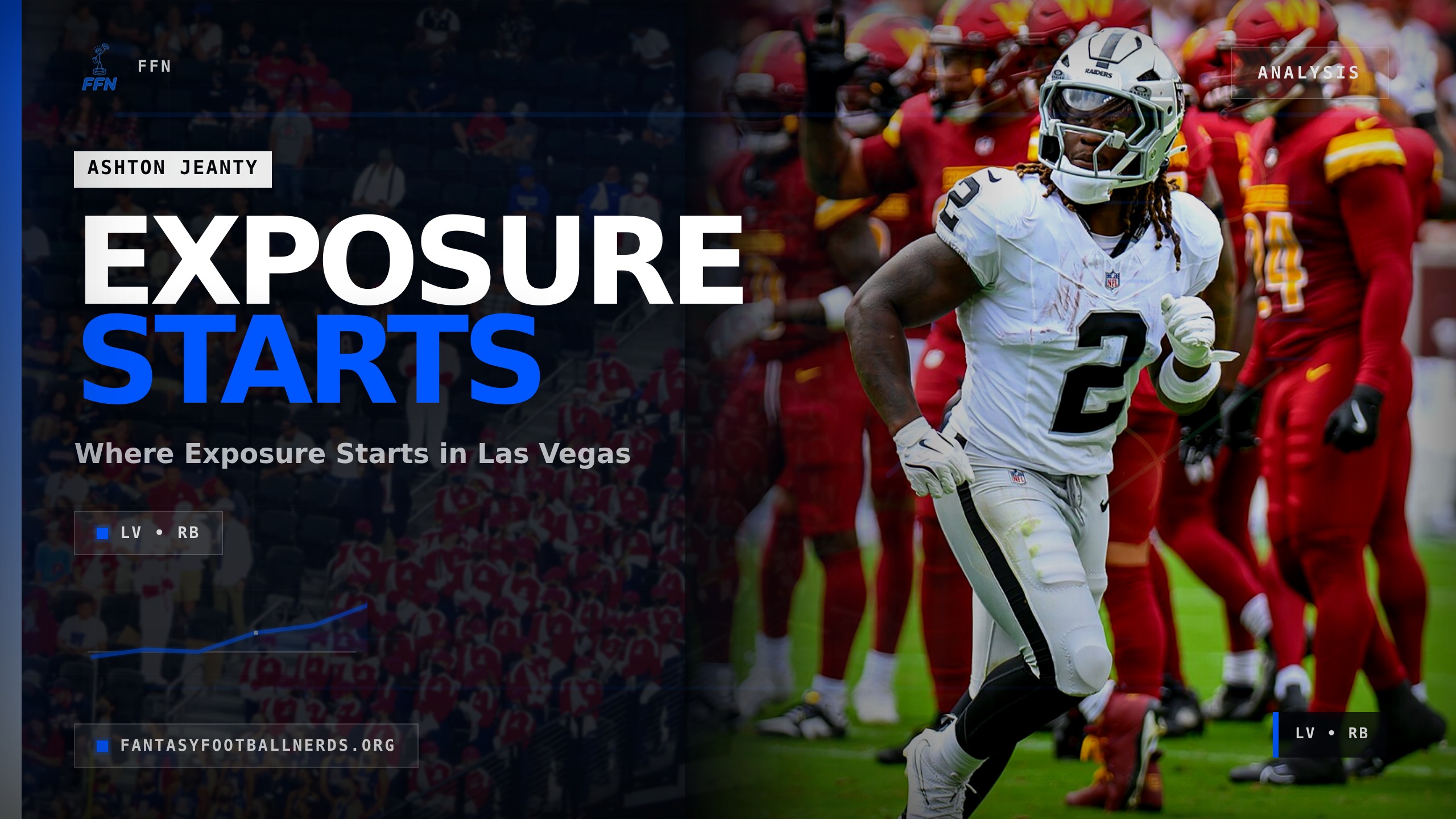
Bo Nix, Rashee Rice, Ashton Jeanty and Ladd McConkey fill different fantasy needs. Match the AFC West role to the roster you're building.
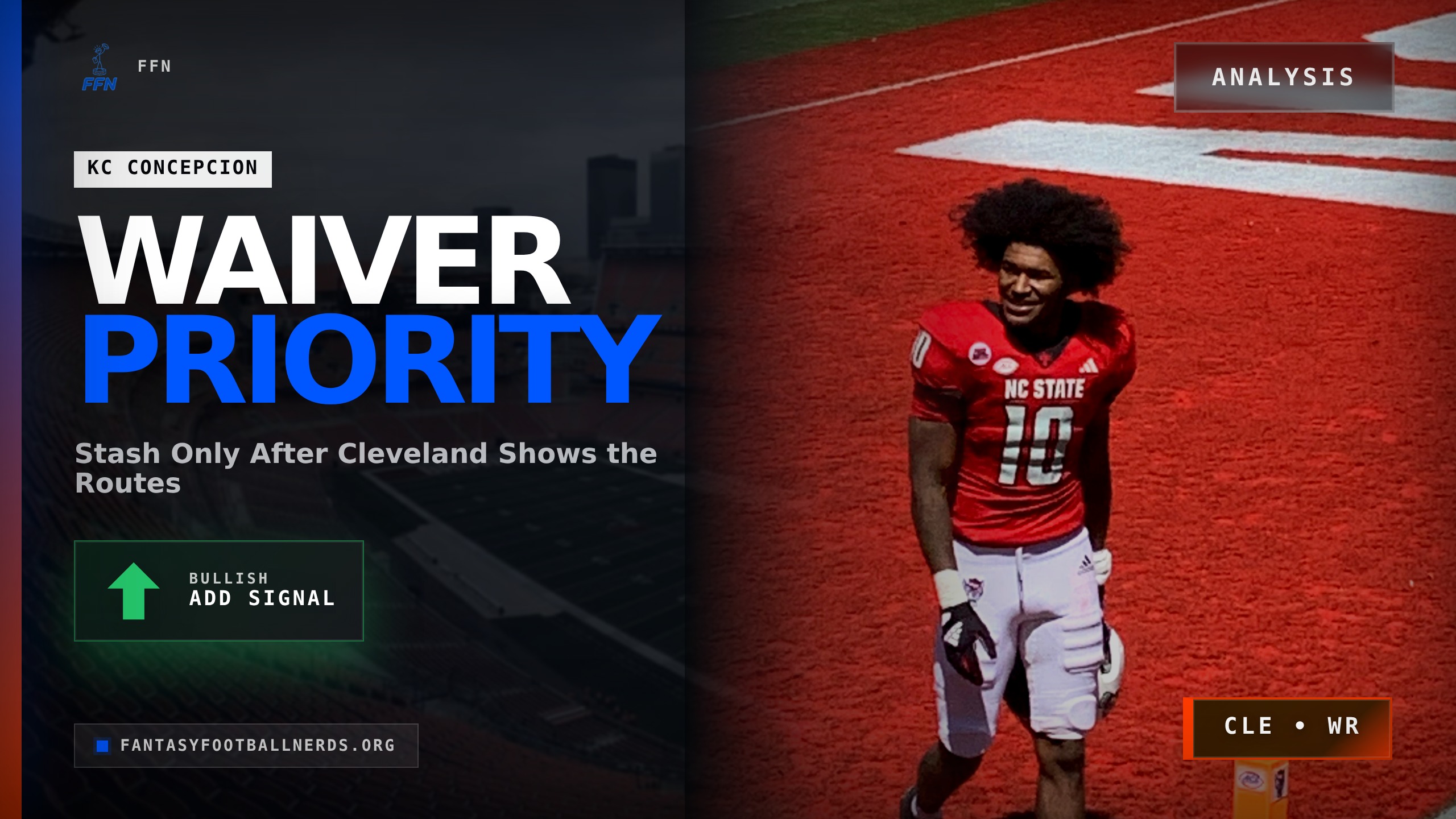
Cleveland's quarterback battle shapes Judkins, Jeudy, Sanders, Sampson and Concepcion. Draft Judkins first, then watch the third-down work.
Jordan James is worth a cheap camp stash, while Christian Kirk should stay in the wait tier until San Francisco provides firmer role and health evidence.
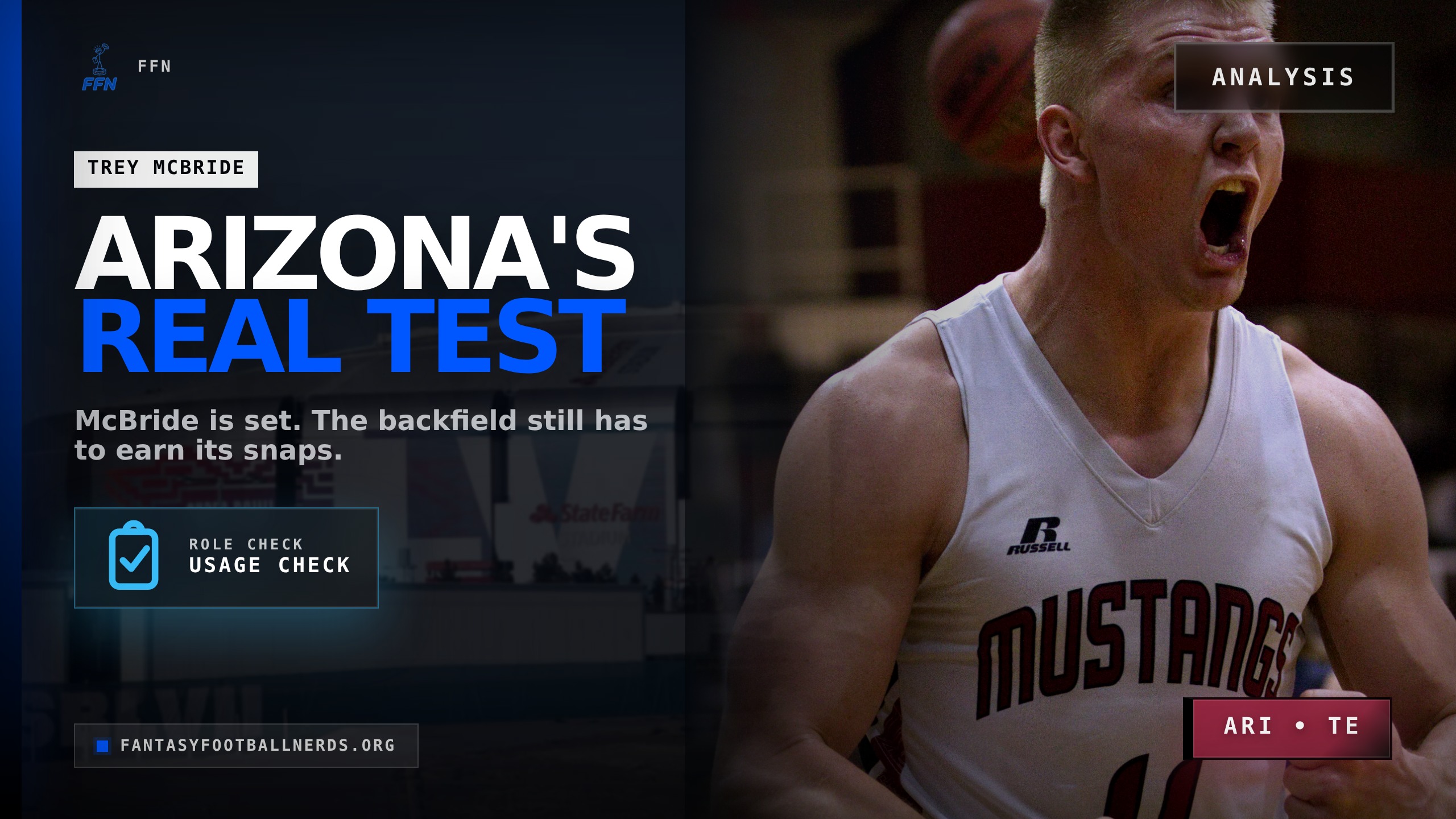
Jacoby Brissett can preserve Trey McBride's elite role, while Michael Wilson and Arizona's backfield need specific usage before fantasy managers commit.
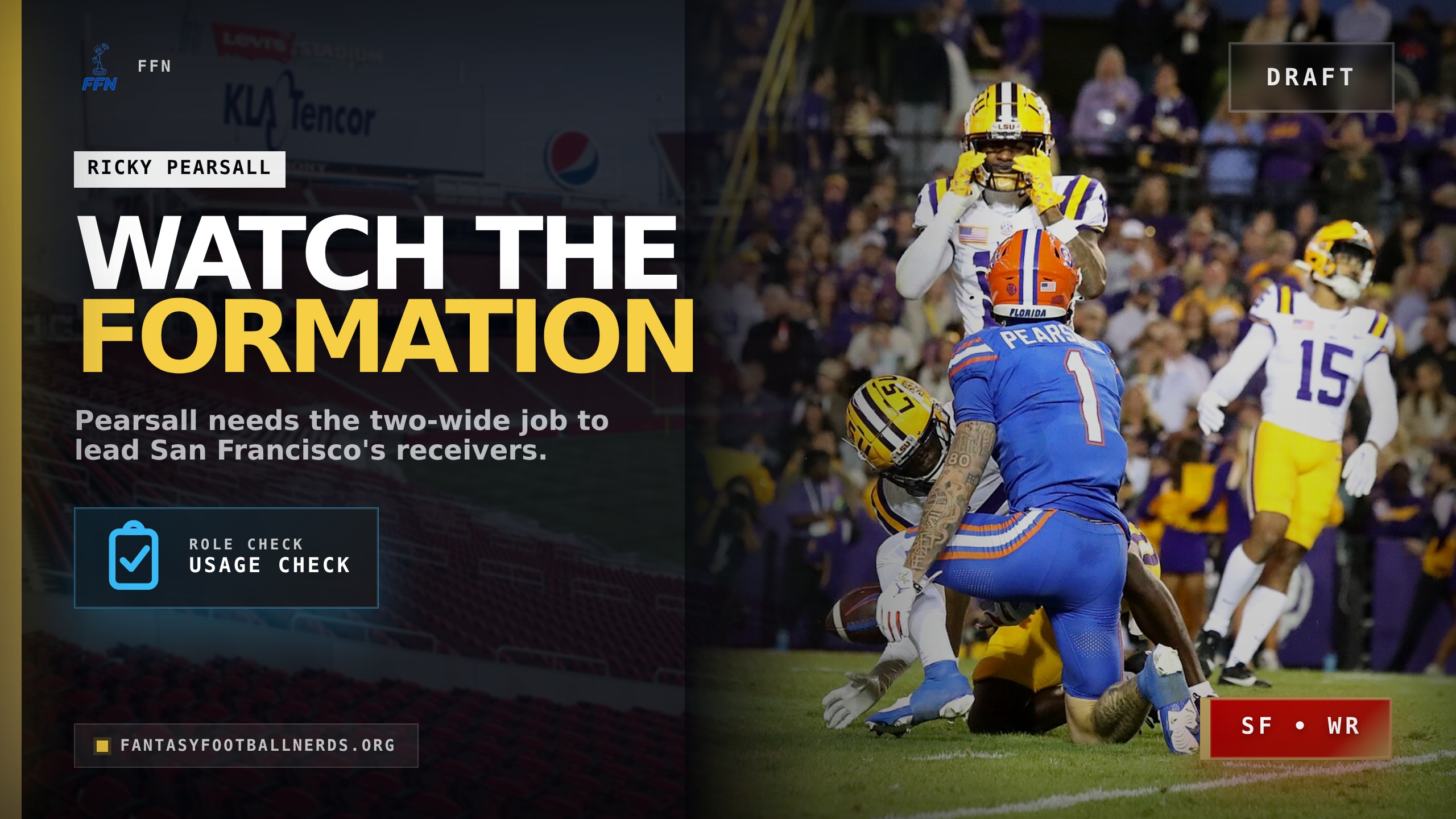
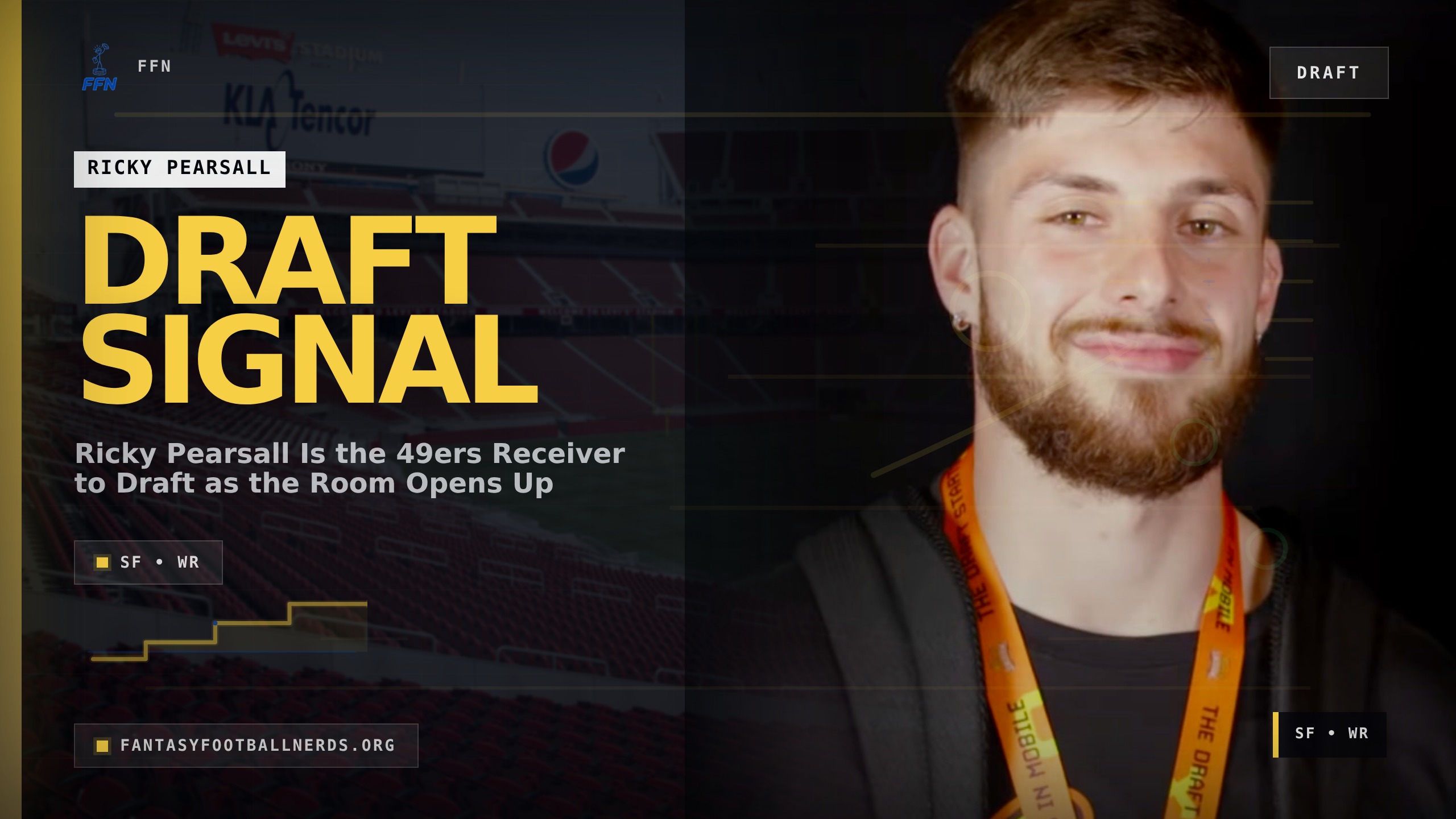
Ricky Pearsall can lead San Francisco's reshaped receiver group, but his two-wide snaps will decide whether fantasy managers should target him.
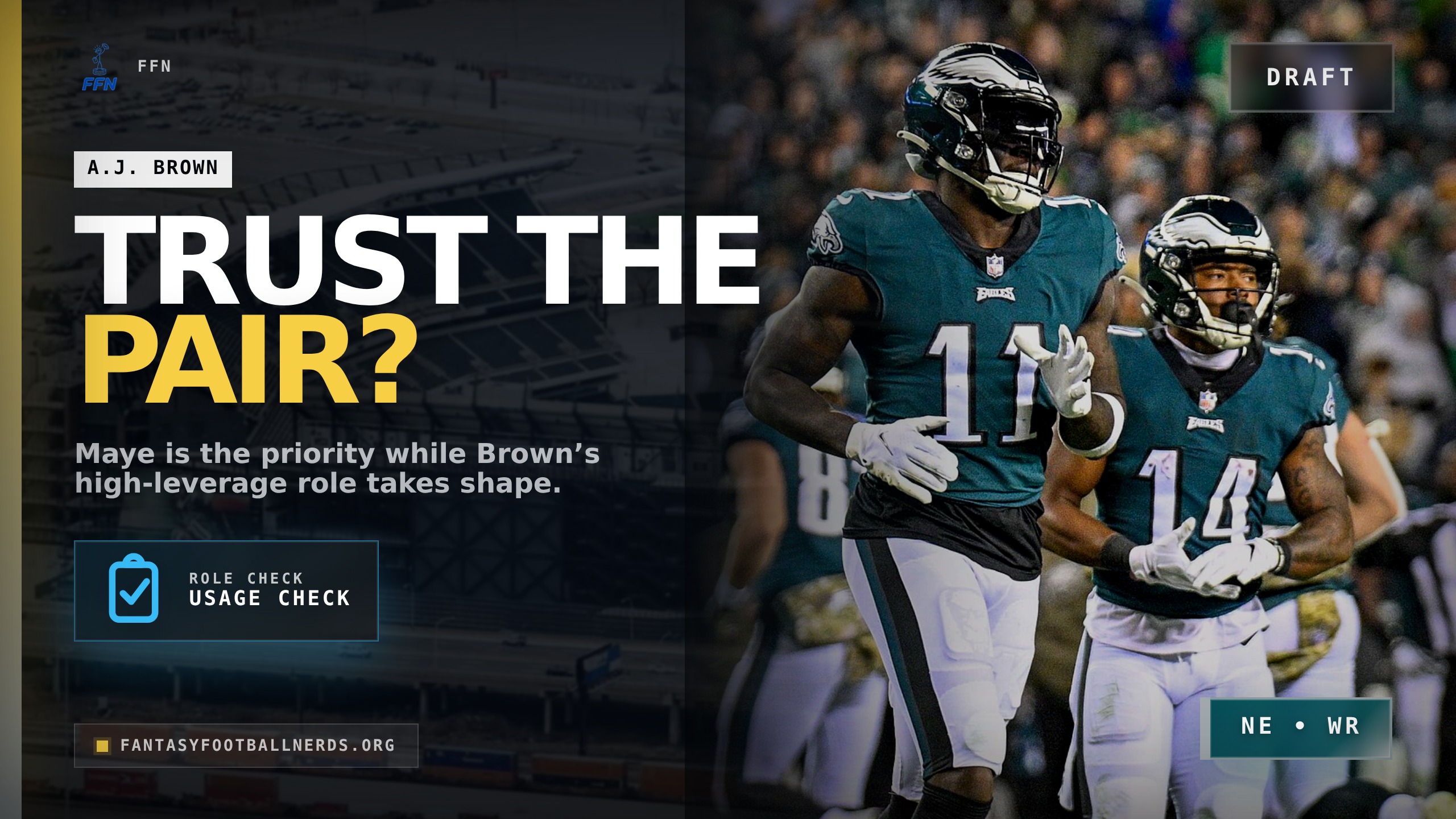
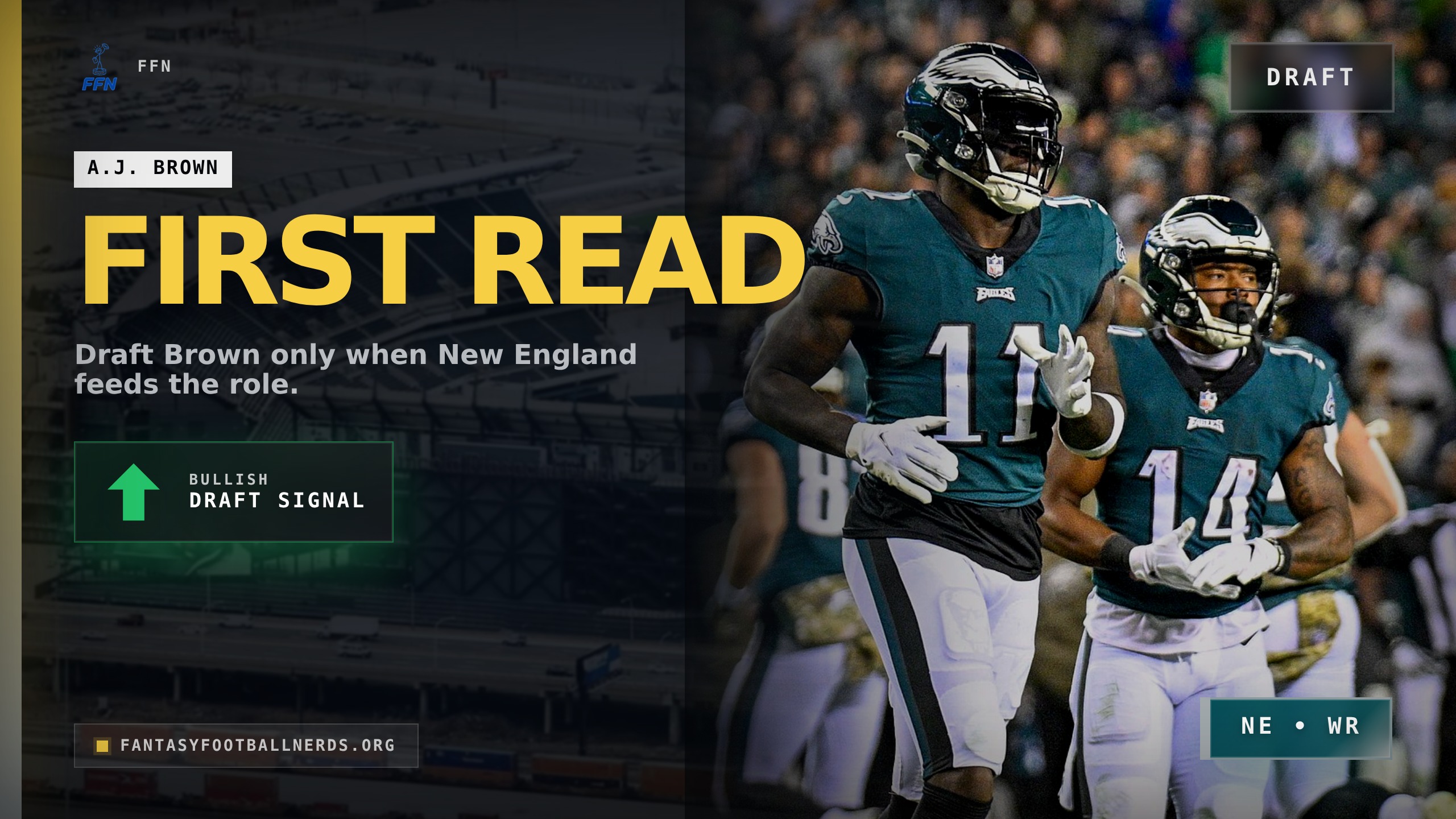
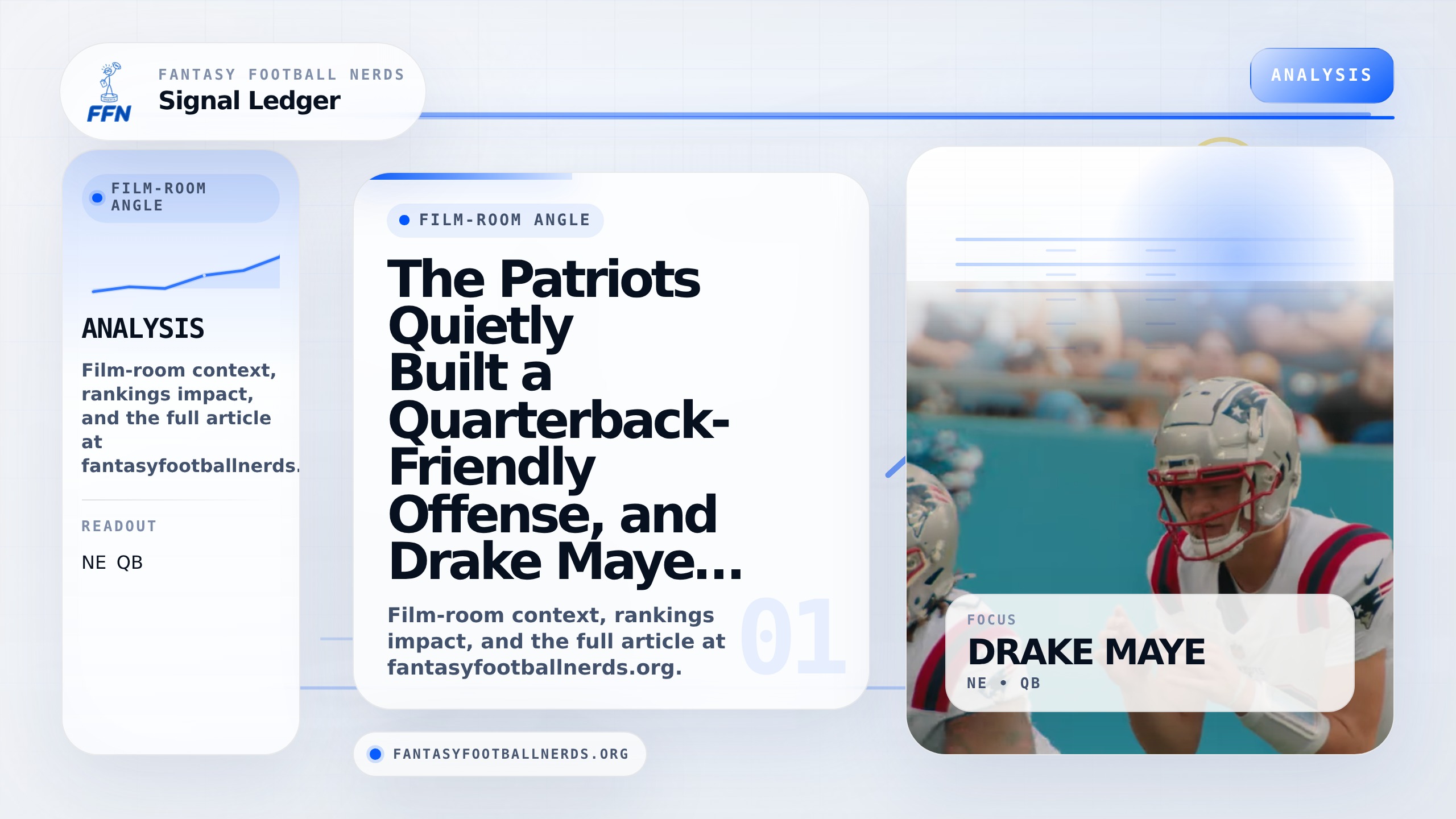
Drake Maye has top-six quarterback upside with A.J. Brown, but Brown and New England’s backs still need the right high-leverage assignments.
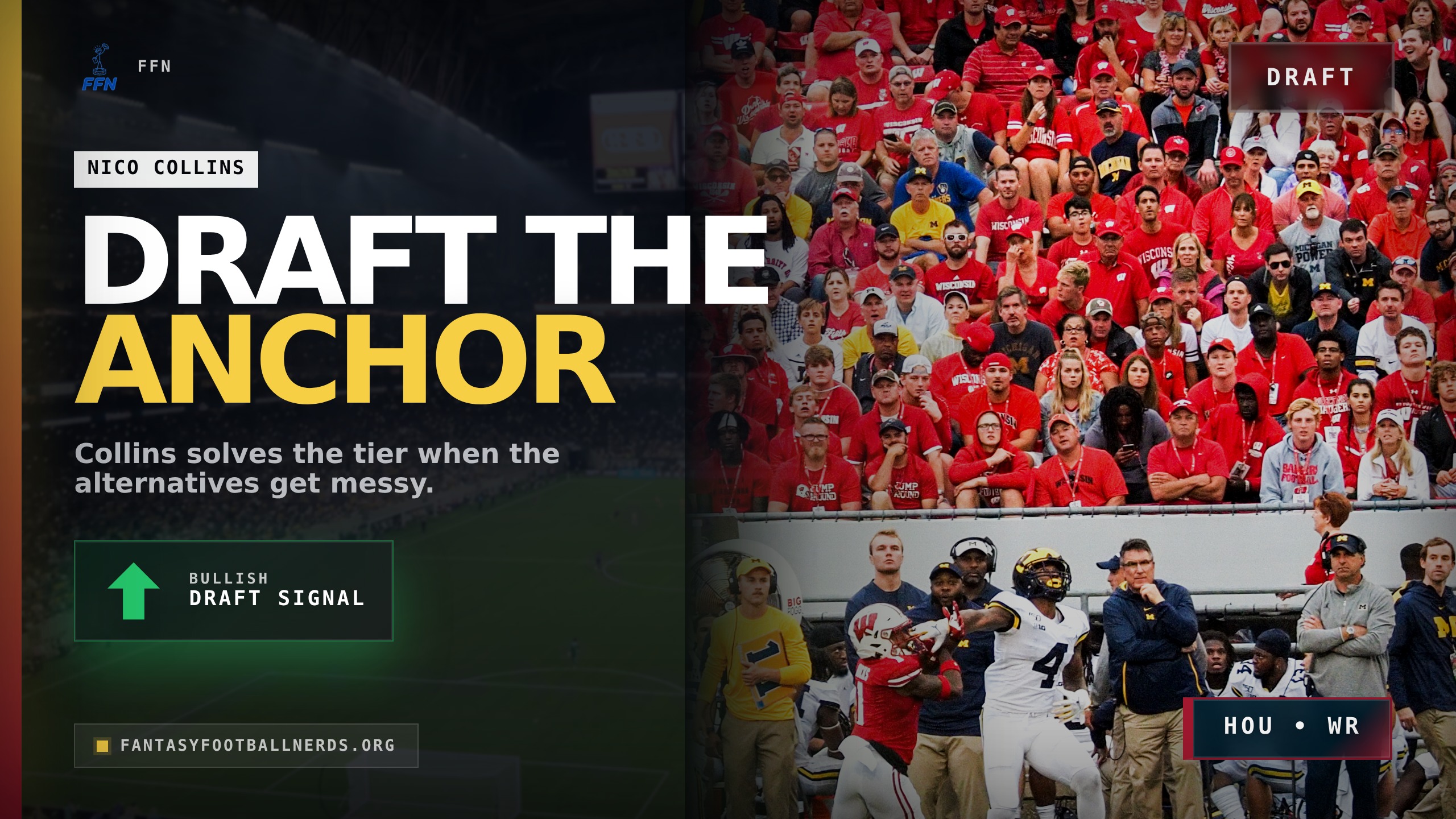
Nico Collins and Jonathan Taylor lead the AFC South choices. Use Trevor Lawrence in multi-QB builds, while Tony Pollard should wait for preseason.
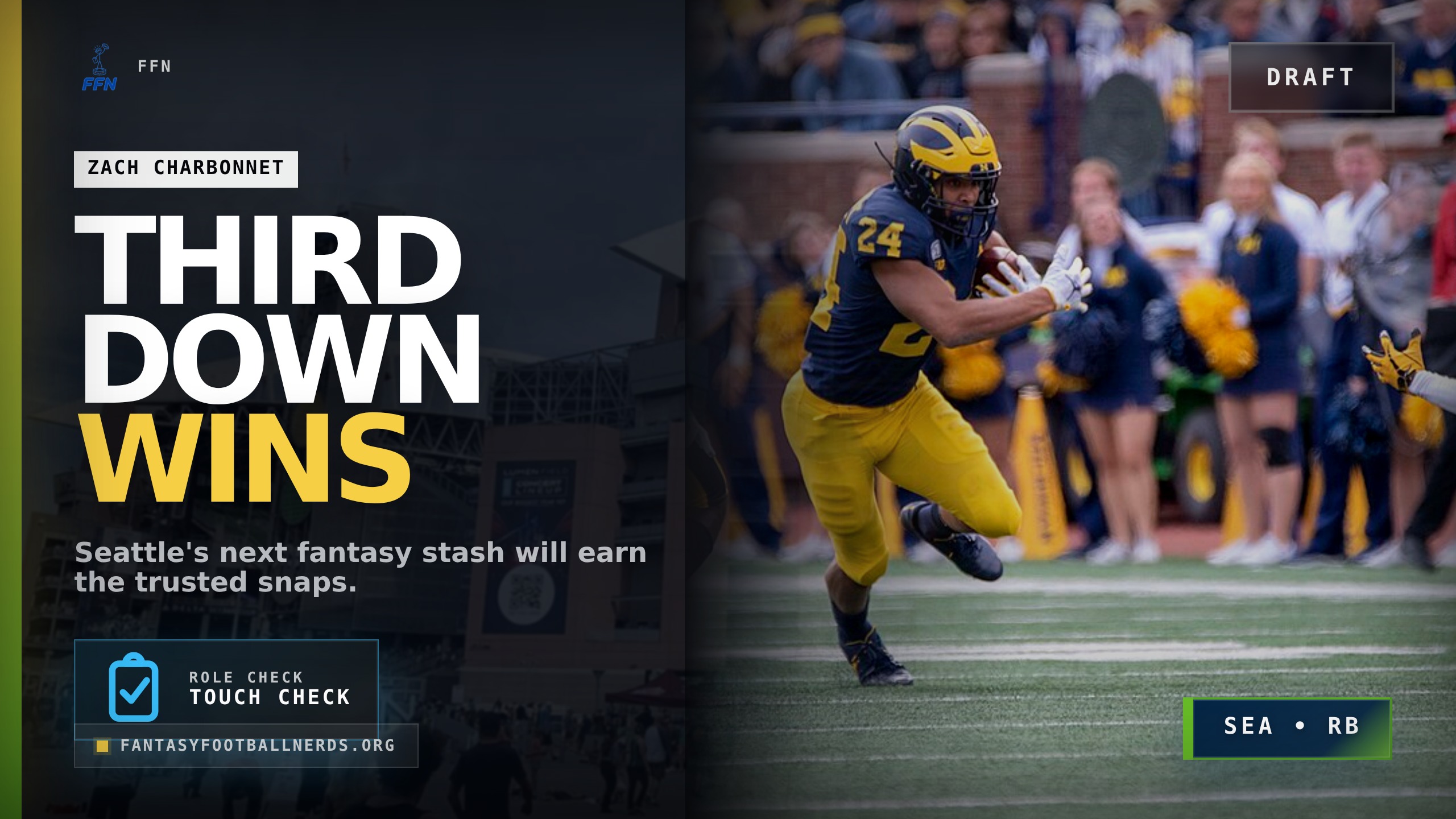
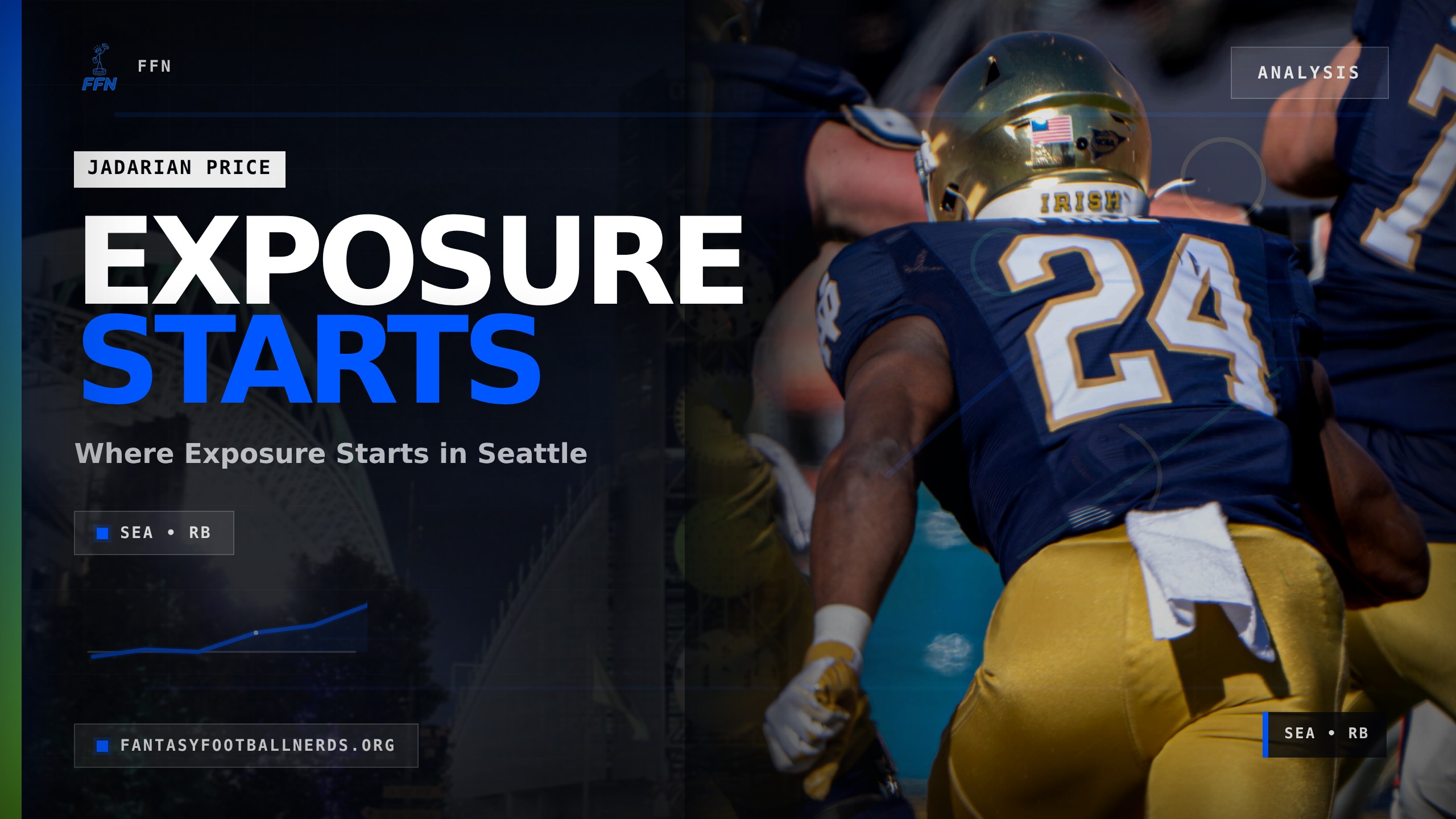
Zach Charbonnet brings late-season volume, but Jadarian Price becomes Seattle's better stash if he wins third downs and scoring-area work.
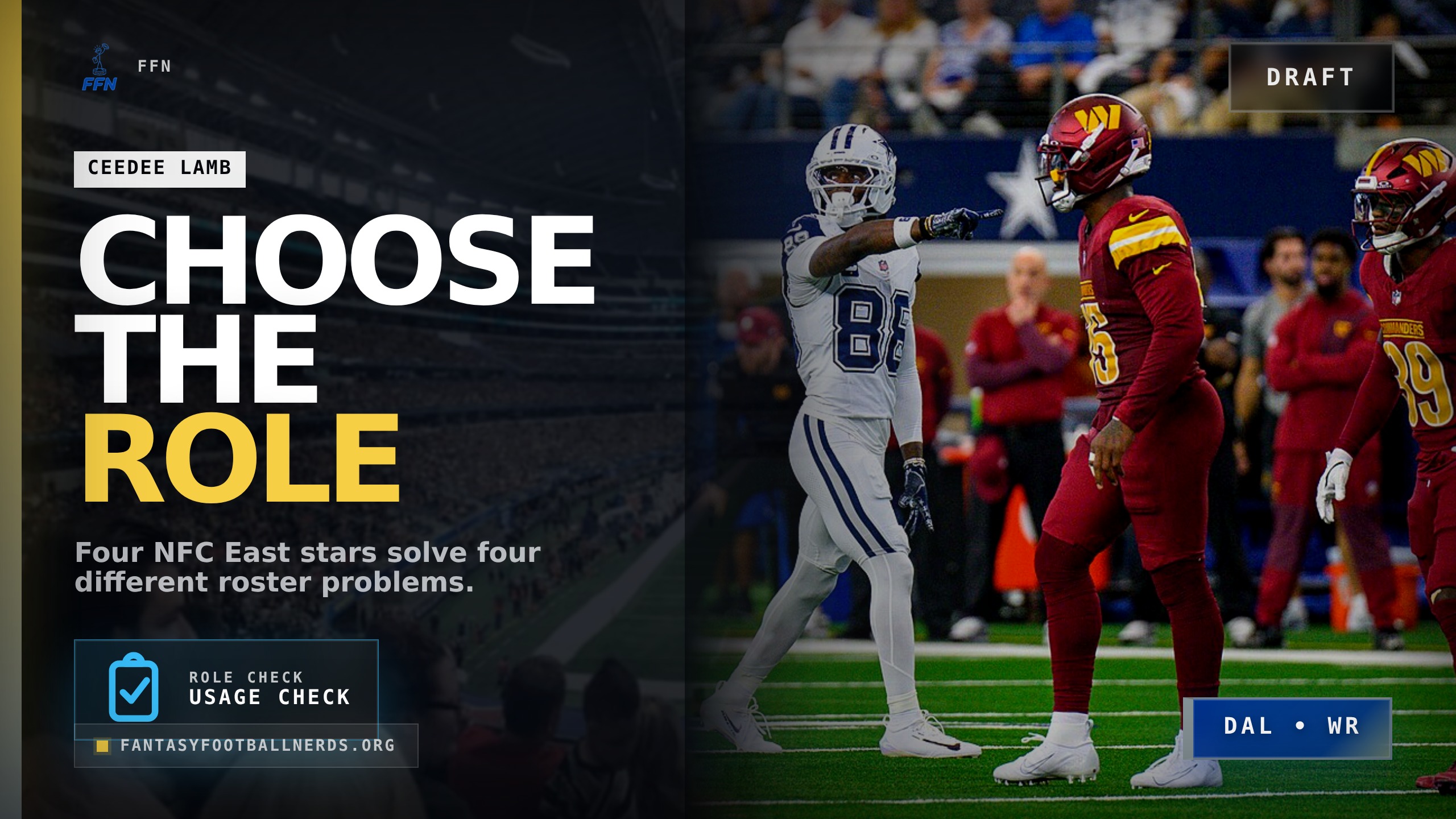
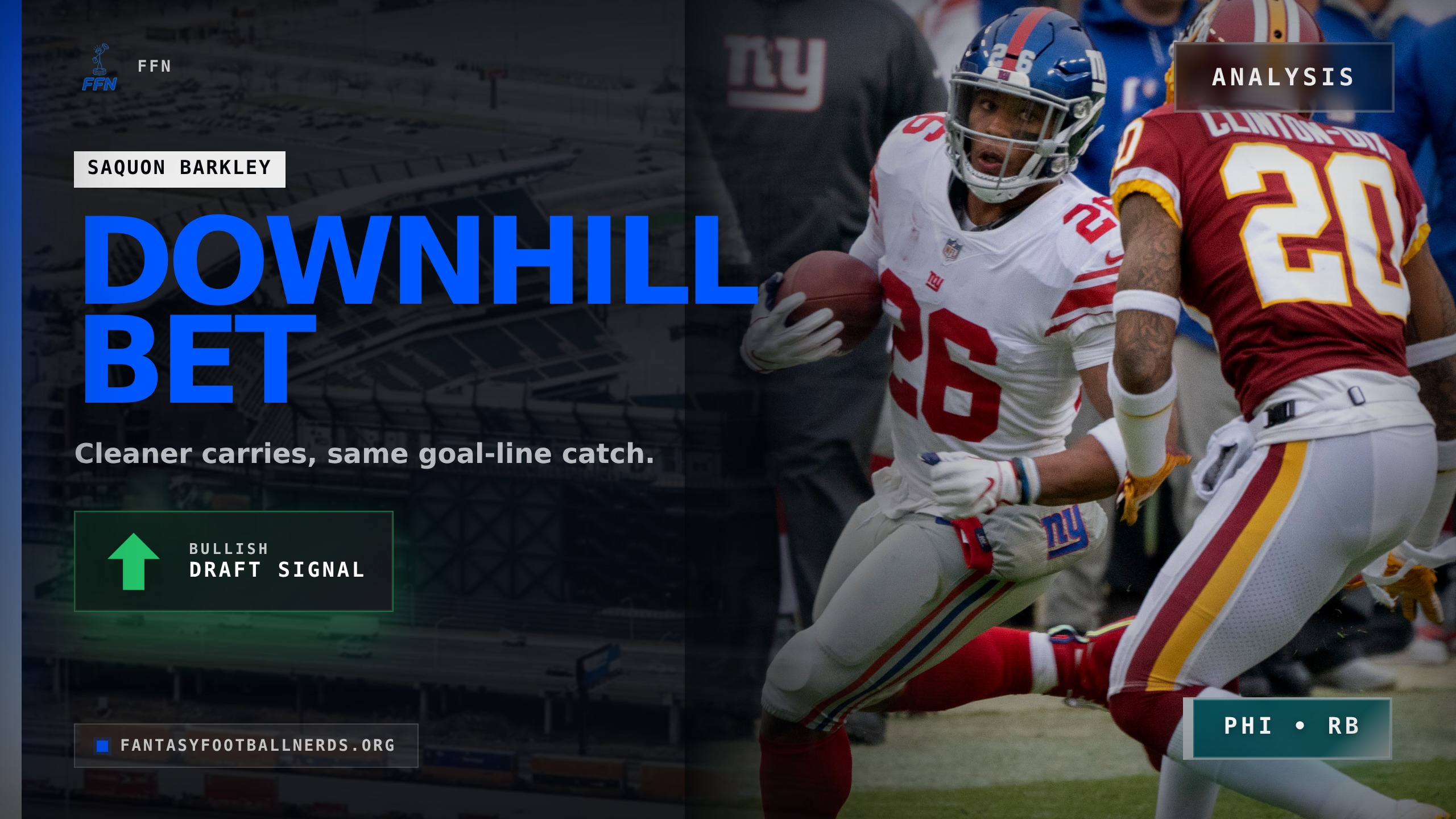
See how CeeDee Lamb, Saquon Barkley, Malik Nabers and Jayden Daniels fit different roster builds, then choose the role your team needs most.
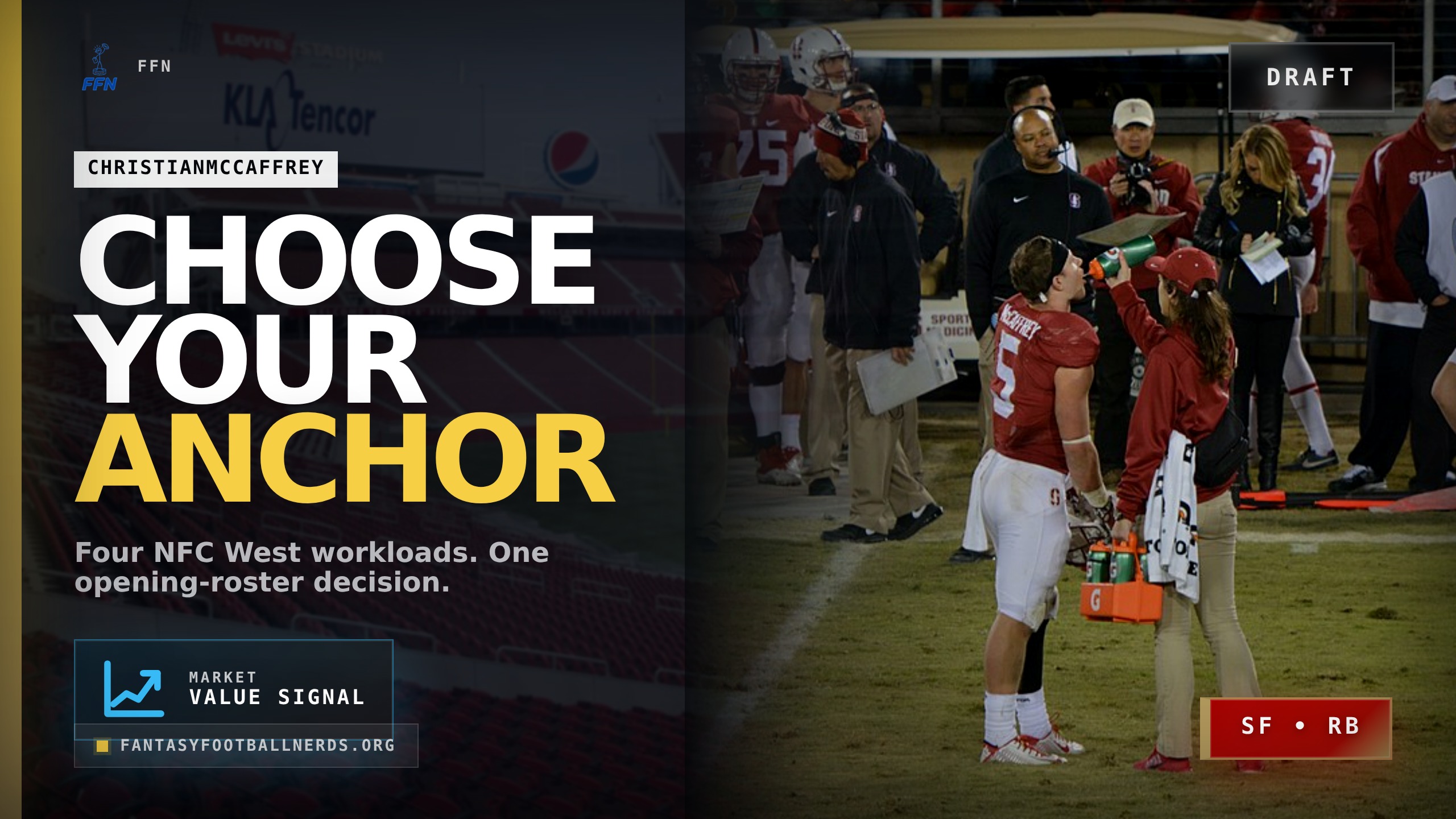
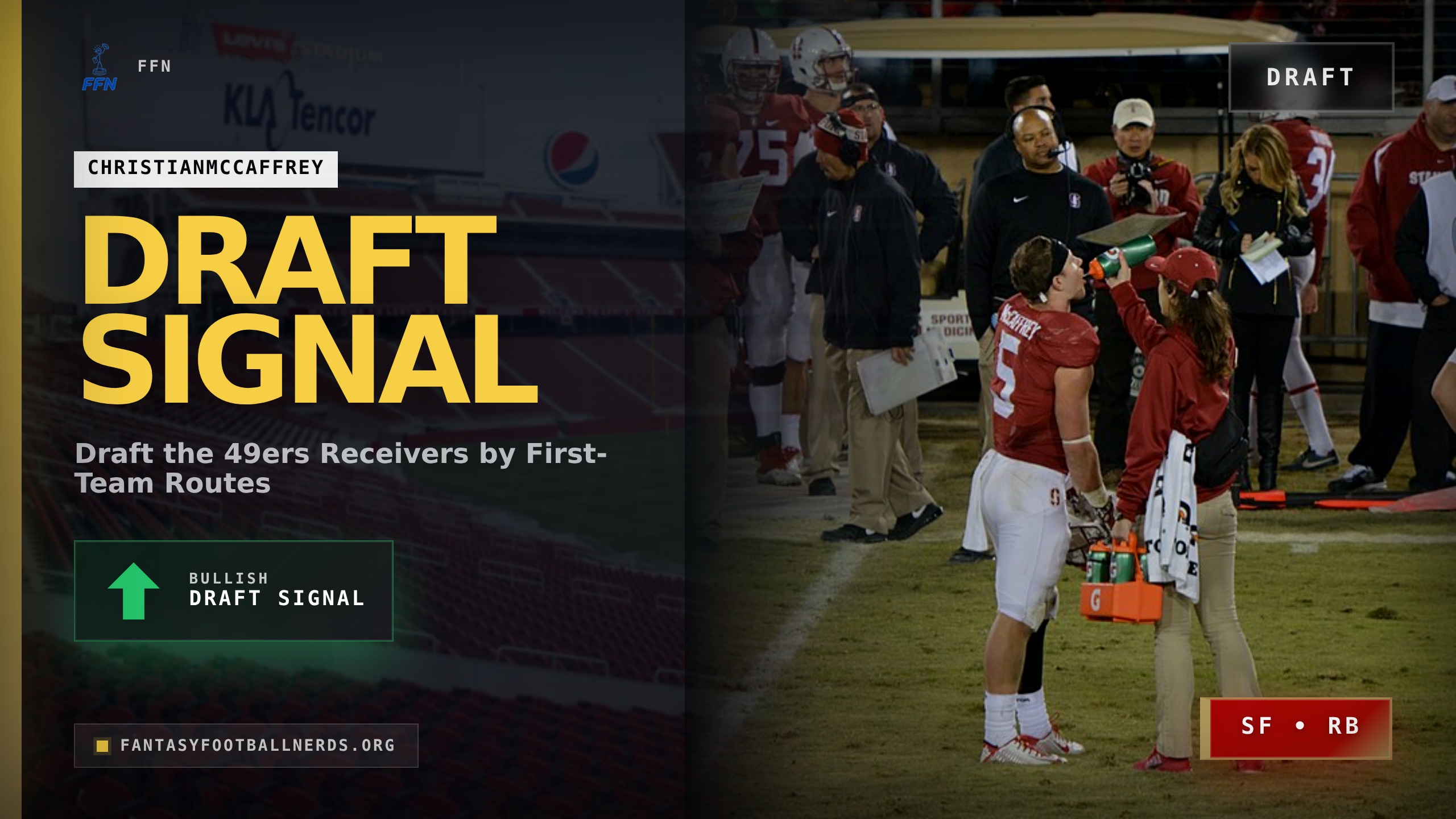
Christian McCaffrey leads four NFC West stars with different workload paths. Use roster construction to choose between McCaffrey, Puka, JSN and McBride.
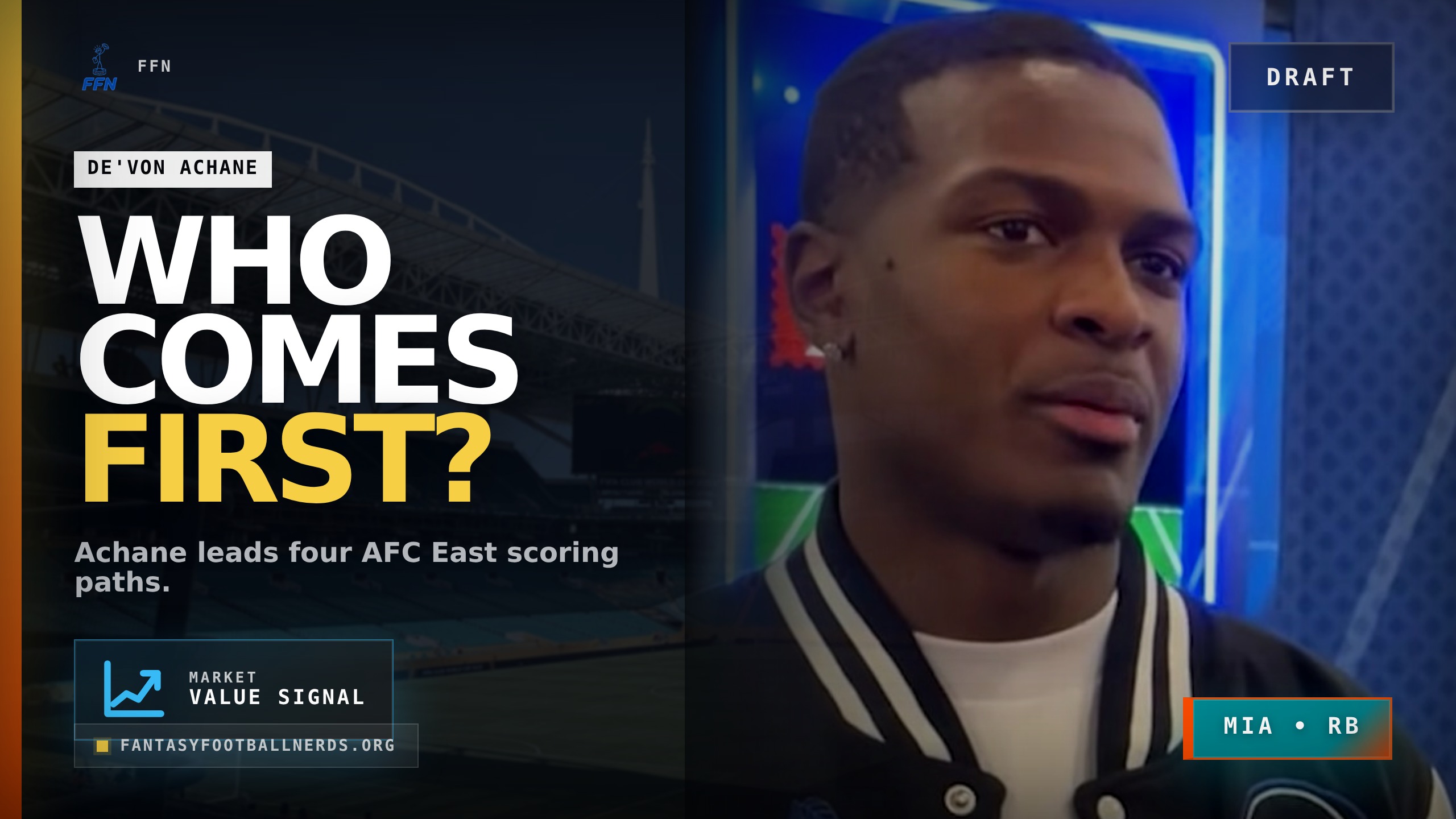
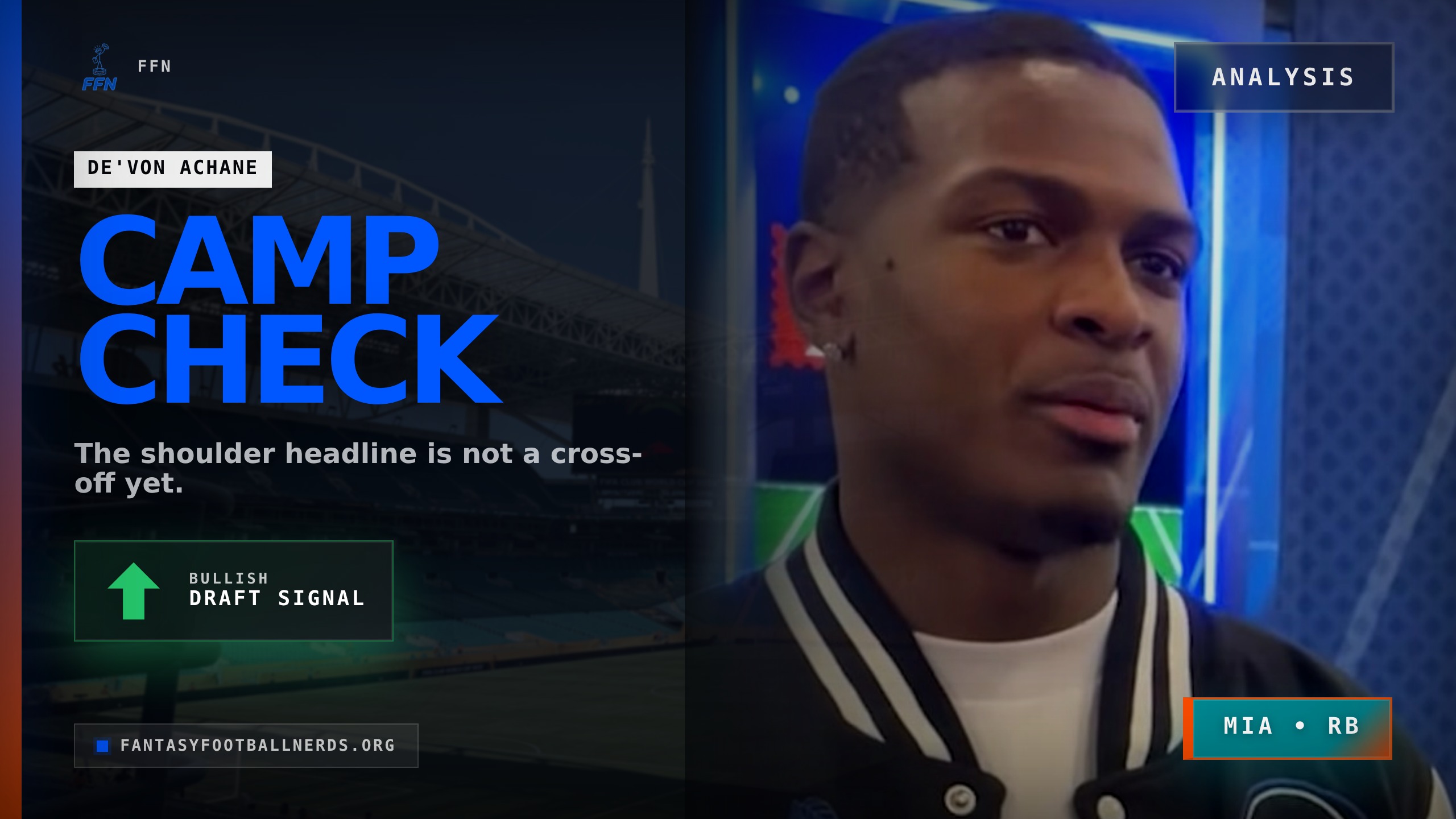
De'Von Achane offers the widest scoring path among four AFC East stars. See when Josh Allen, Garrett Wilson or A.J. Brown better fits your roster.
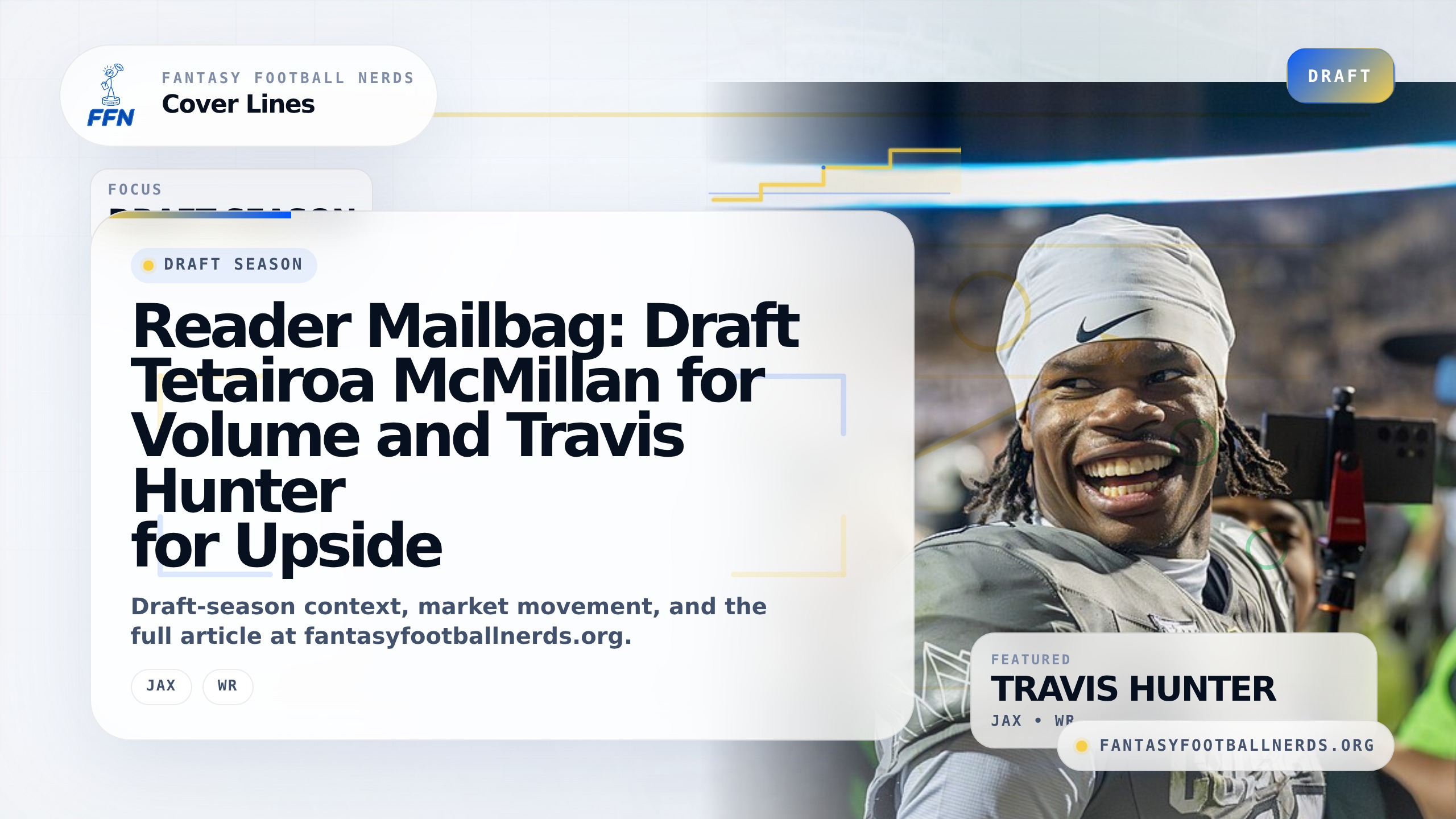
With Taylor Moton expected to miss time, McMillan still belongs in WR2 plans while Young, Hubbard and Coker need specific camp signals.
Sam LaPorta is cleared for camp, but Detroit's target distribution still matters. See when to draft LaPorta and how scoring changes St. Brown and Gibbs.
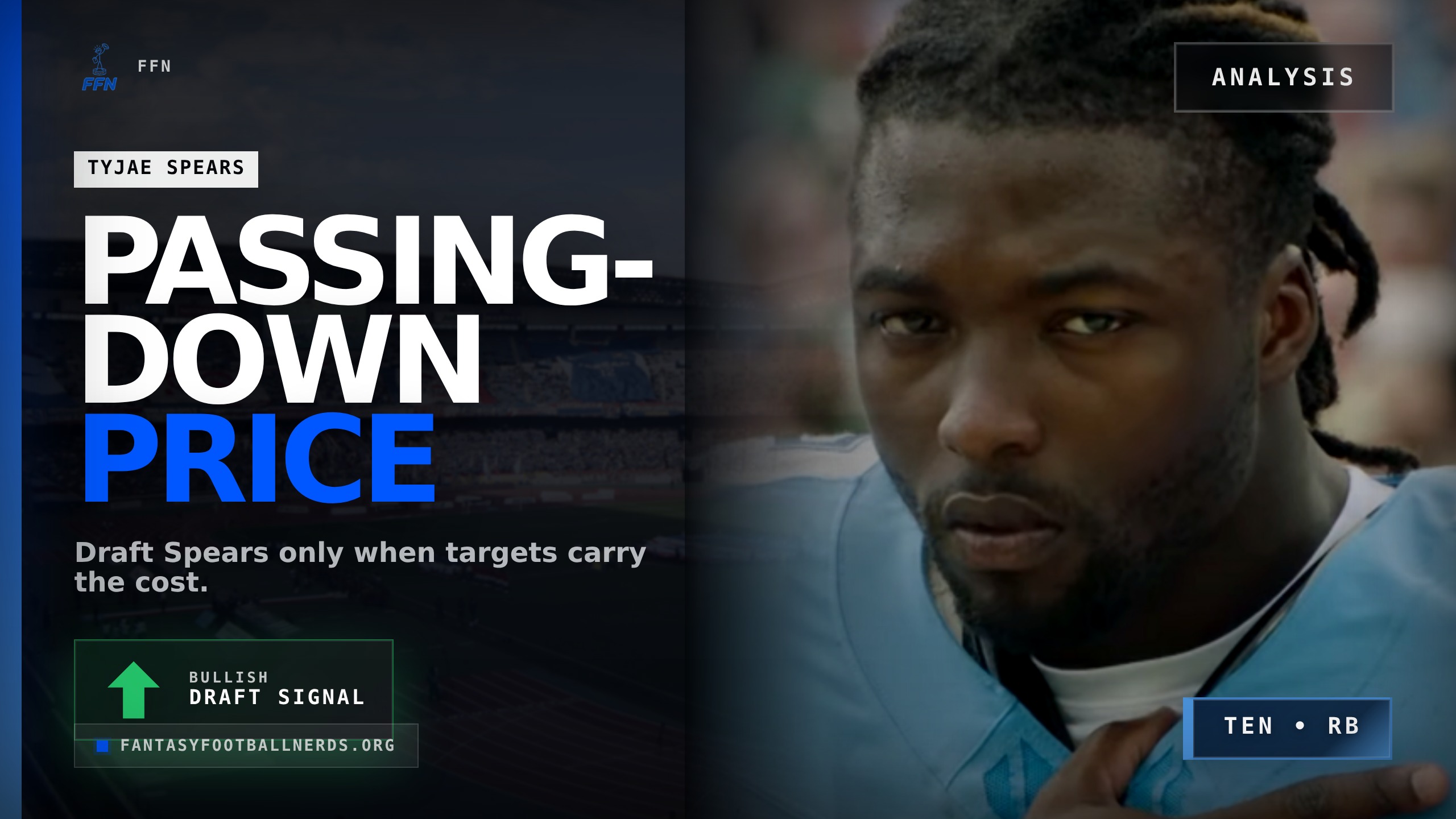
Tony Pollard leads the Titans fantasy tiers. See which first-team assignments Tyjae Spears, Carnell Tate, and Cam Ward need before they rise.
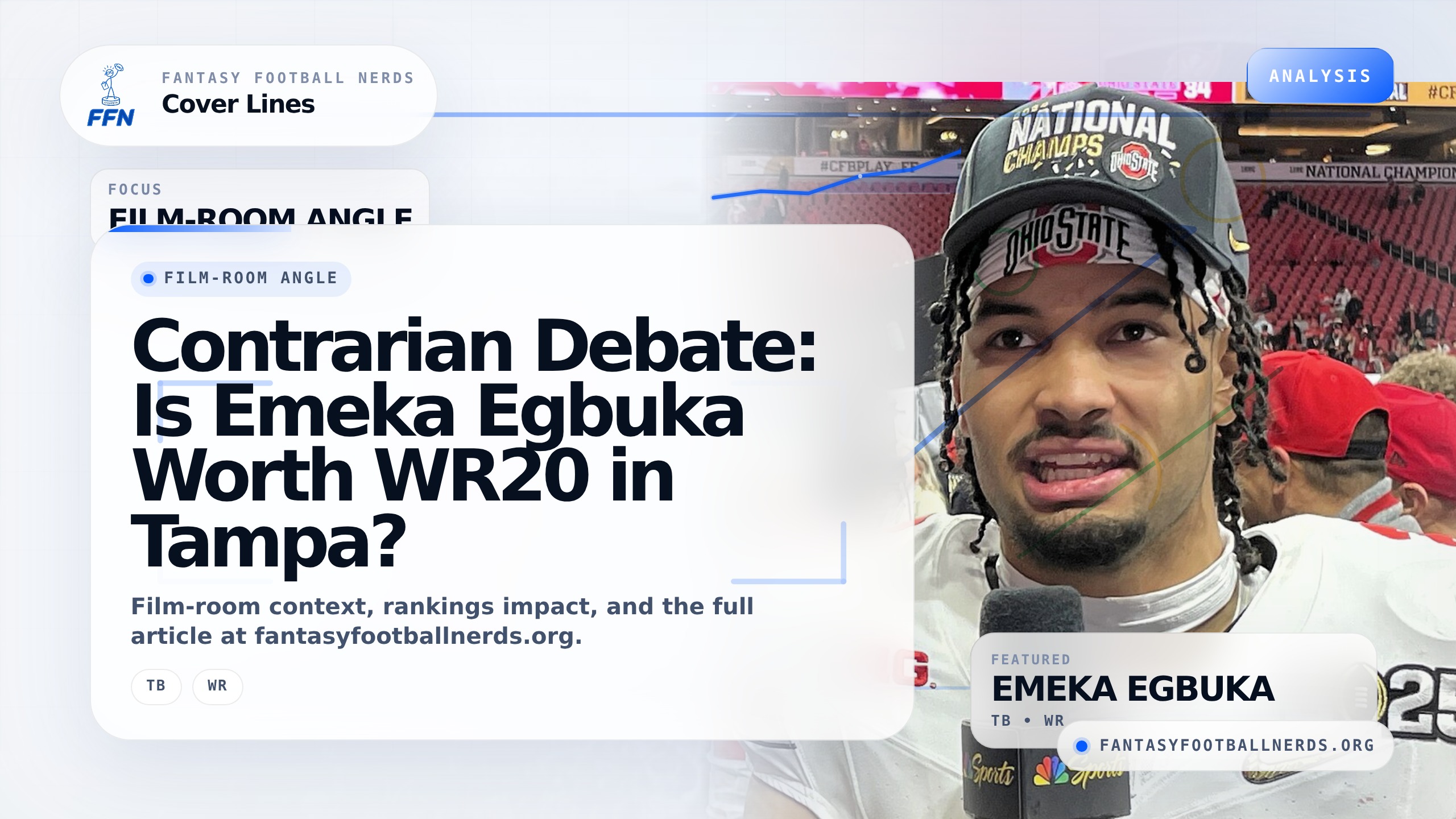
Tetairoa McMillan leads the NFC South plan, while Emeka Egbuka needs more routes and Chris Olave remains the Saints receiver to trust in drafts.
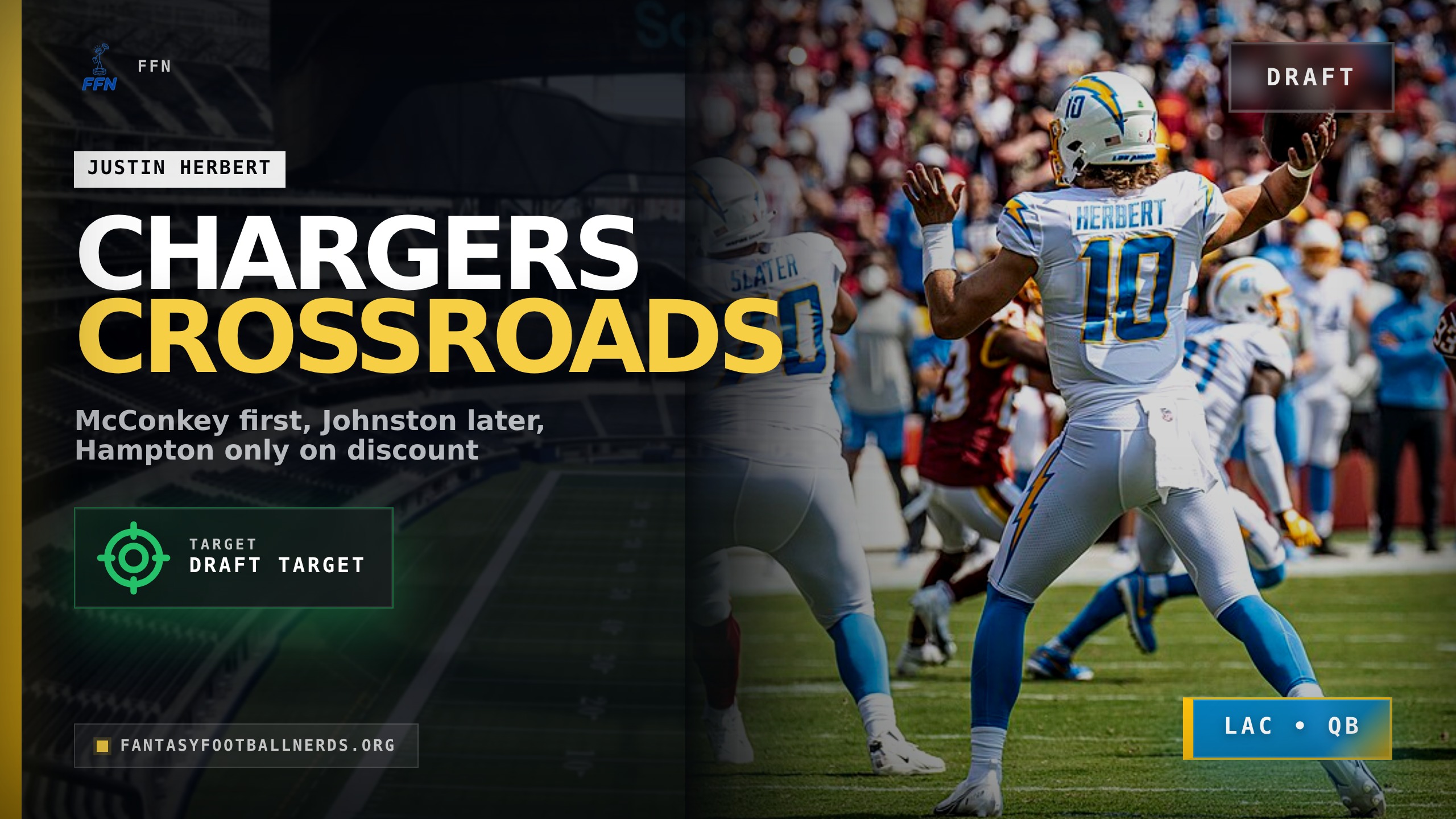
Mike McDaniel can lift the Chargers offense, but McConkey, Hampton, Johnston, and Herbert each need a different camp signal before drafts.
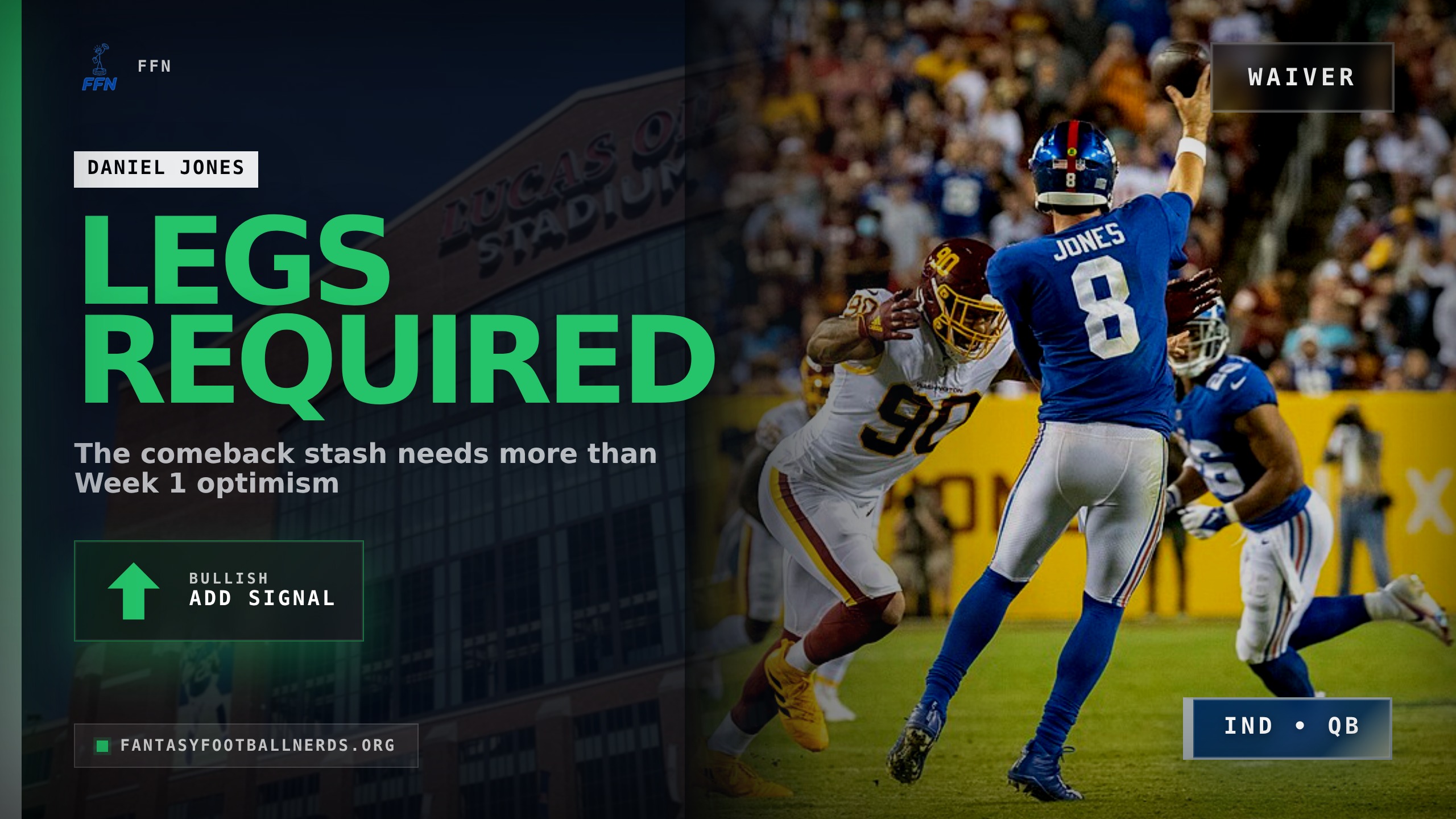
Nico Collins gives AFC South drafts the clean target, while Trevor Lawrence, Daniel Jones, and Gunnar Helm each require a different roster plan.
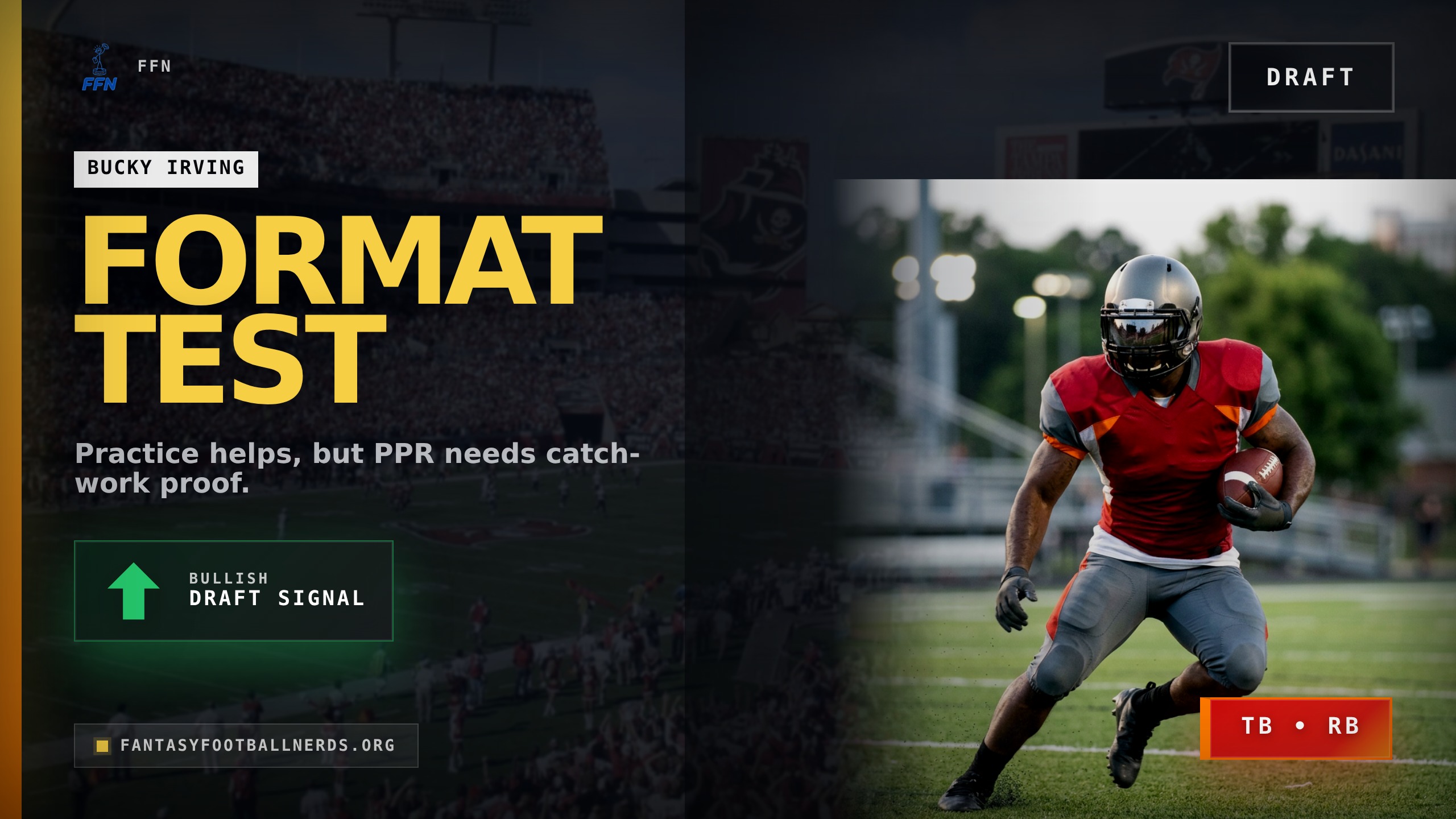
Bucky Irving has the clearest RB room bet, while Tony Pollard beats Tyjae Spears in most builds and the Saints need a passing-down answer.
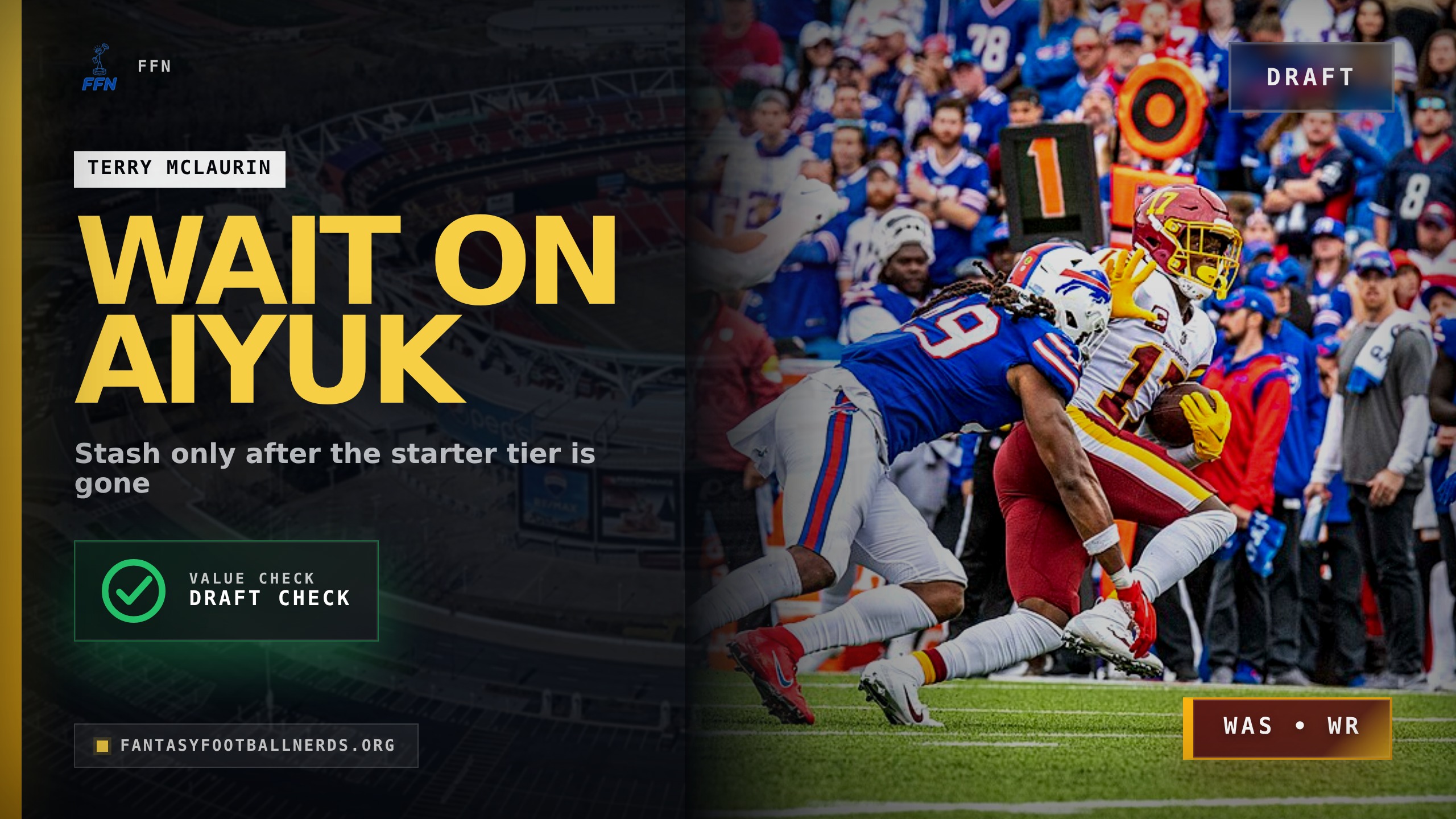
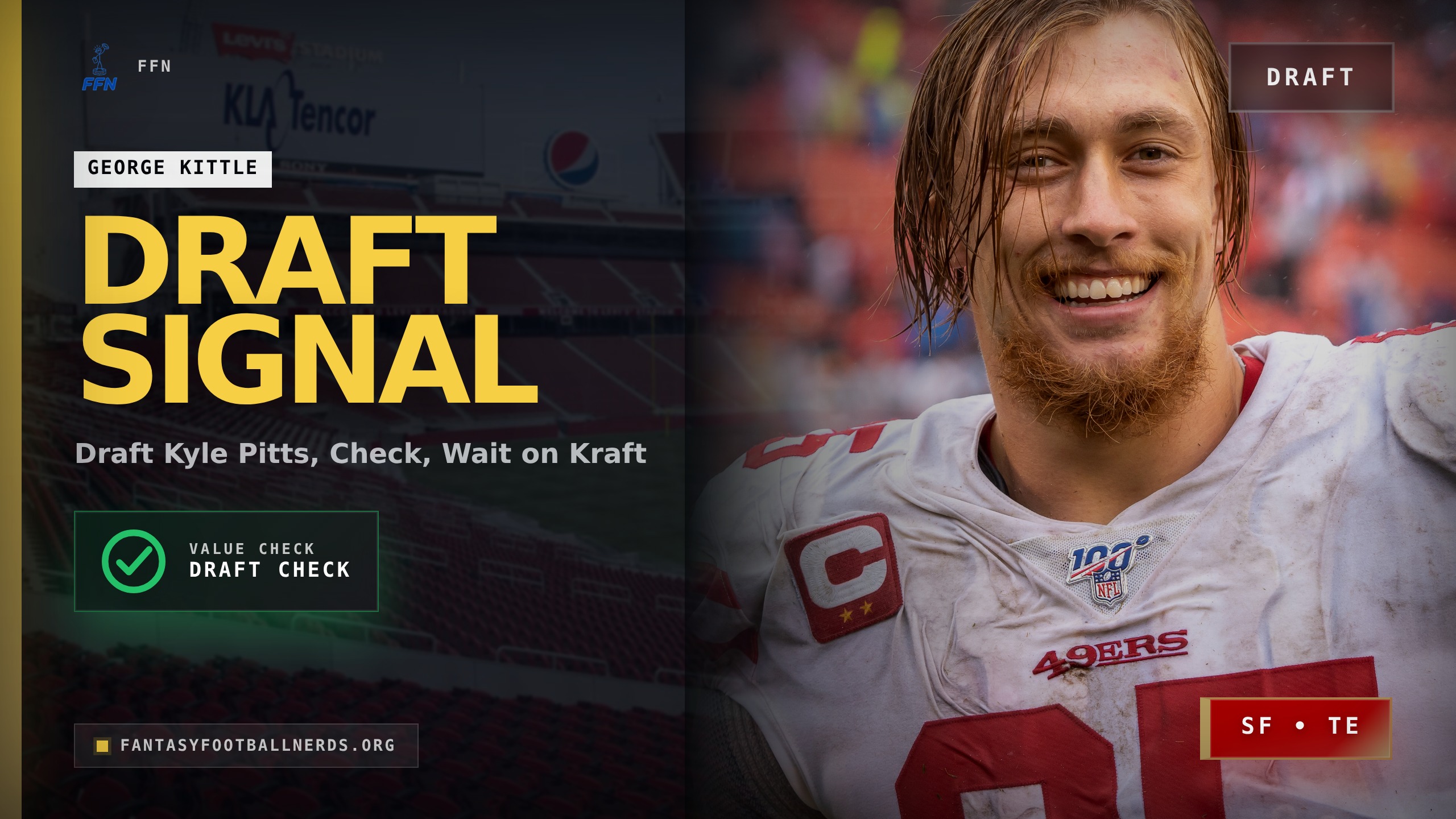
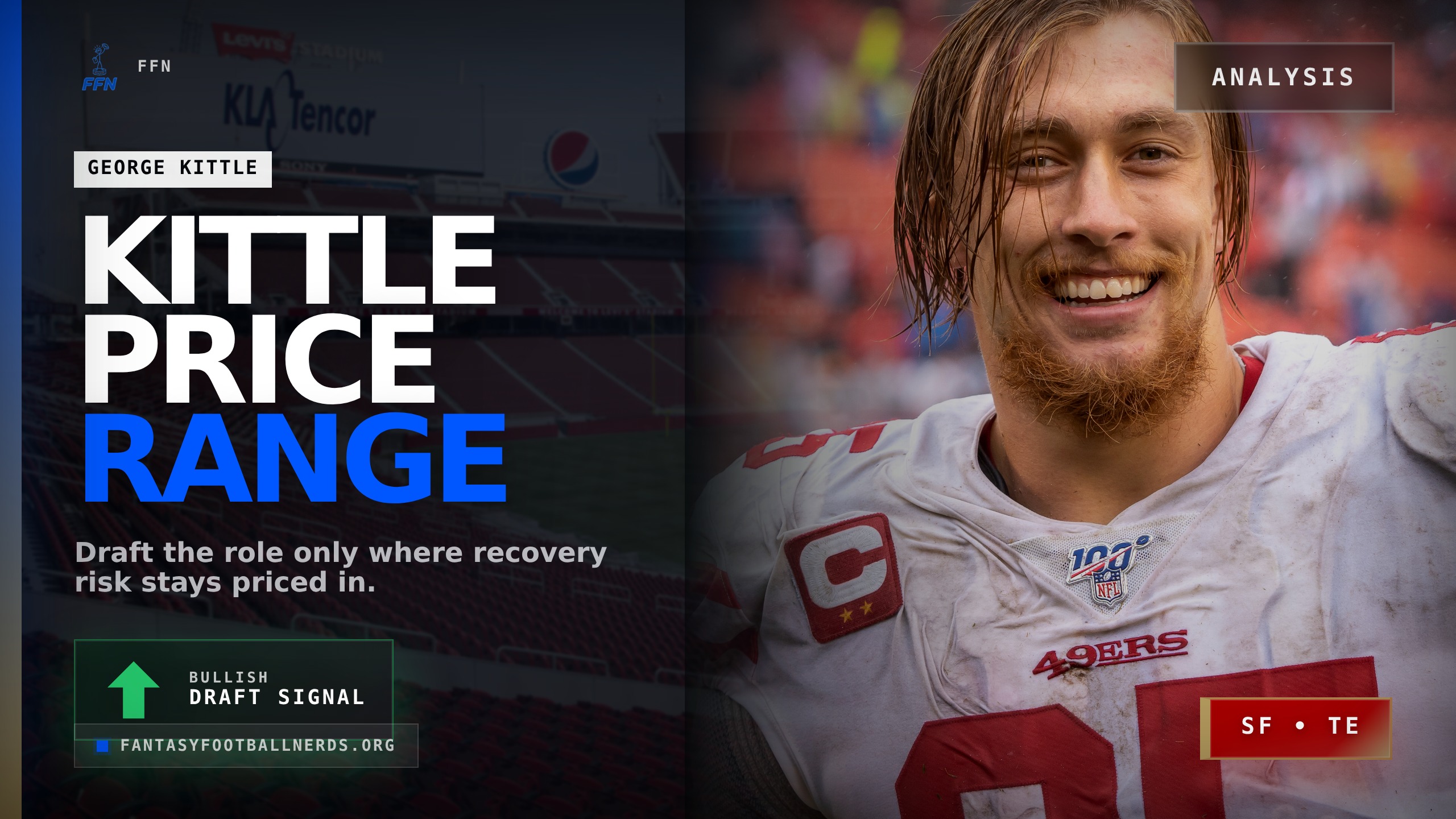
George Kittle's possible Week 1 return changes four 49ers draft decisions. Target Kittle, wait on Aiyuk, monitor Tonges, and take Pearsall later.
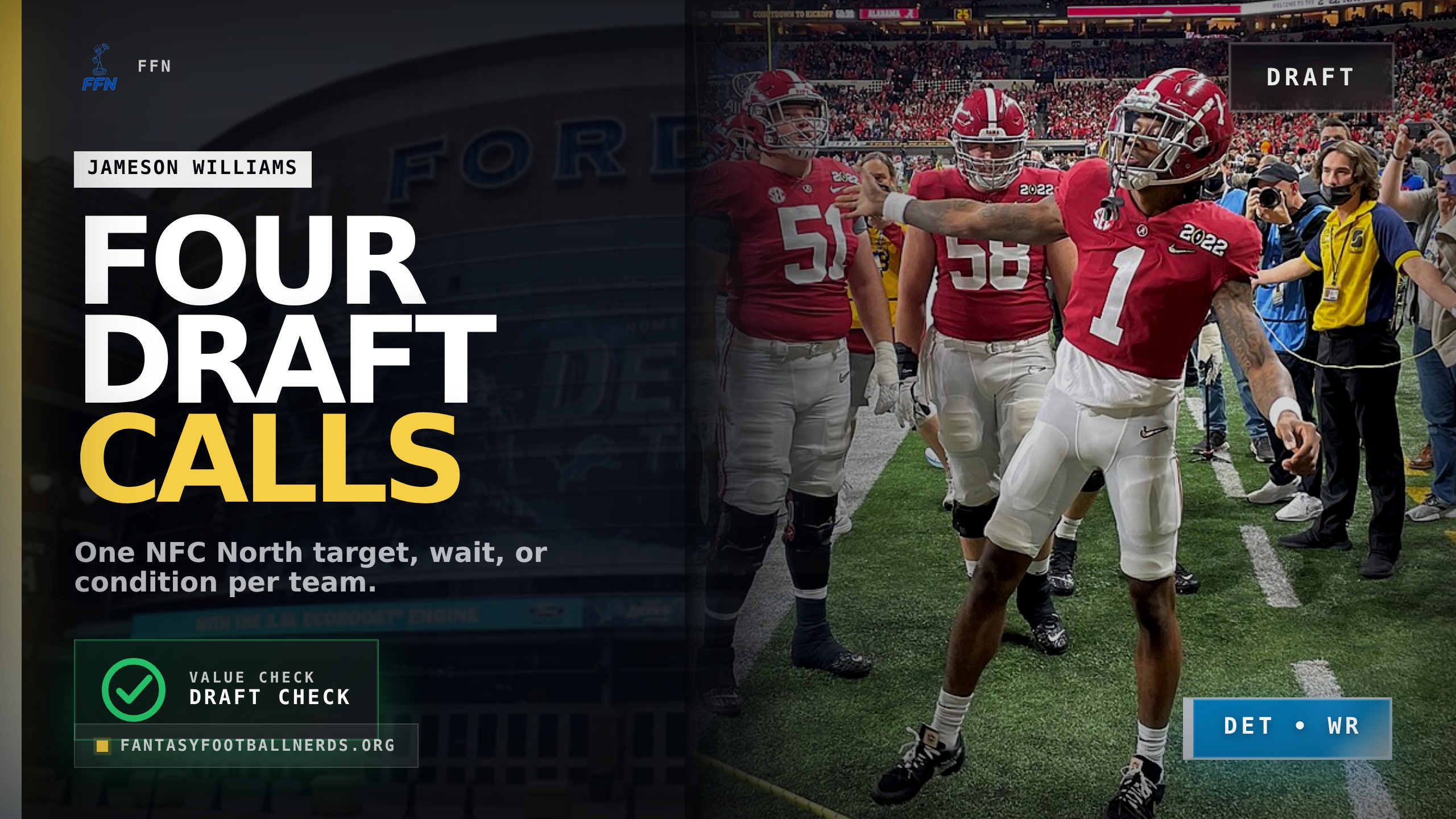
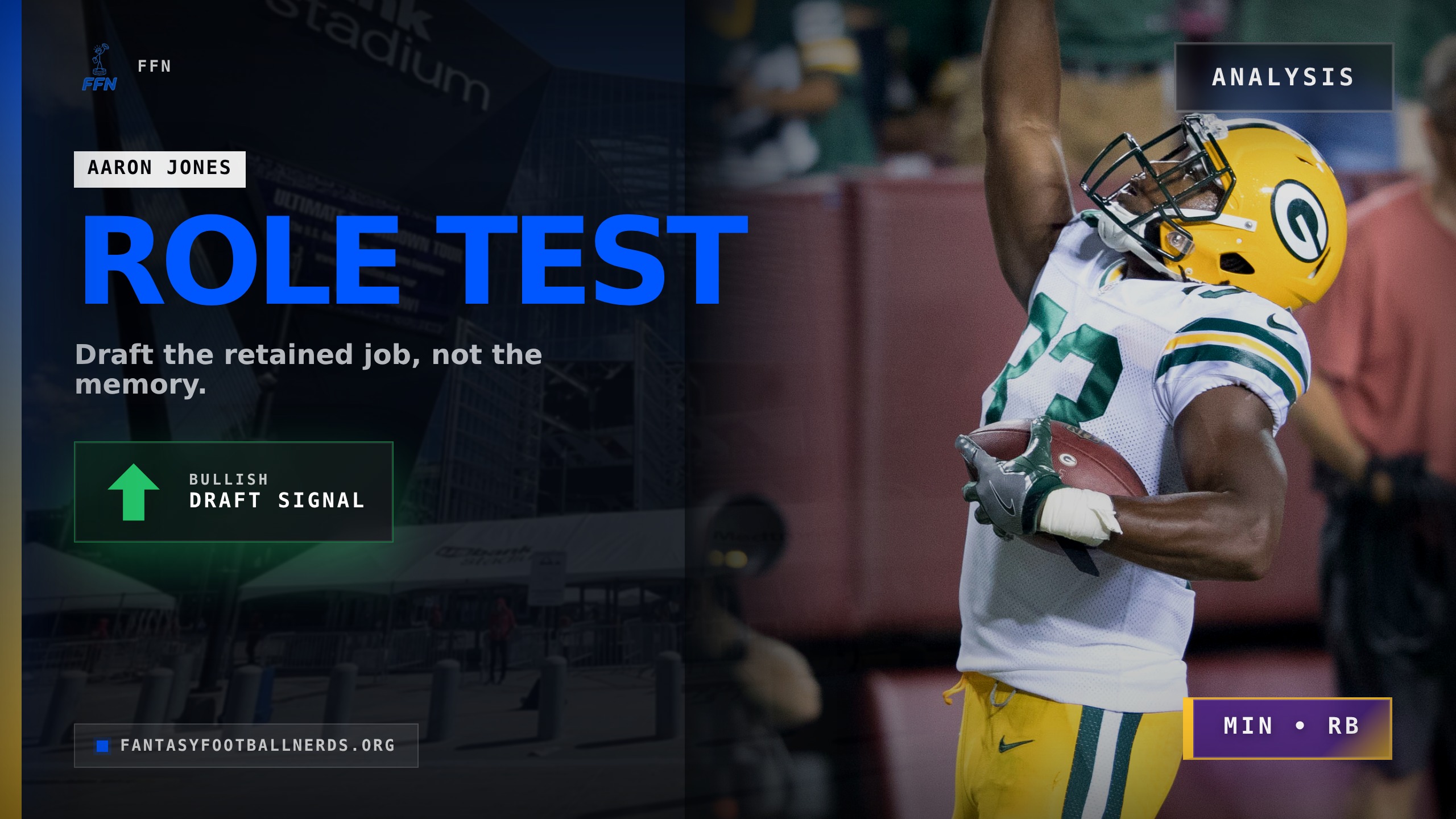
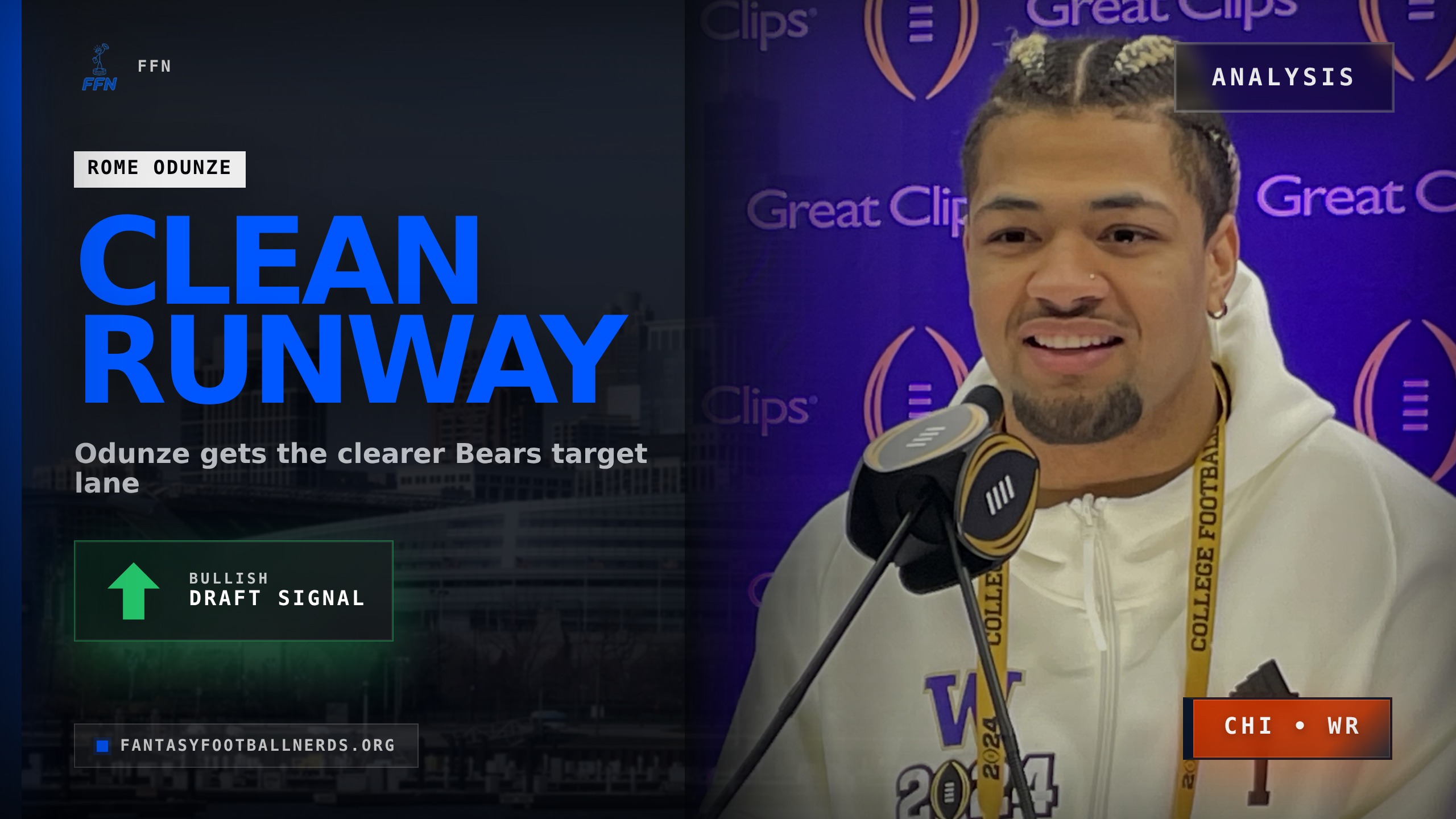
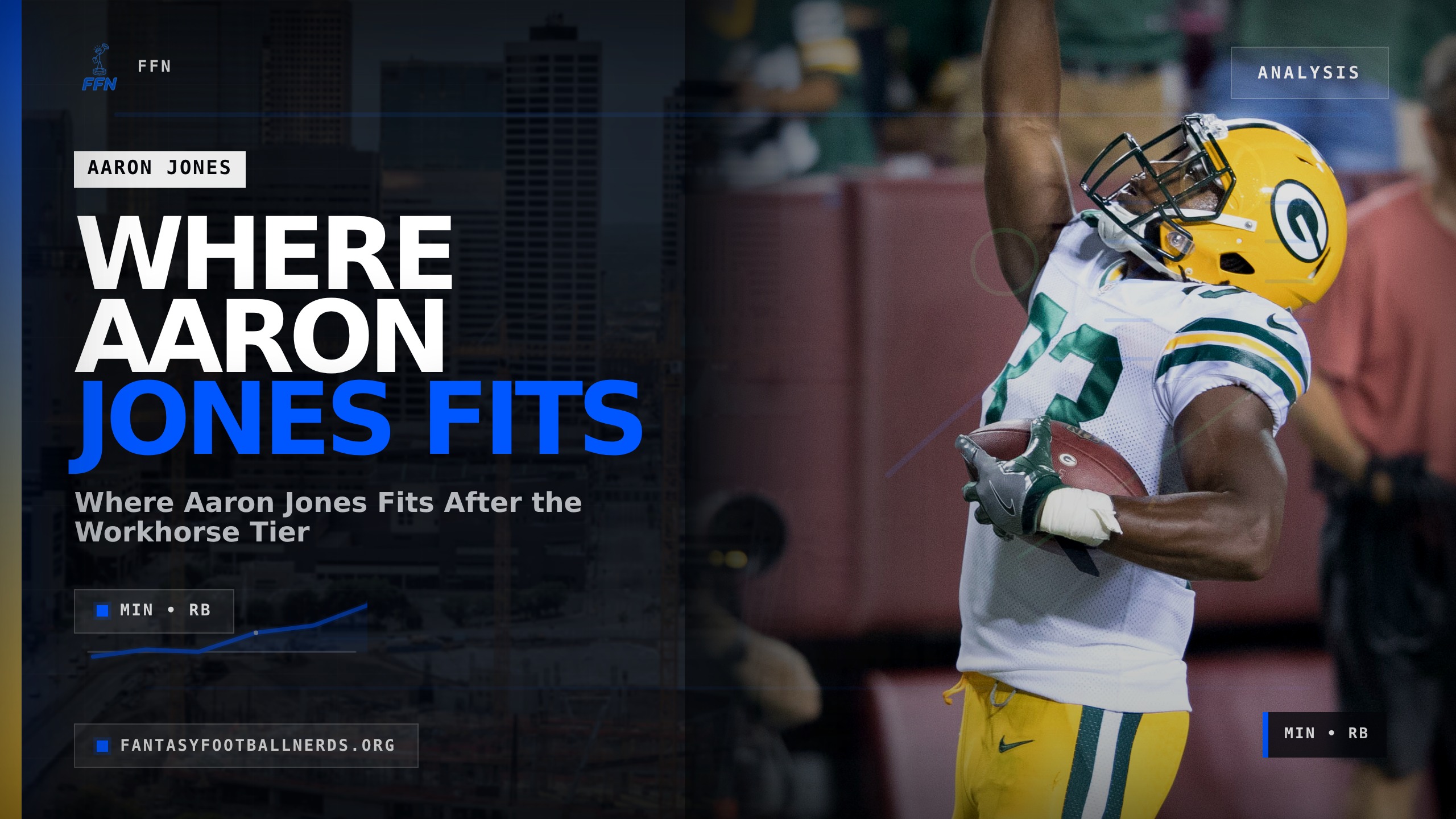
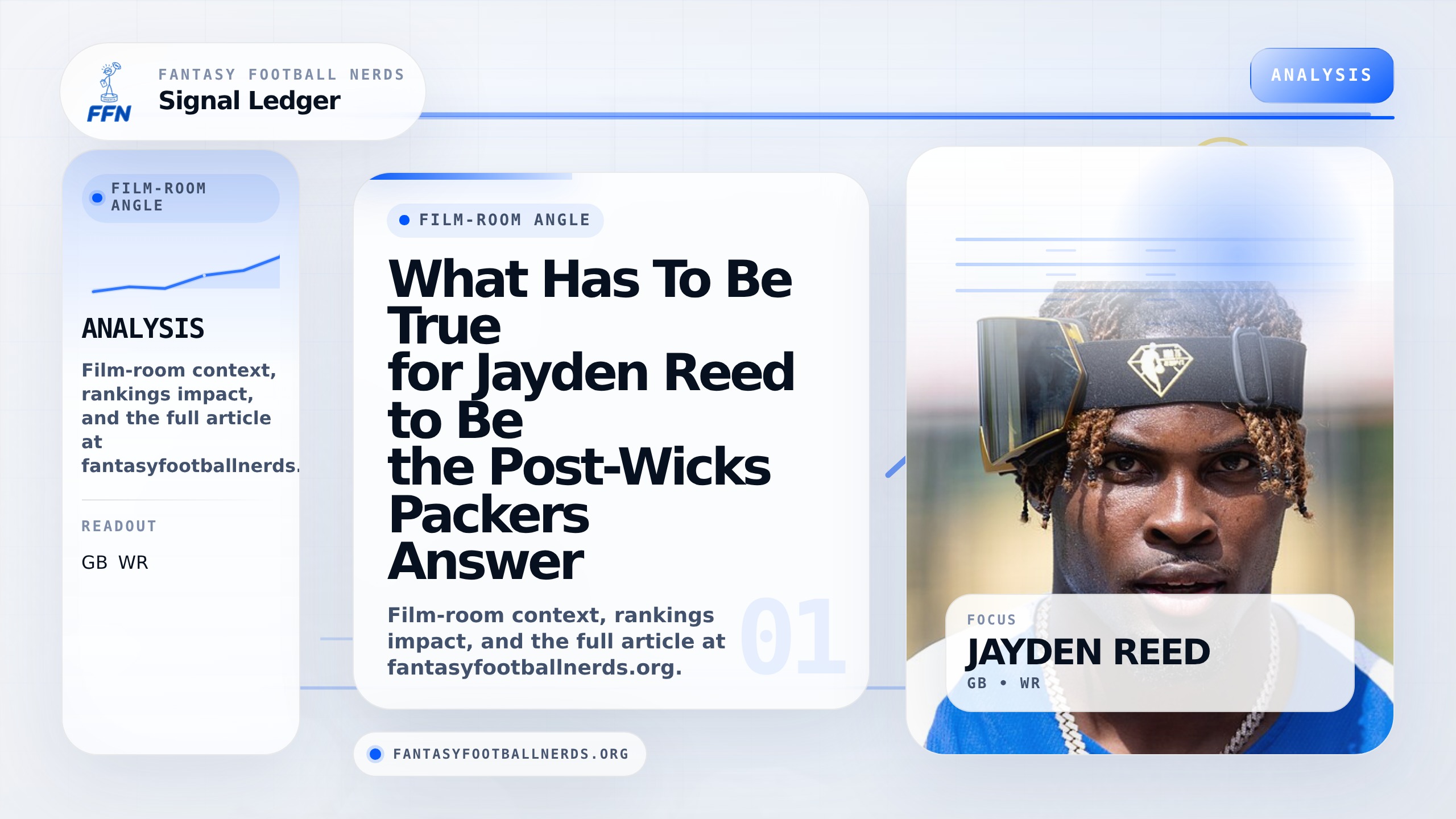
Rome Odunze, Jameson Williams, Jayden Reed, and Aaron Jones require four different draft plans. See the best target, wait, and conditional bet.
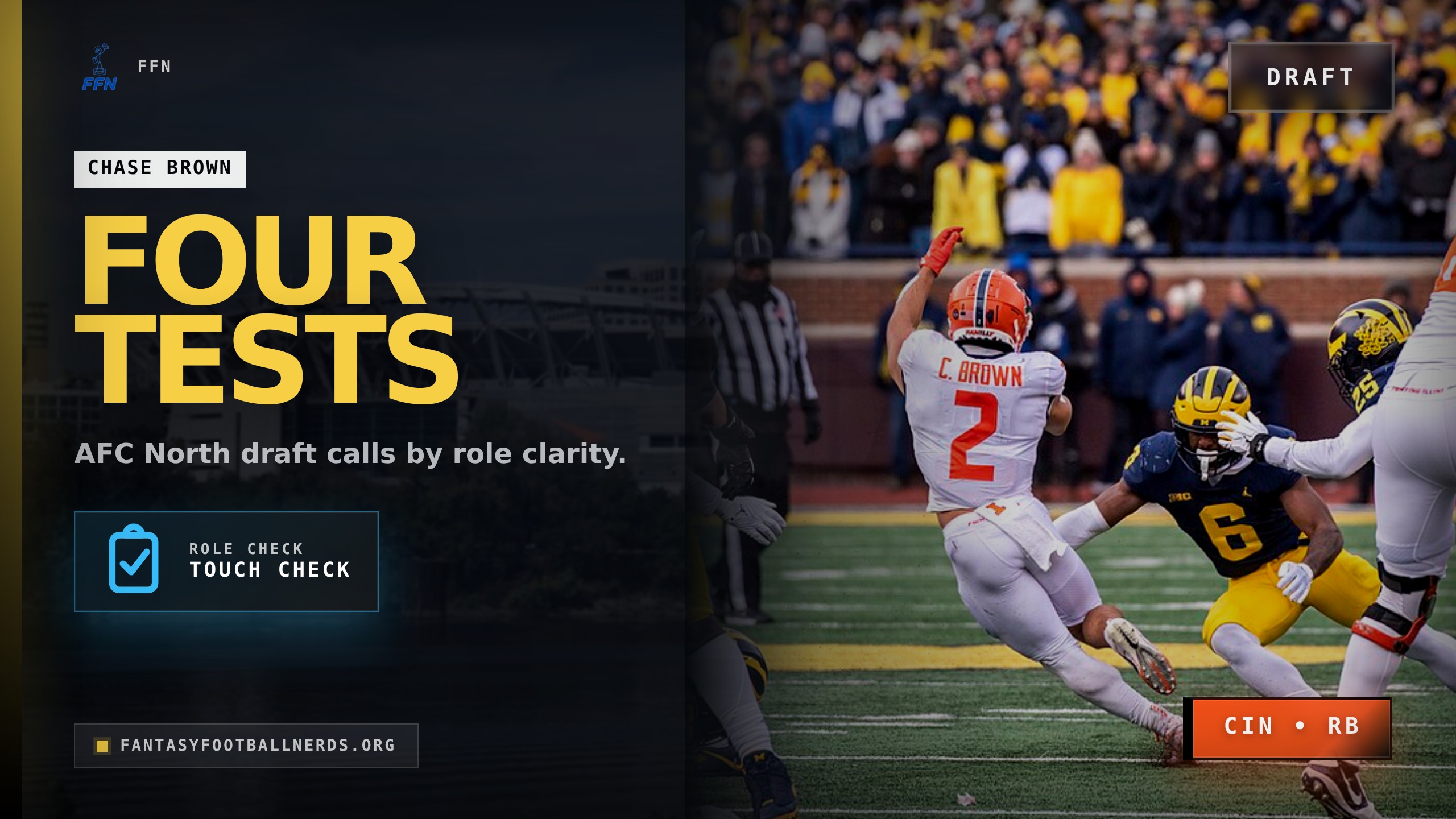
Chase Brown, Zay Flowers, Jerry Jeudy, DK Metcalf, and Michael Pittman all need different draft rules. Here's the AFC North order to trust.
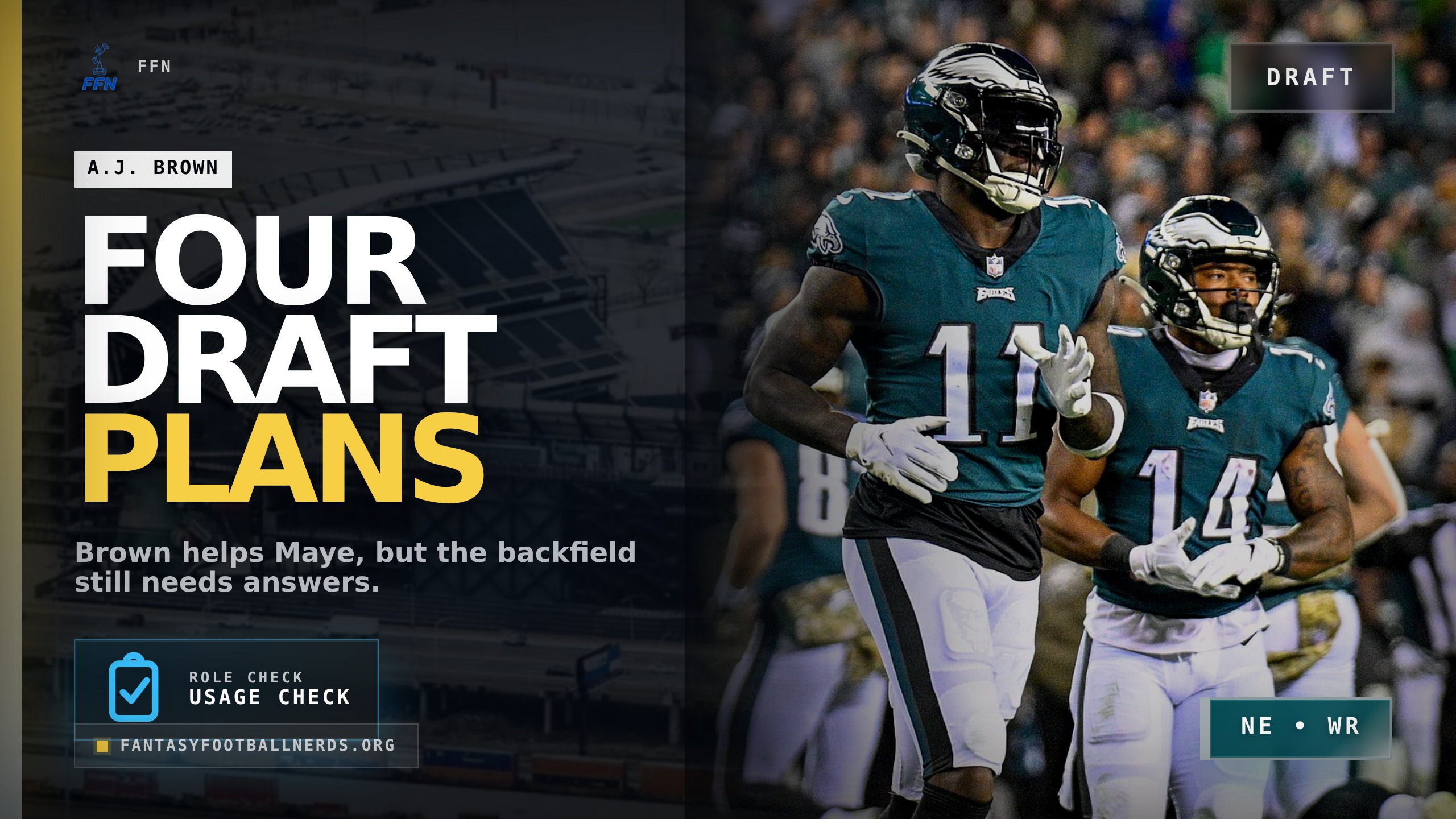
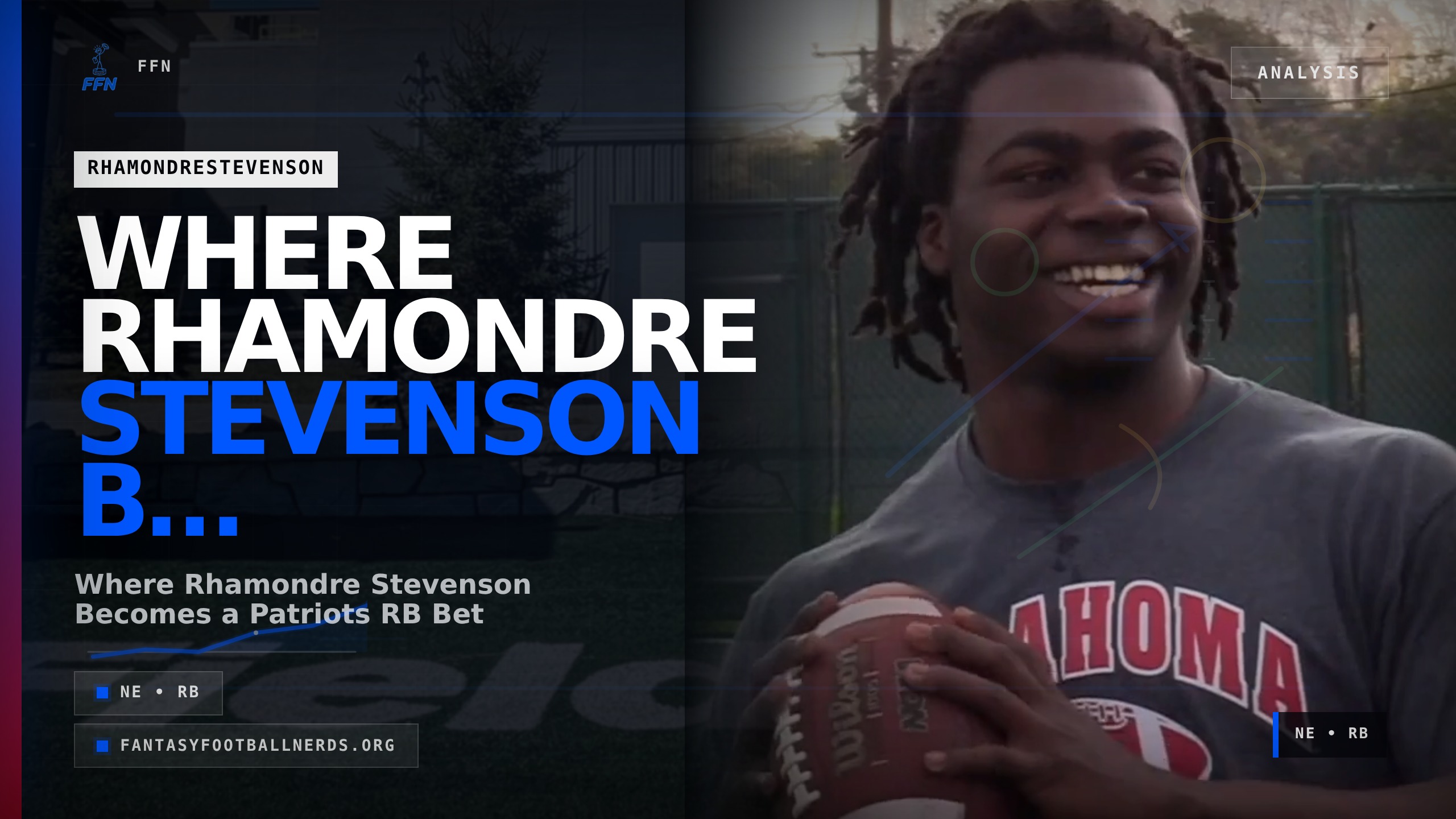
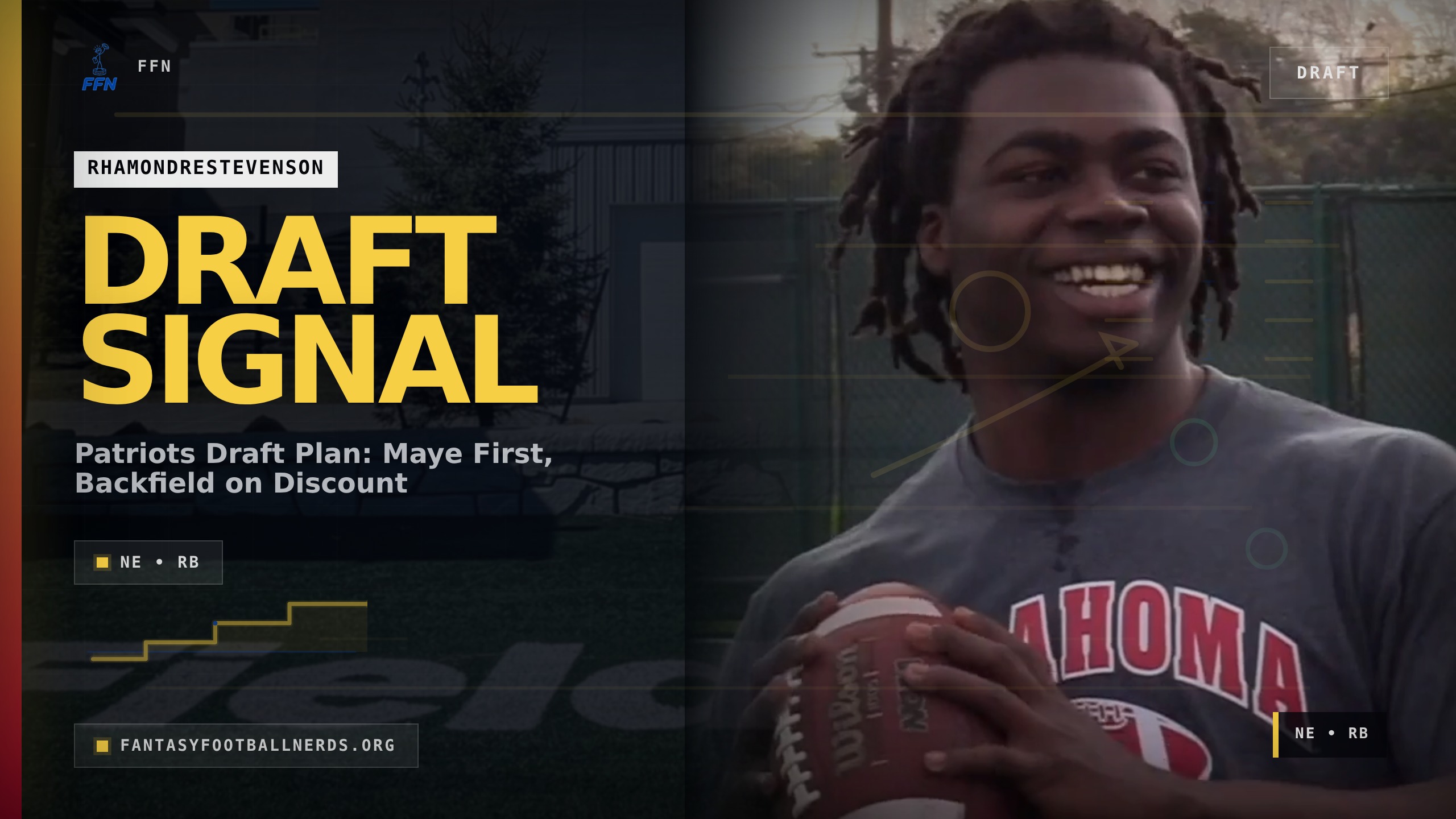
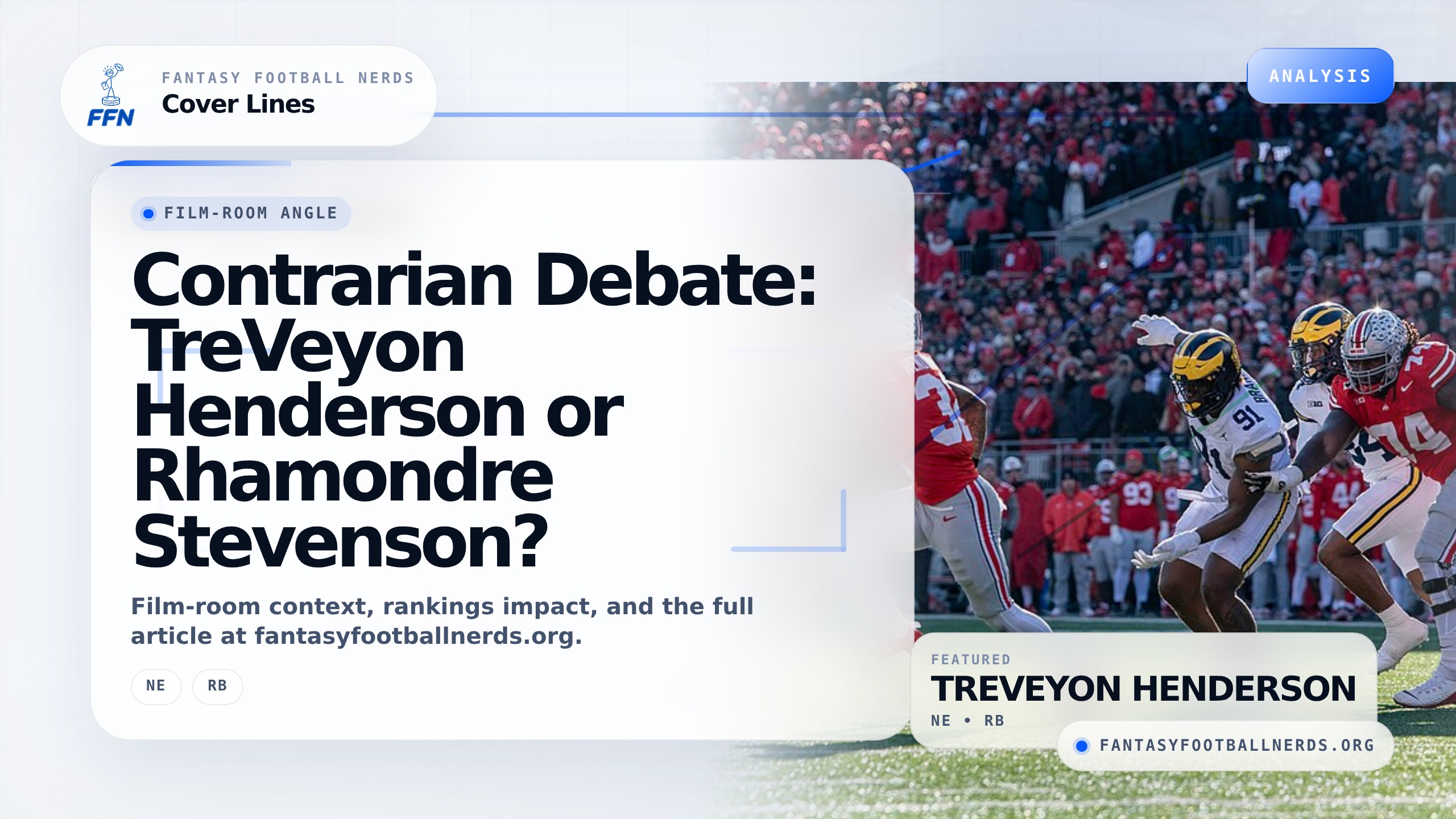
A.J. Brown gives Drake Maye a true first read, but the Patriots backfield still calls for different plans for Rhamondre Stevenson and TreVeyon Henderson.
Stefon Diggs, Brock Bowers, Jonathan Taylor, and the Giants' receivers are drawing camp buzz. Here is the fantasy move for each situation.
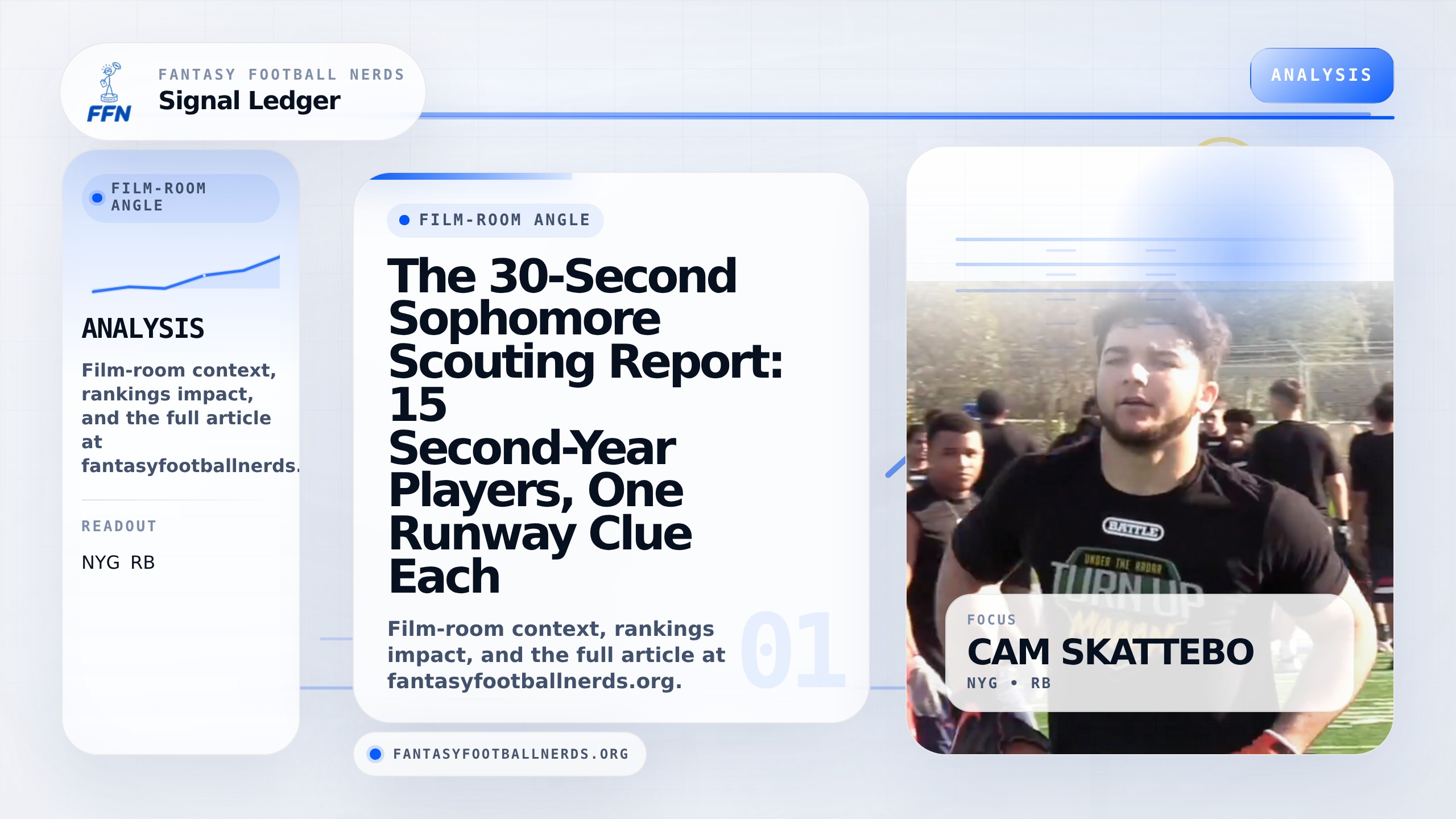
Jonathan Taylor, Cam Skattebo, and Bucky Irving face different camp tests. Use third downs, hurry-up work, and red-zone snaps to reset your RB tiers.
Malik Willis could turn Miami into a Superflex stash offense, while Dolphins receivers need first-team targets before they belong on fantasy benches.
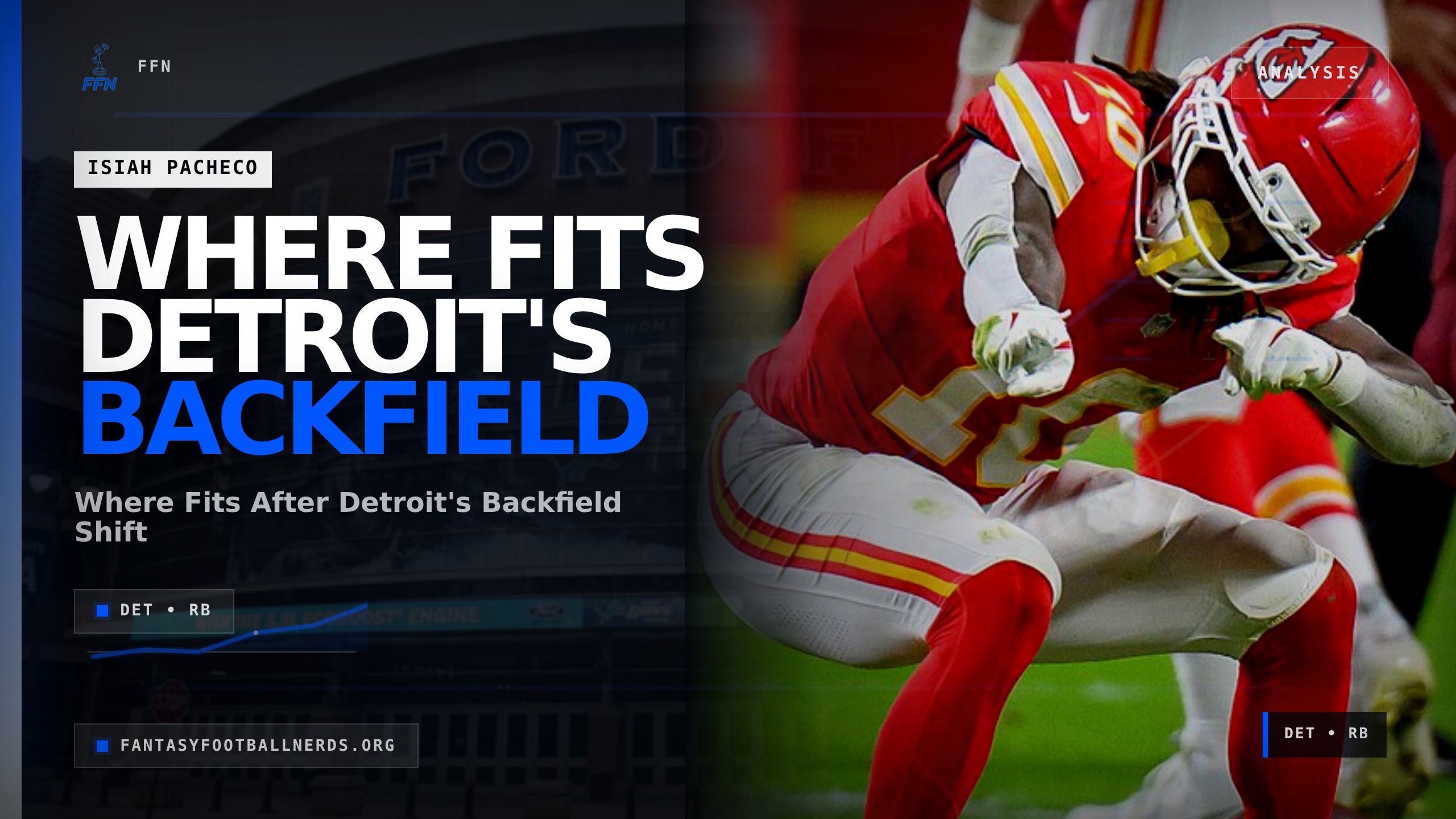
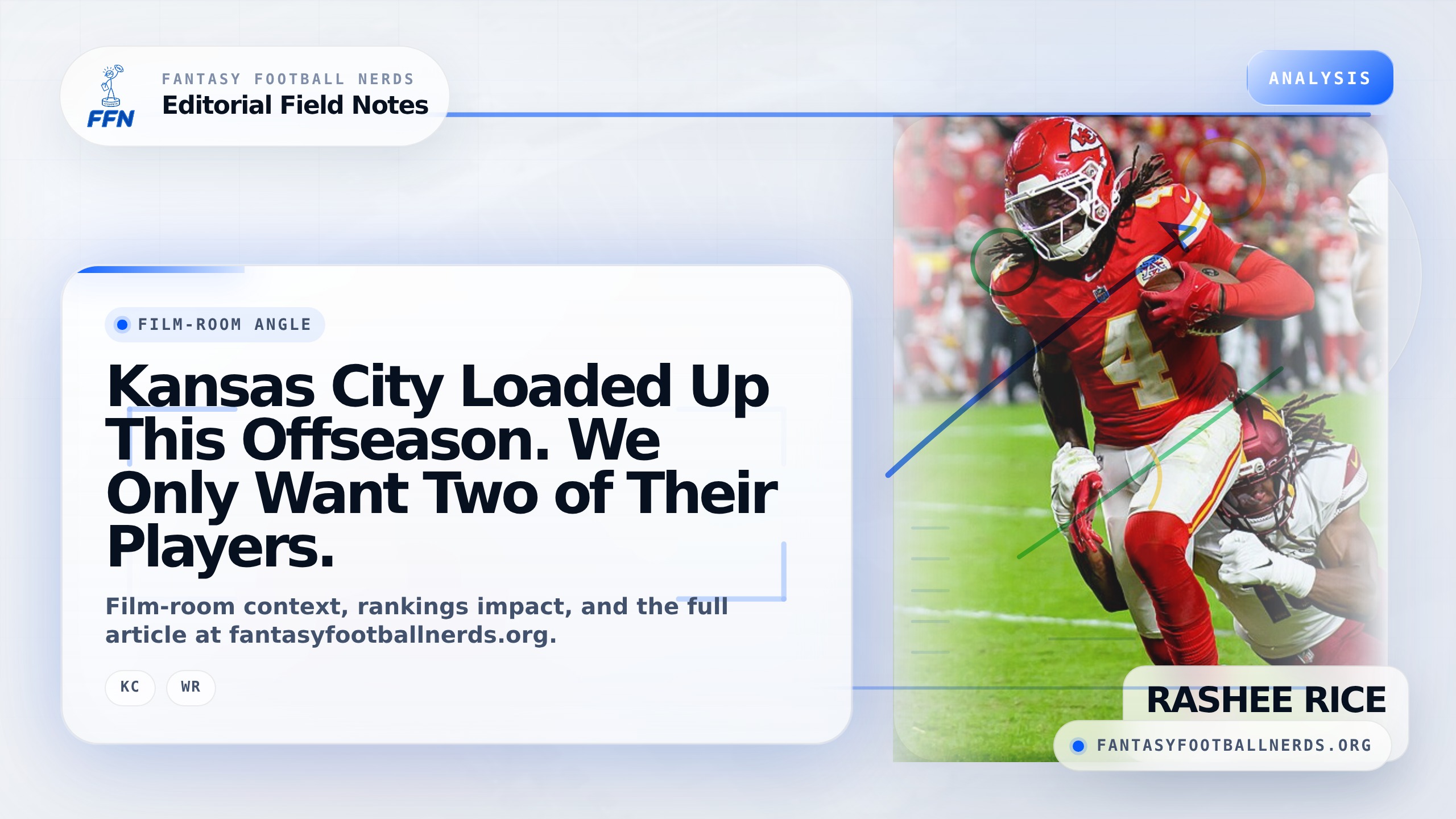
Rashee Rice has an established Kansas City role, while Isiah Pacheco needs Detroit to define his workload. Here is how to draft each risk.
The elite tight end tier looks simple until scoring format matters. Sort target volume, snap safety, and touchdown ceiling before you pick.
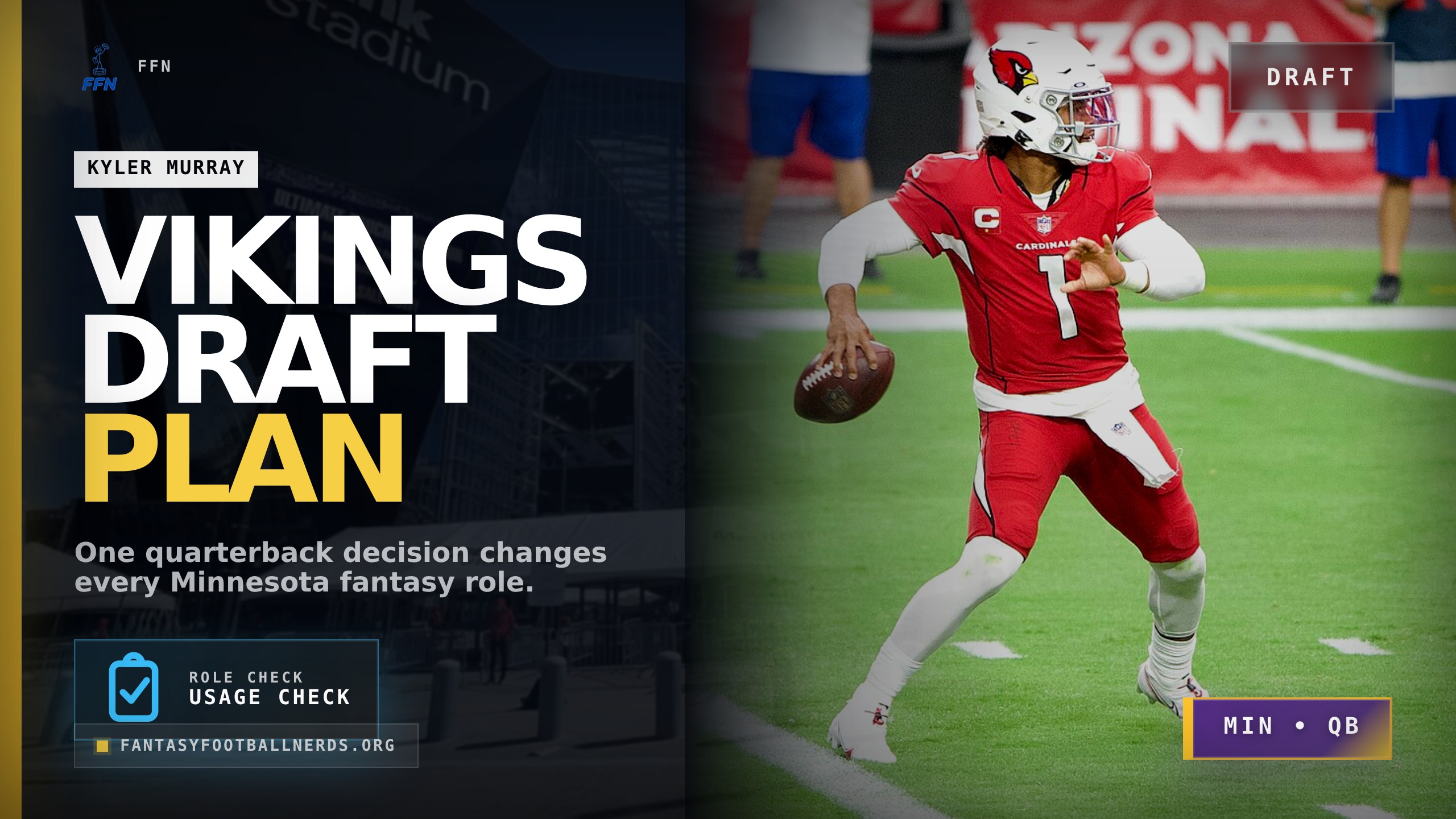
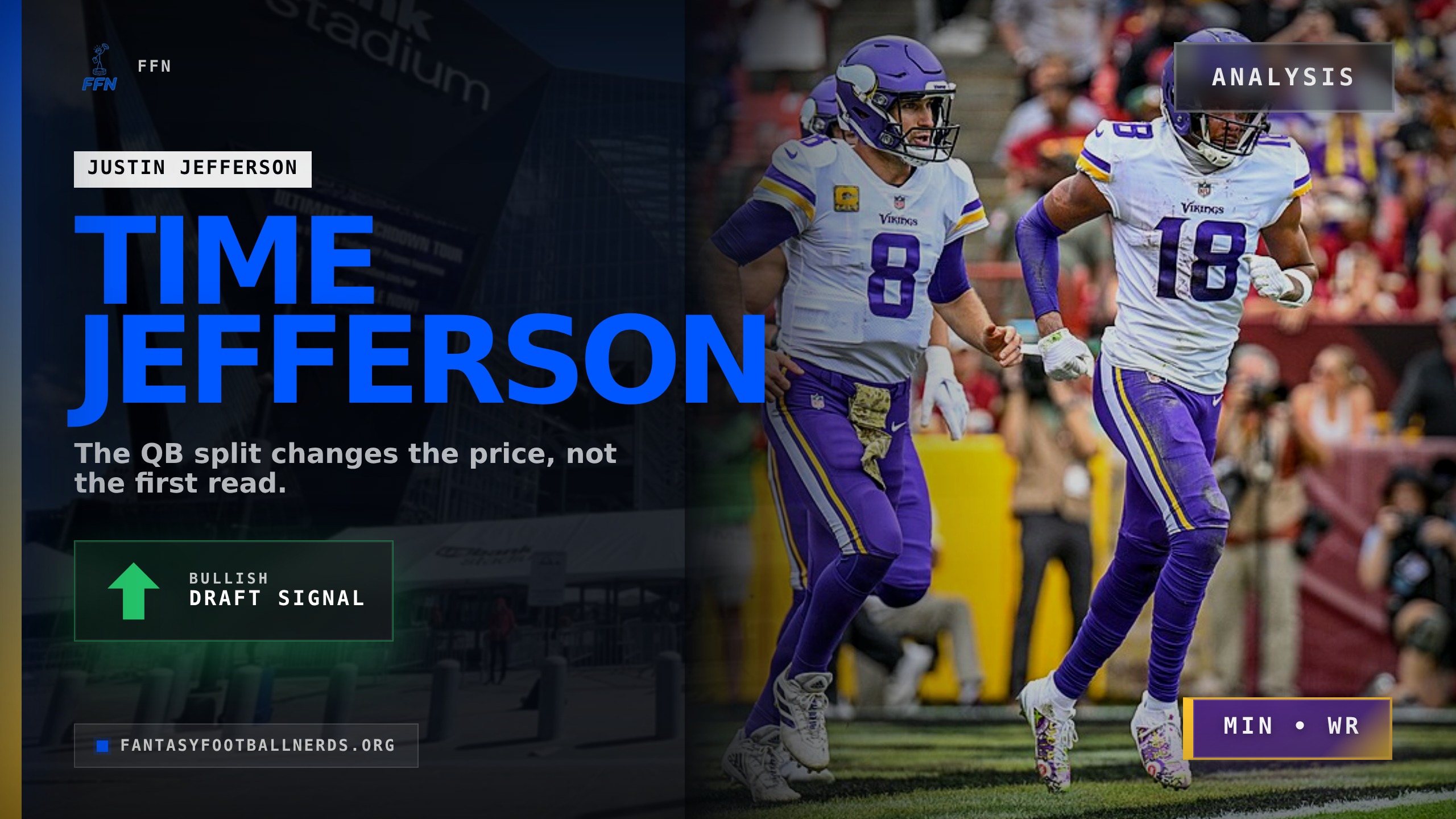
Minnesota's quarterback battle changes every fantasy role. Keep Jefferson in the elite tier, target Addison later, and wait for clarity elsewhere.
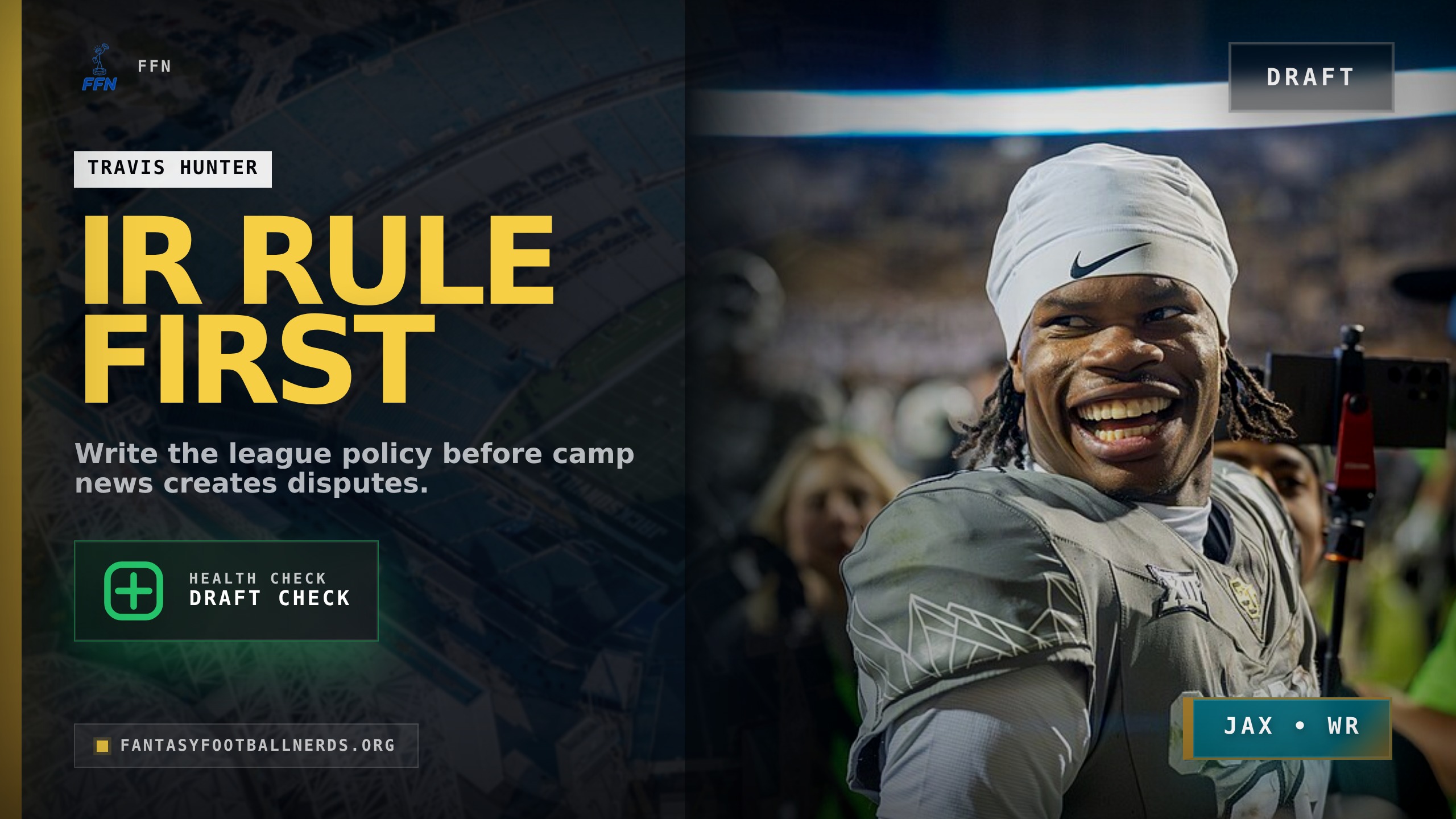
Set the IR trigger, first waiver run and roster-cut clock before Travis Hunter uncertainty becomes a roster loophole or league argument.
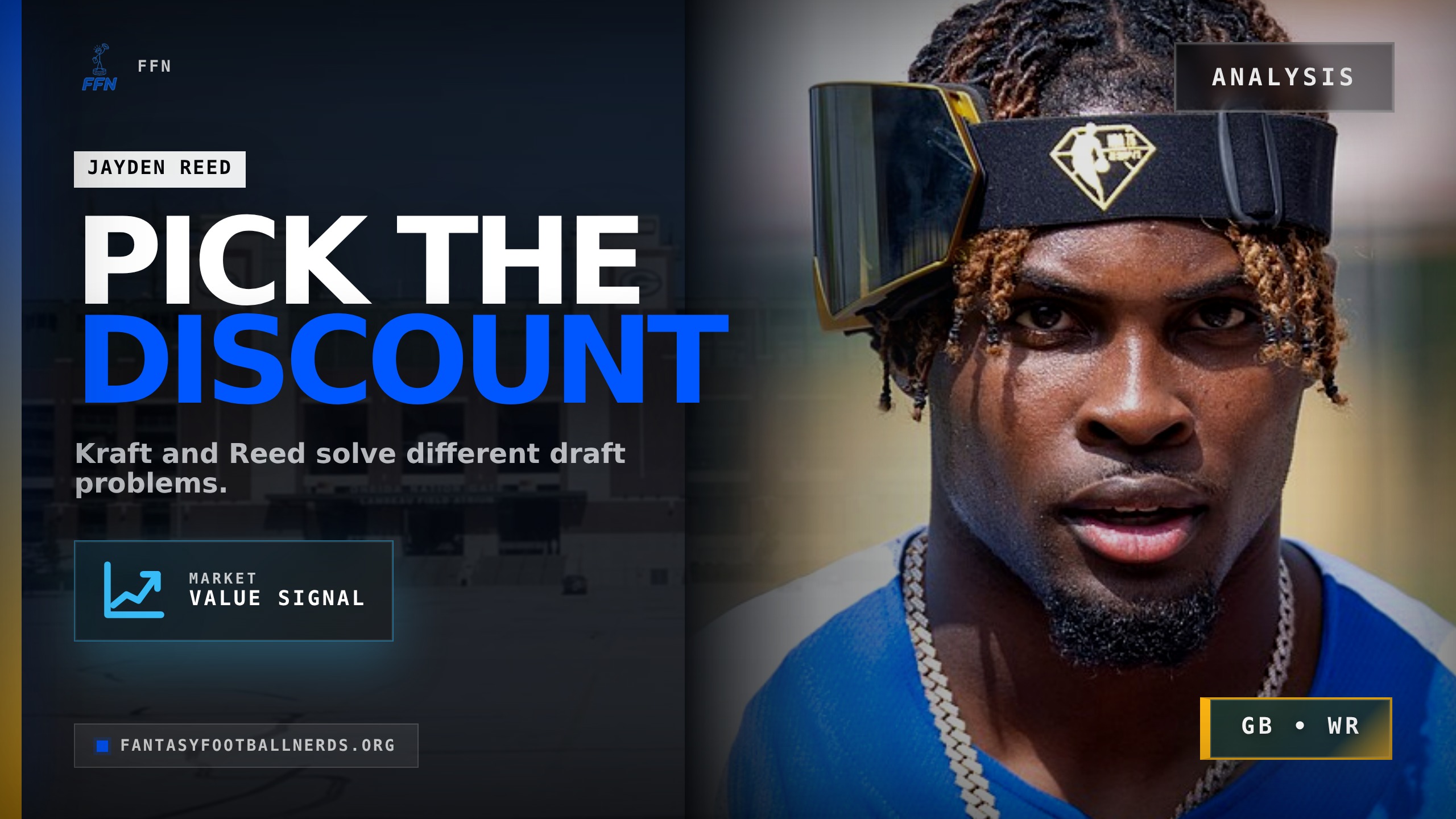
Tucker Kraft and Jayden Reed both look playable, but the right Packers discount depends on whether your roster needs tight end stability or bench upside.
Gunnar Helm has the Titans tight end opening after Chigoziem Okonkwo's move, but drafters should stash him only where benches or scoring reward patience.
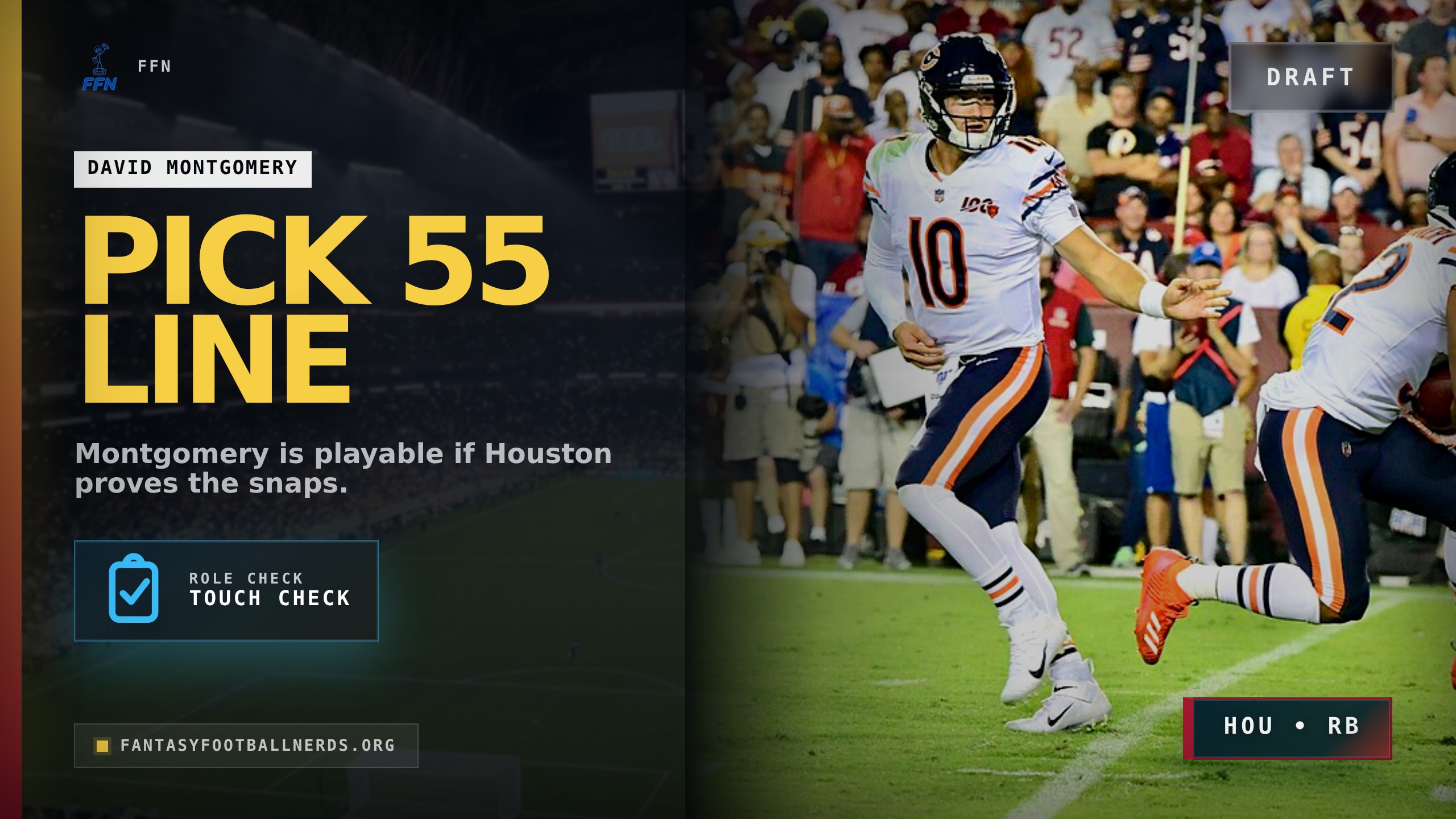
David Montgomery has a real Houston RB2 path, but the draft line matters. Buy the three-down signal after pick 55, not inside the top 50.
Tank Dell and Jaylin Noel both look cheap, but the draft move depends on clearance, routes, and bench depth before you spend a late Texans pick.
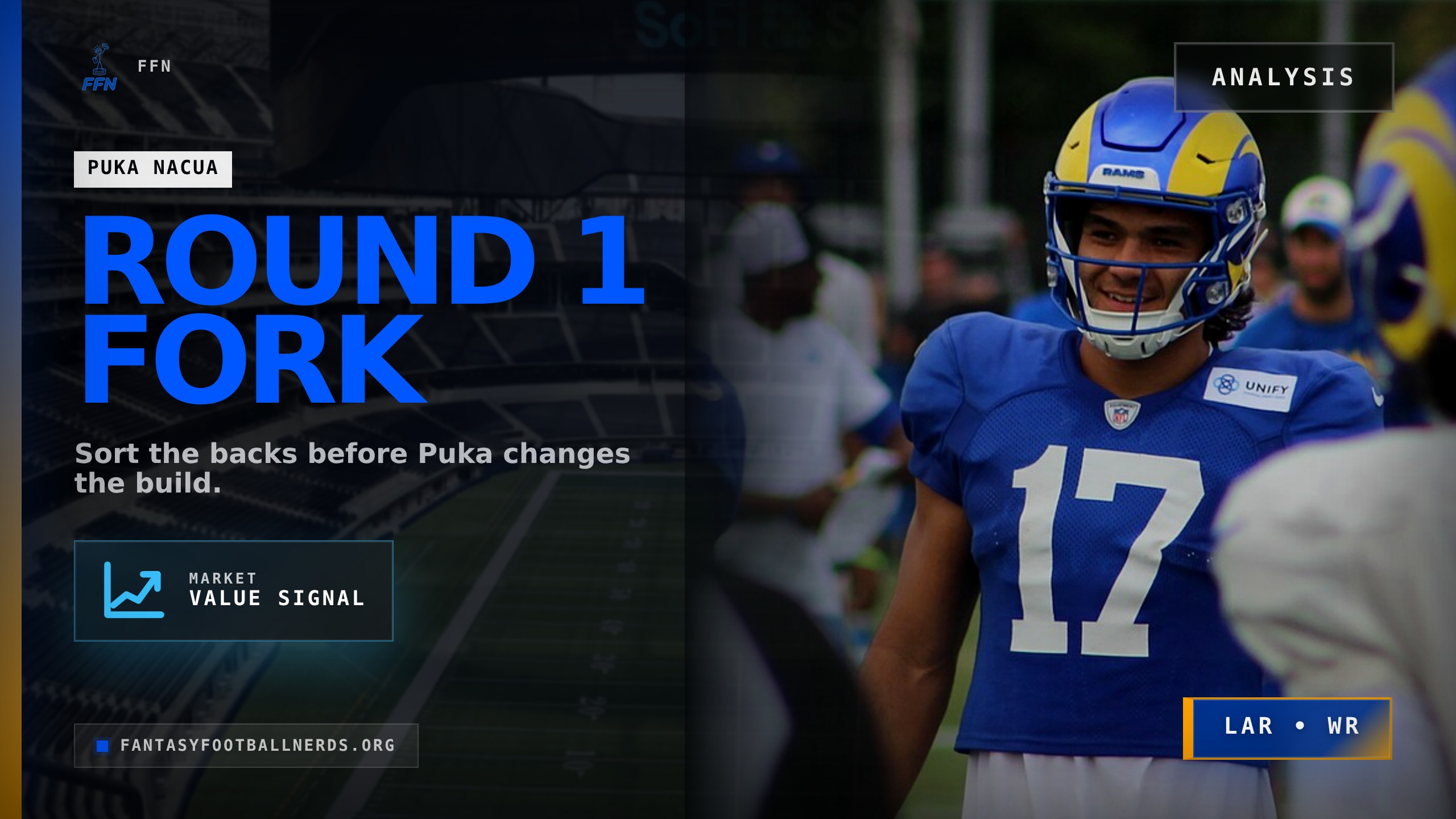
The Round 1 RB tier still starts with Bijan Robinson and Jahmyr Gibbs, but Puka Nacua changes the build when WR volume comes first.
Ray Davis leads the late RB stash board after pick 150, while Jordan Mason, Chris Rodriguez, and Terrell Jennings need sharper role checks.
Cam Skattebo has camp buzz, but drafters should start exposure near pick 41 only if the Giants verify passing-game snaps and goal-line trust.
Green Bay has three draftable pass-catcher profiles, but Golden, Kraft, and Reed only make sense when the scoring format matches the role.
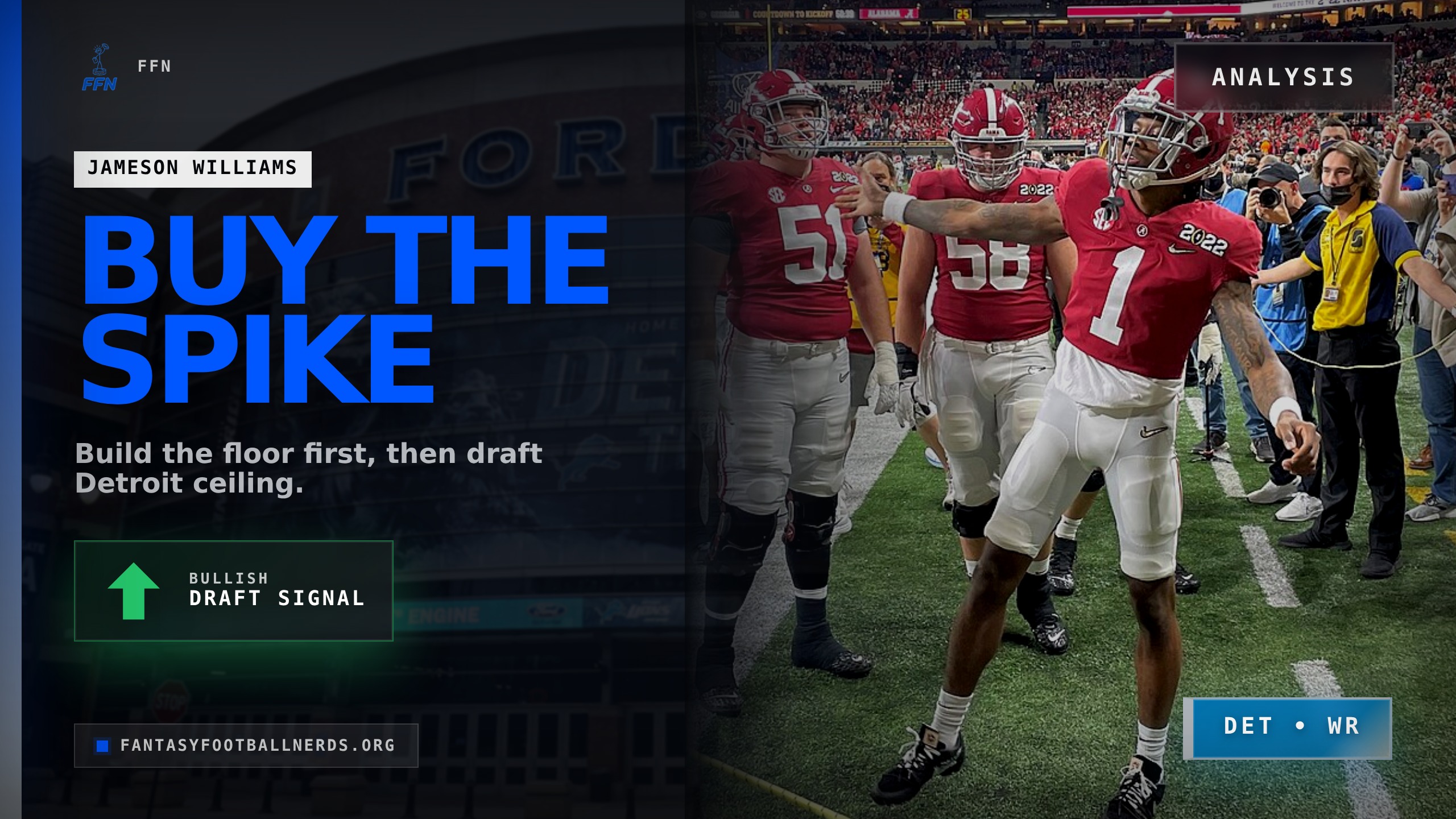
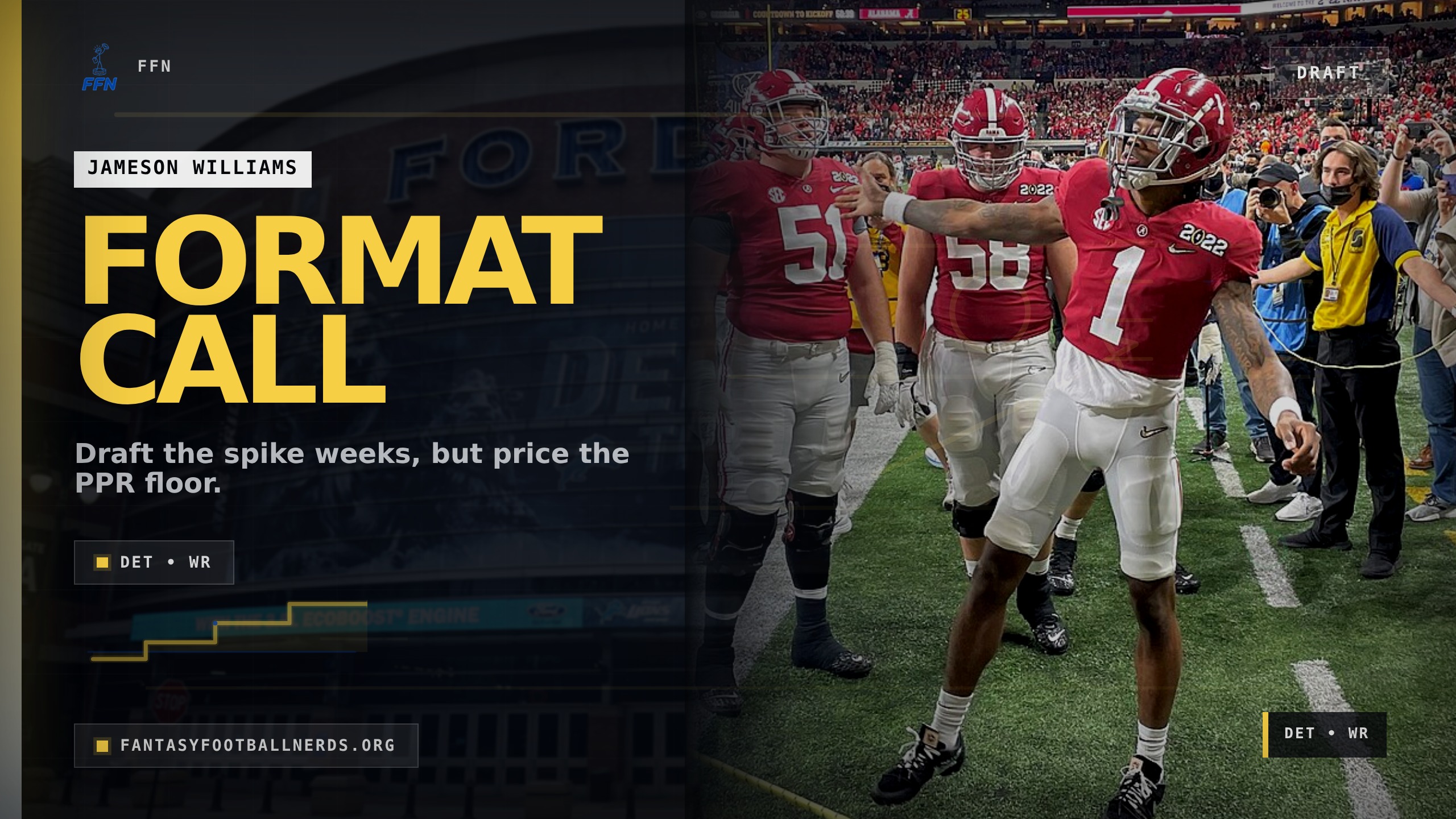
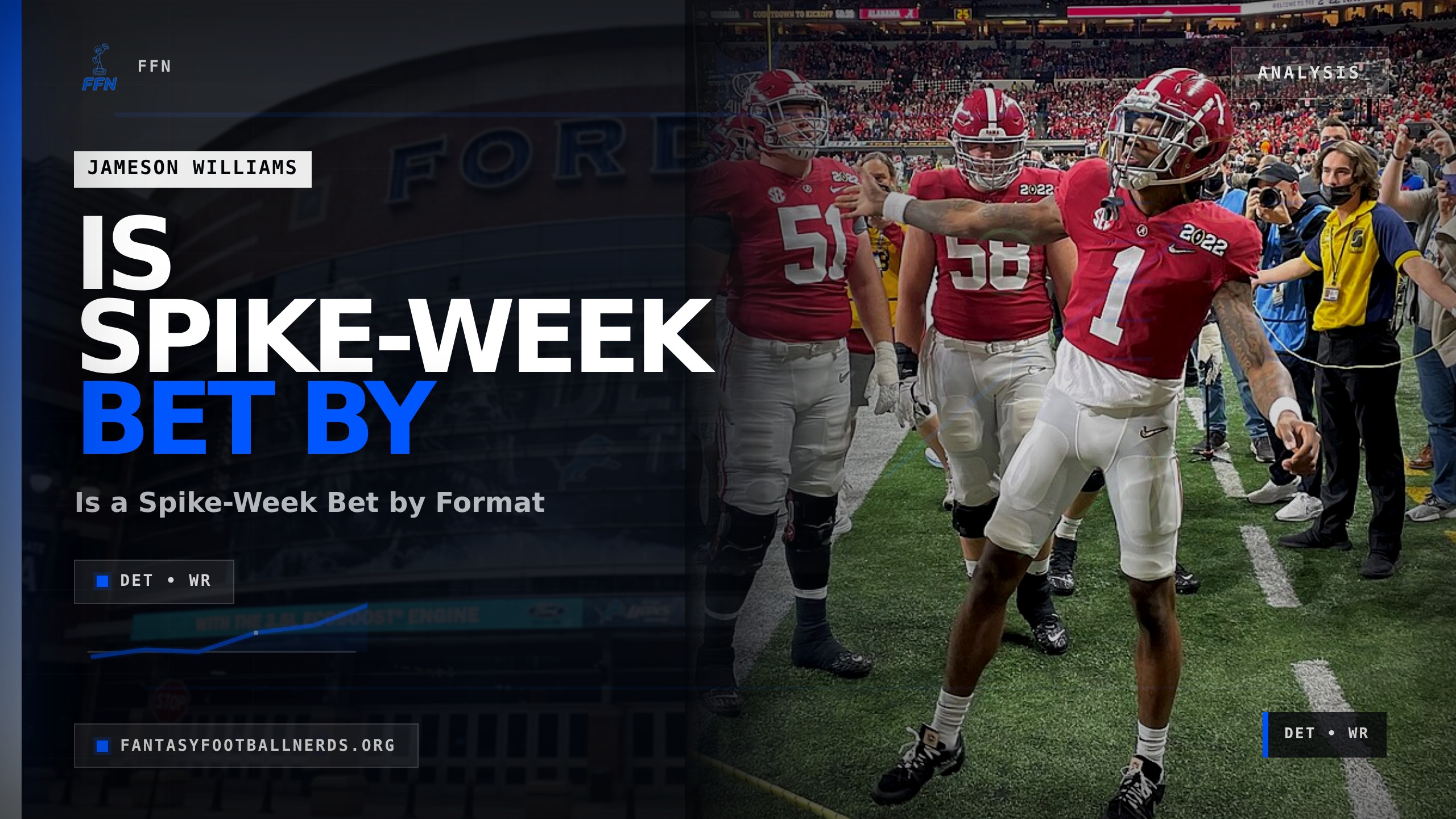
Jameson Williams can justify a fifth-round PPR price only if Detroit keeps him on full-time routes and still leaves enough room behind its top target earners for real spike-week value.
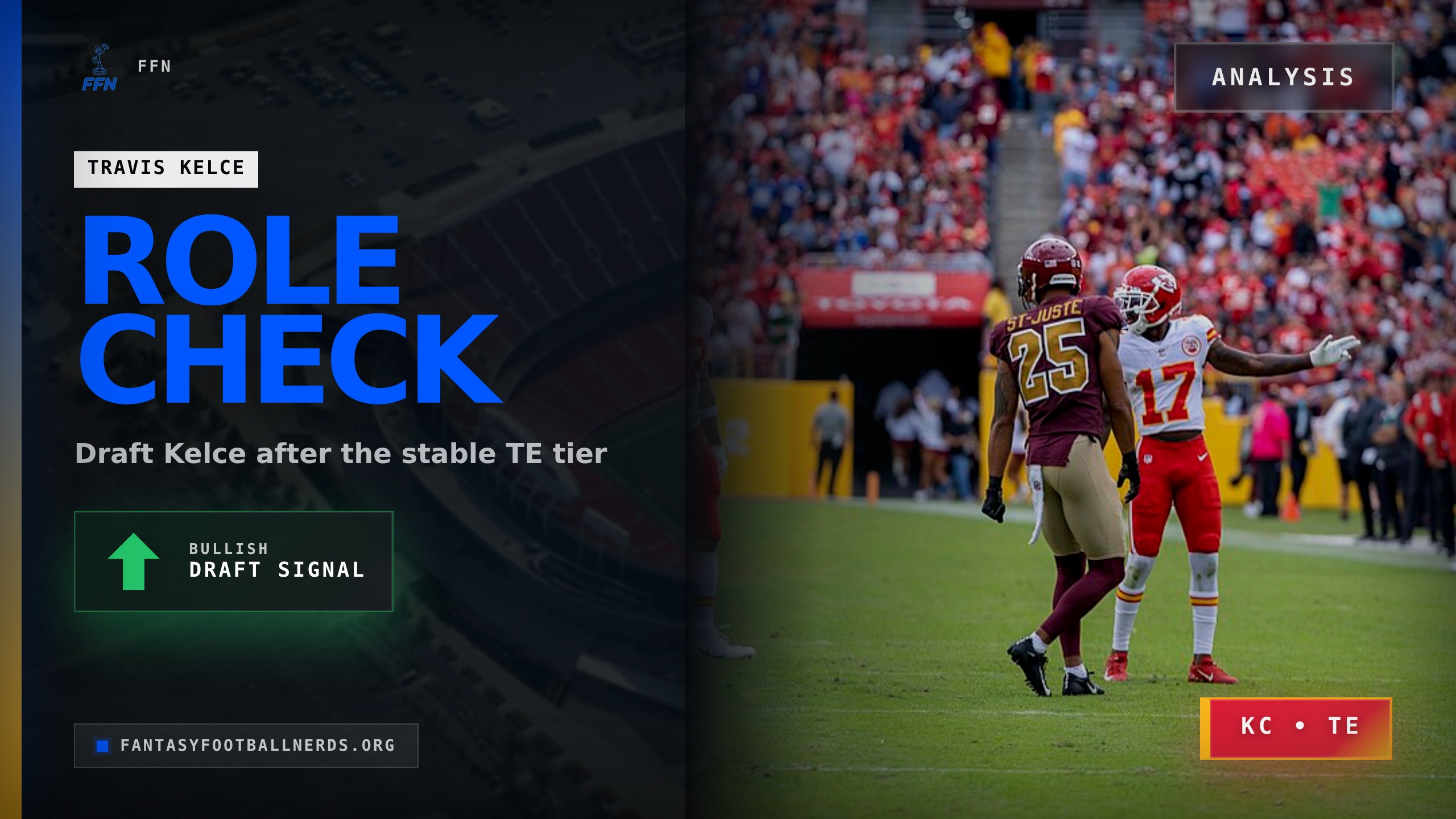
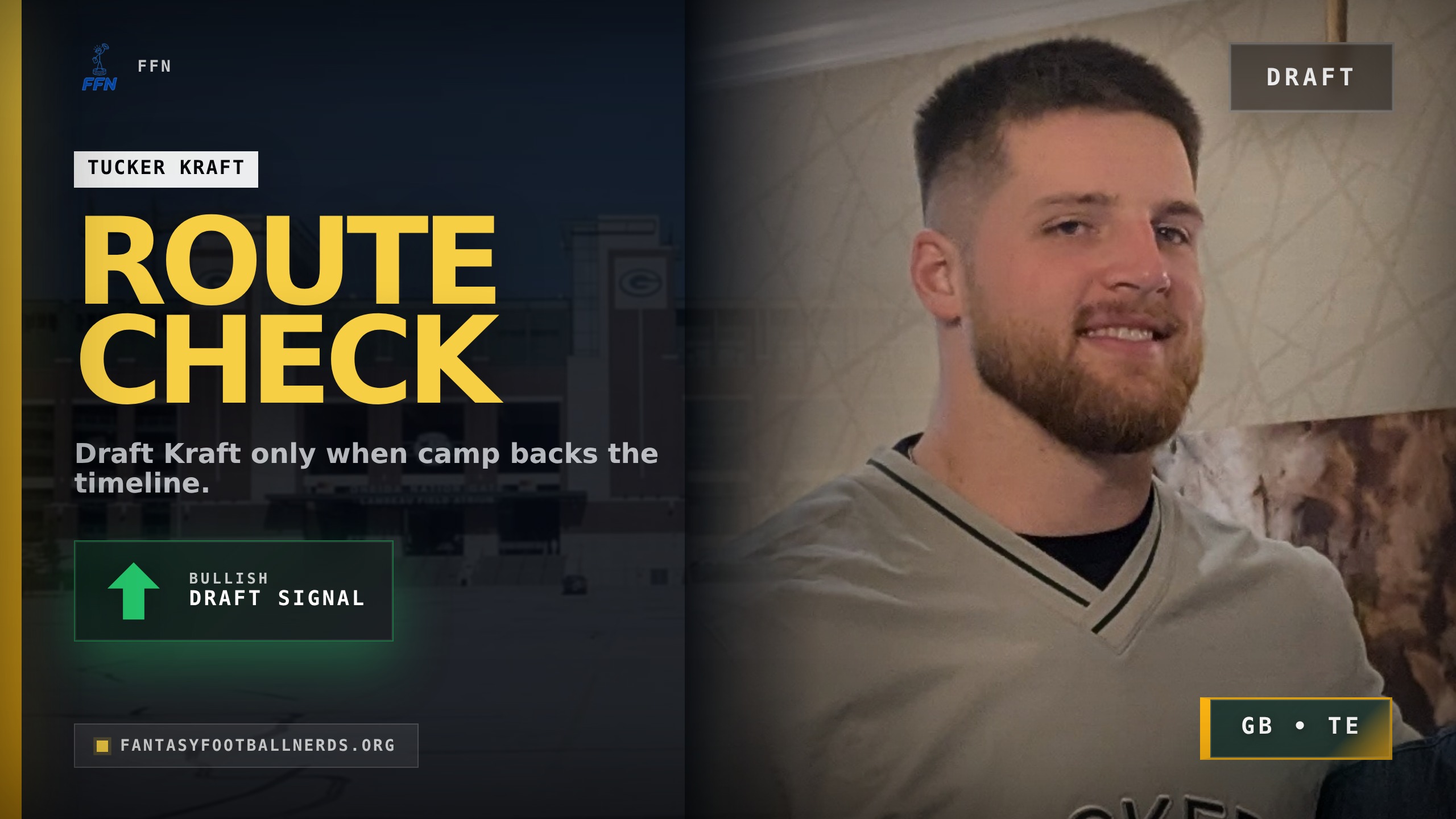
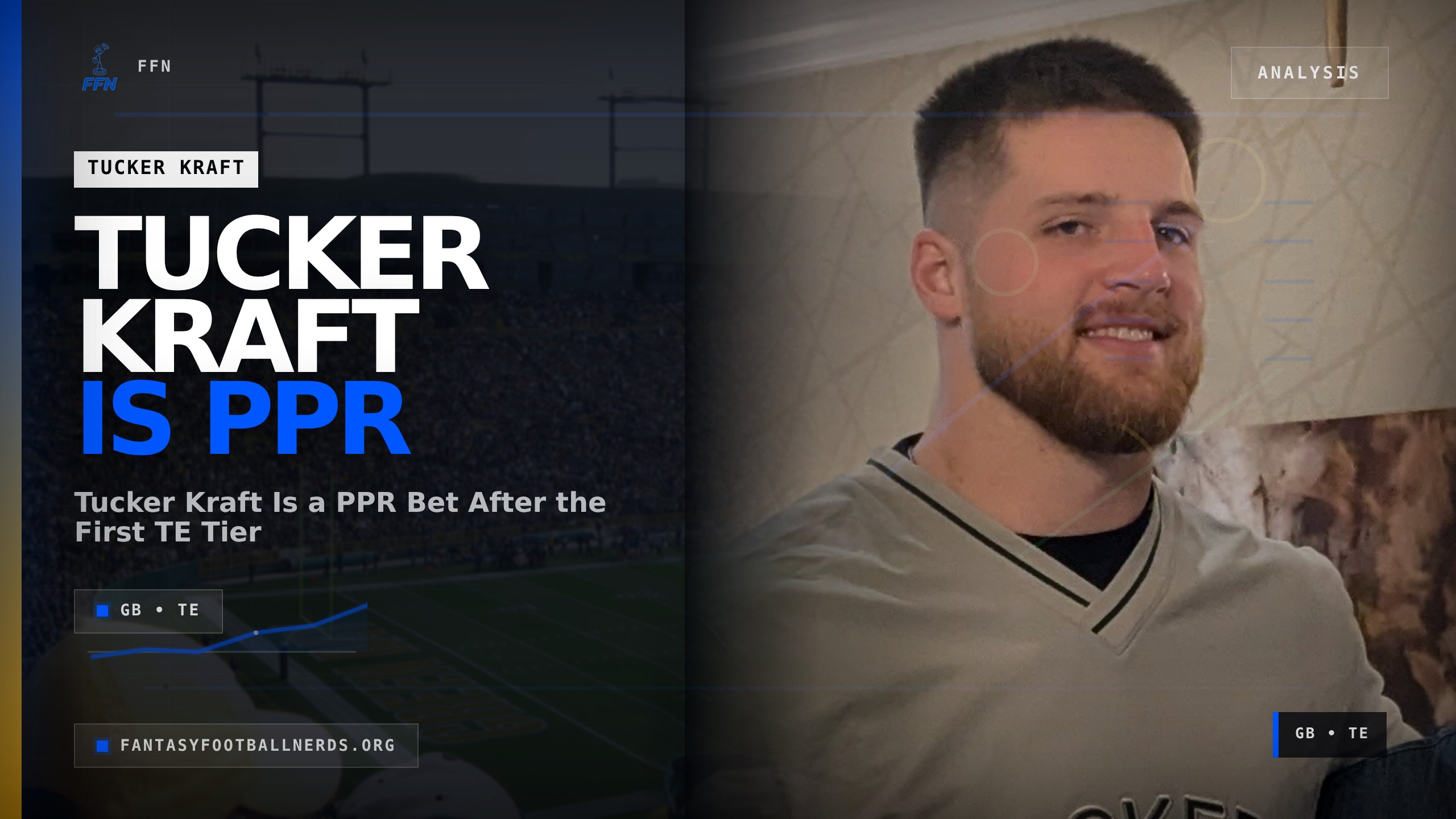
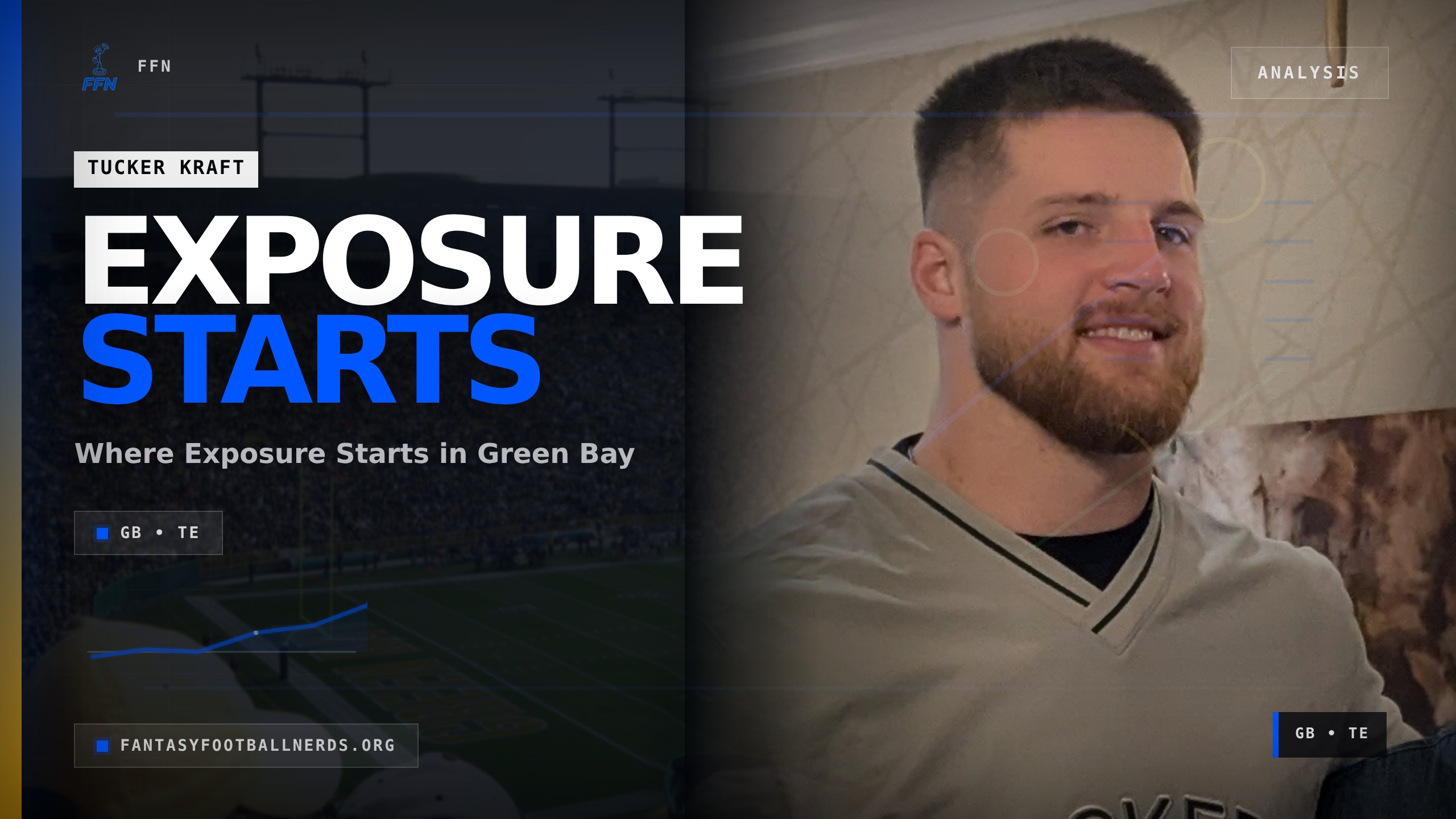
Tucker Kraft has the best target-trend case after the elite tight ends, while Loveland, Andrews, and Kelce all need stricter draft prices.
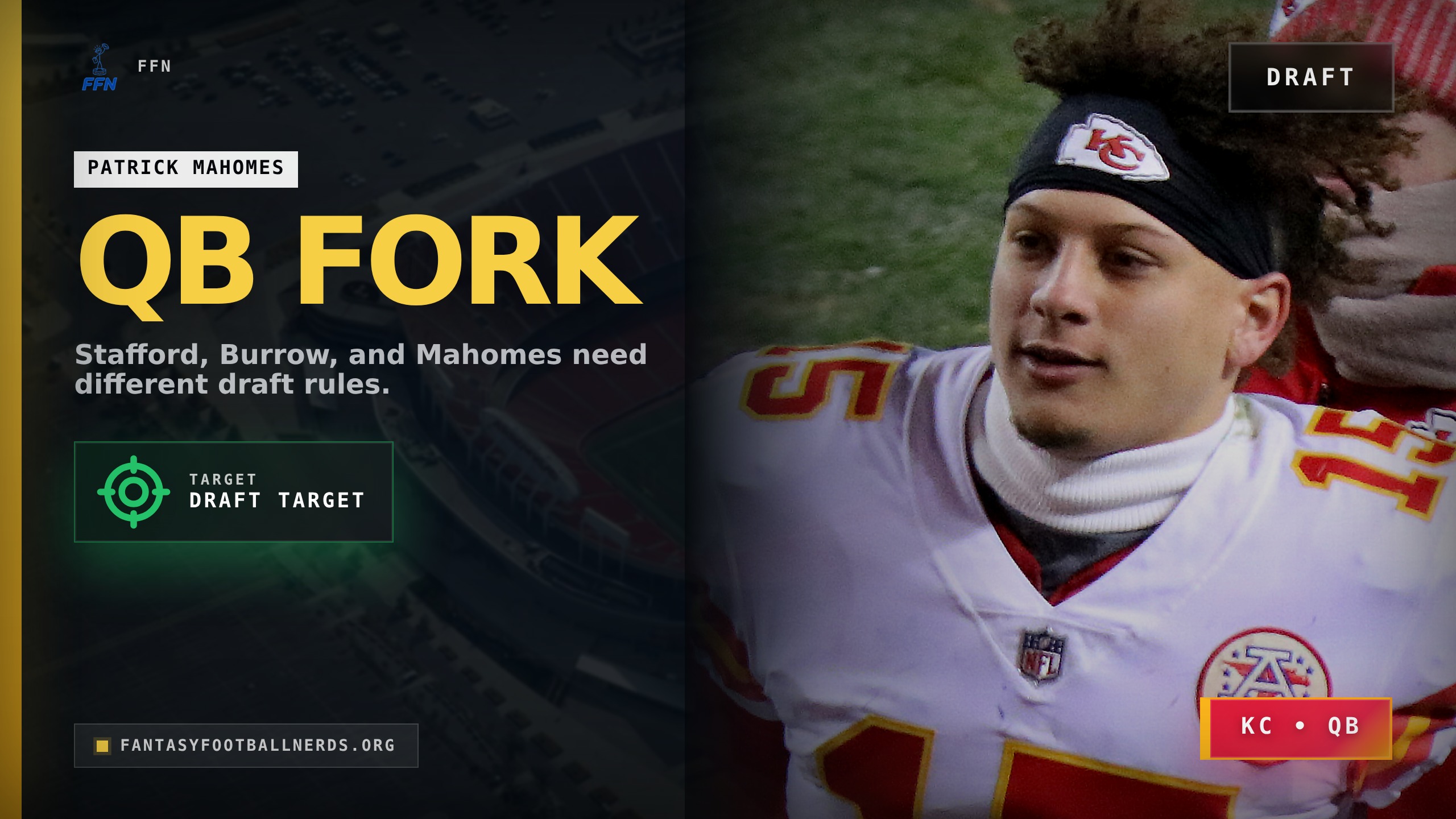
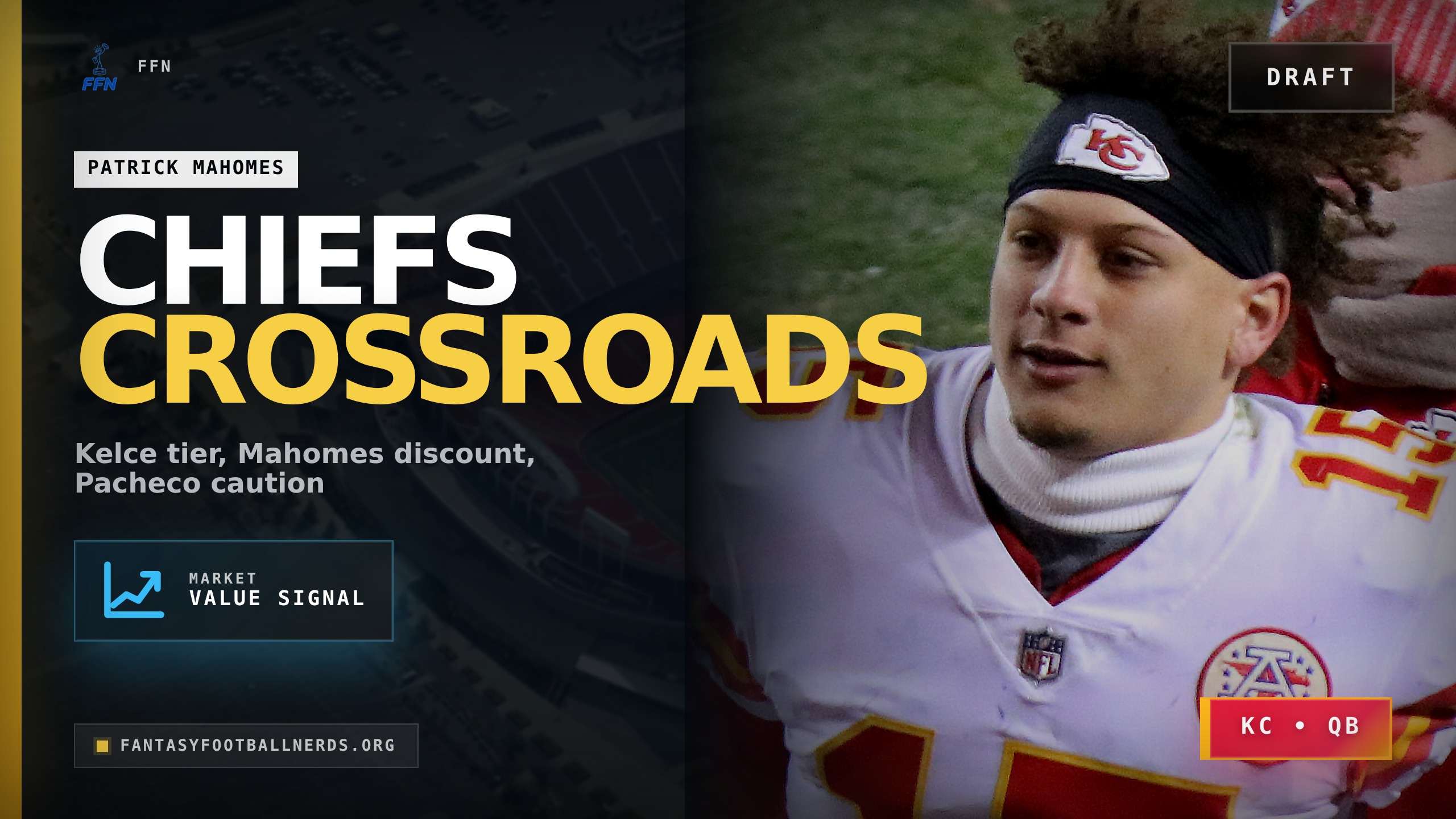
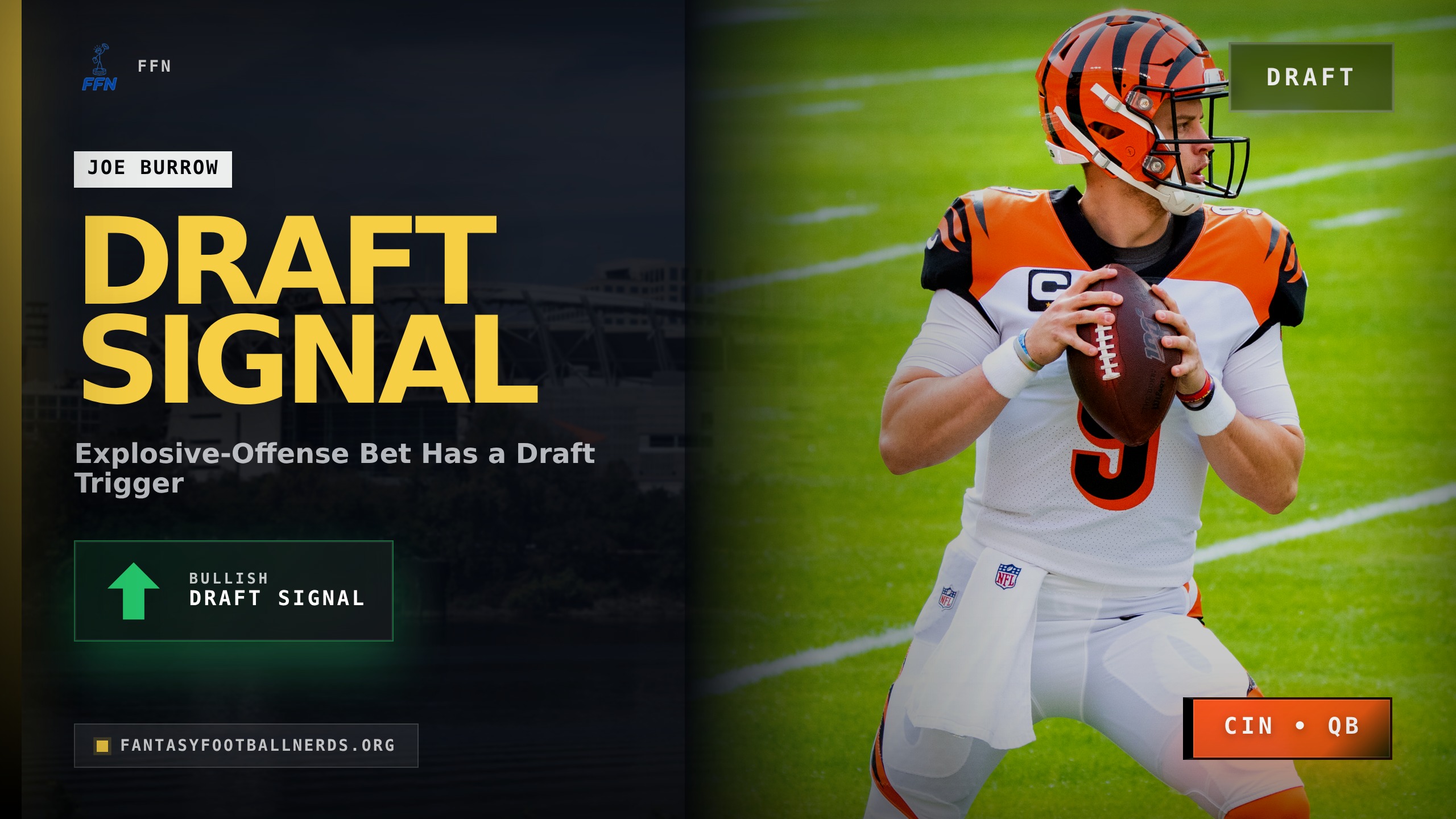
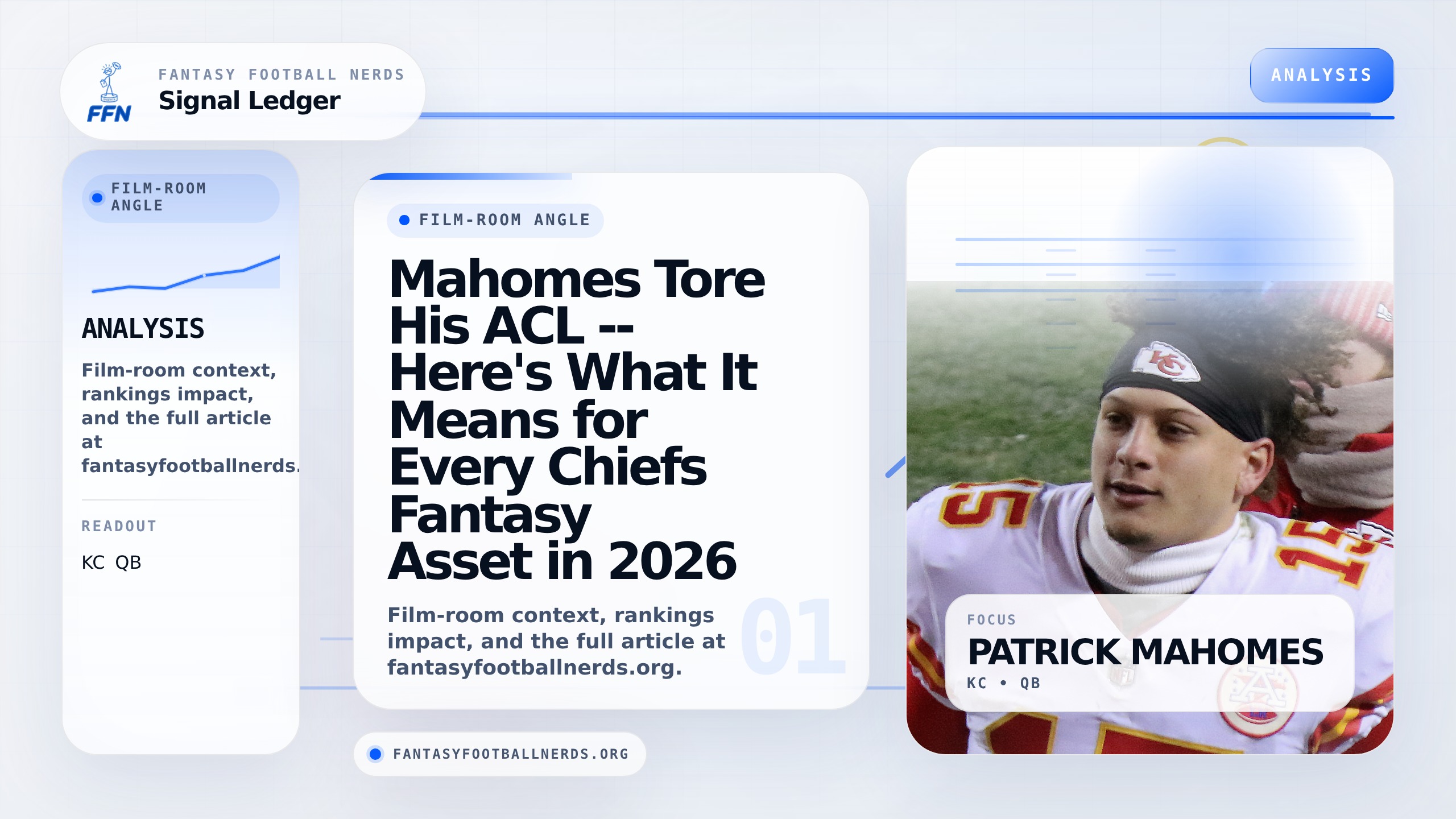
Stafford is the cheaper efficiency swing, Burrow is the roster-stability wager, and Mahomes needs a real price break before the name tax makes sense.
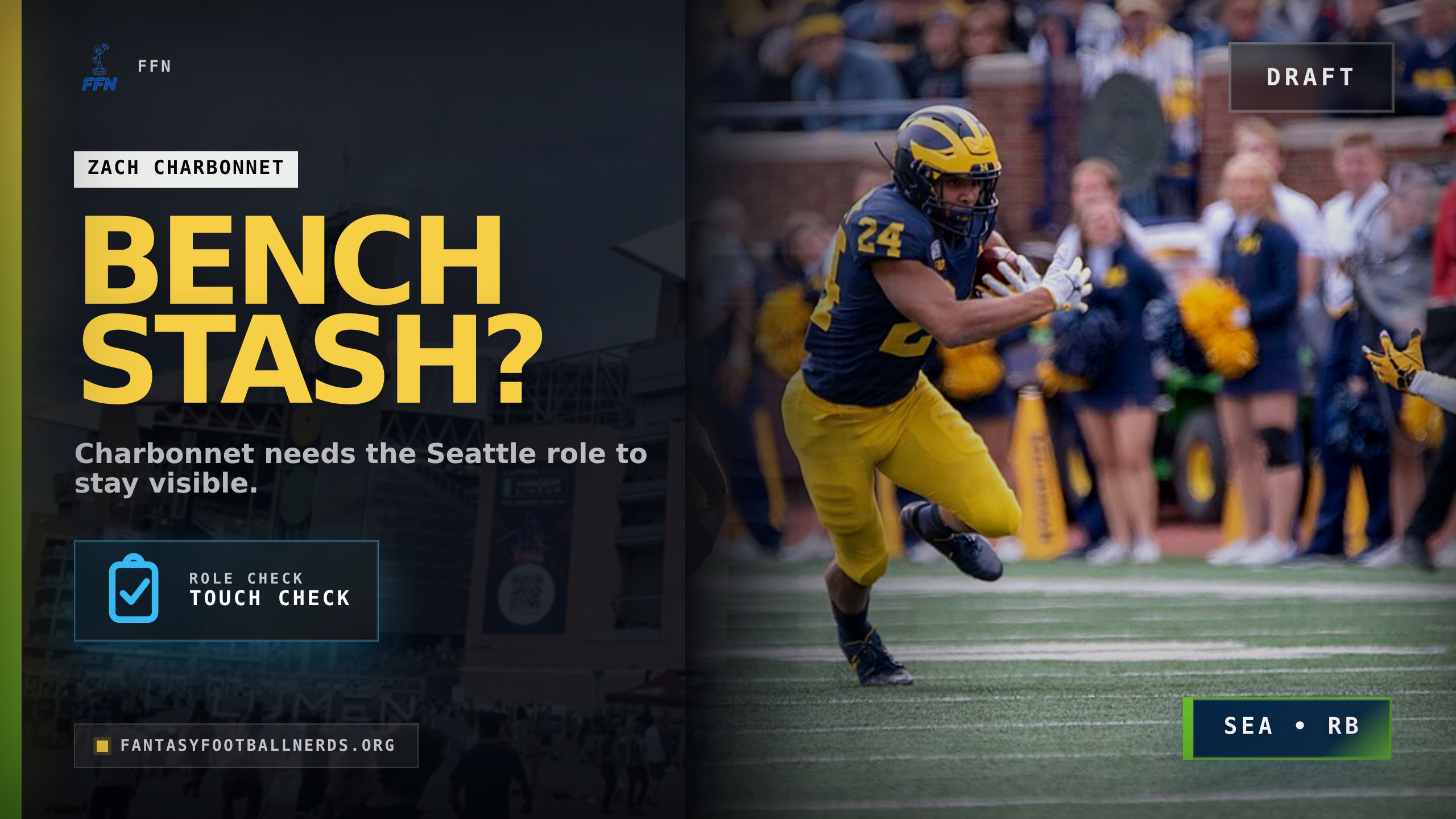
Zach Charbonnet still has a playable stash case, but the pick only works after safer bench backs are gone and Seattle's role clues hold.
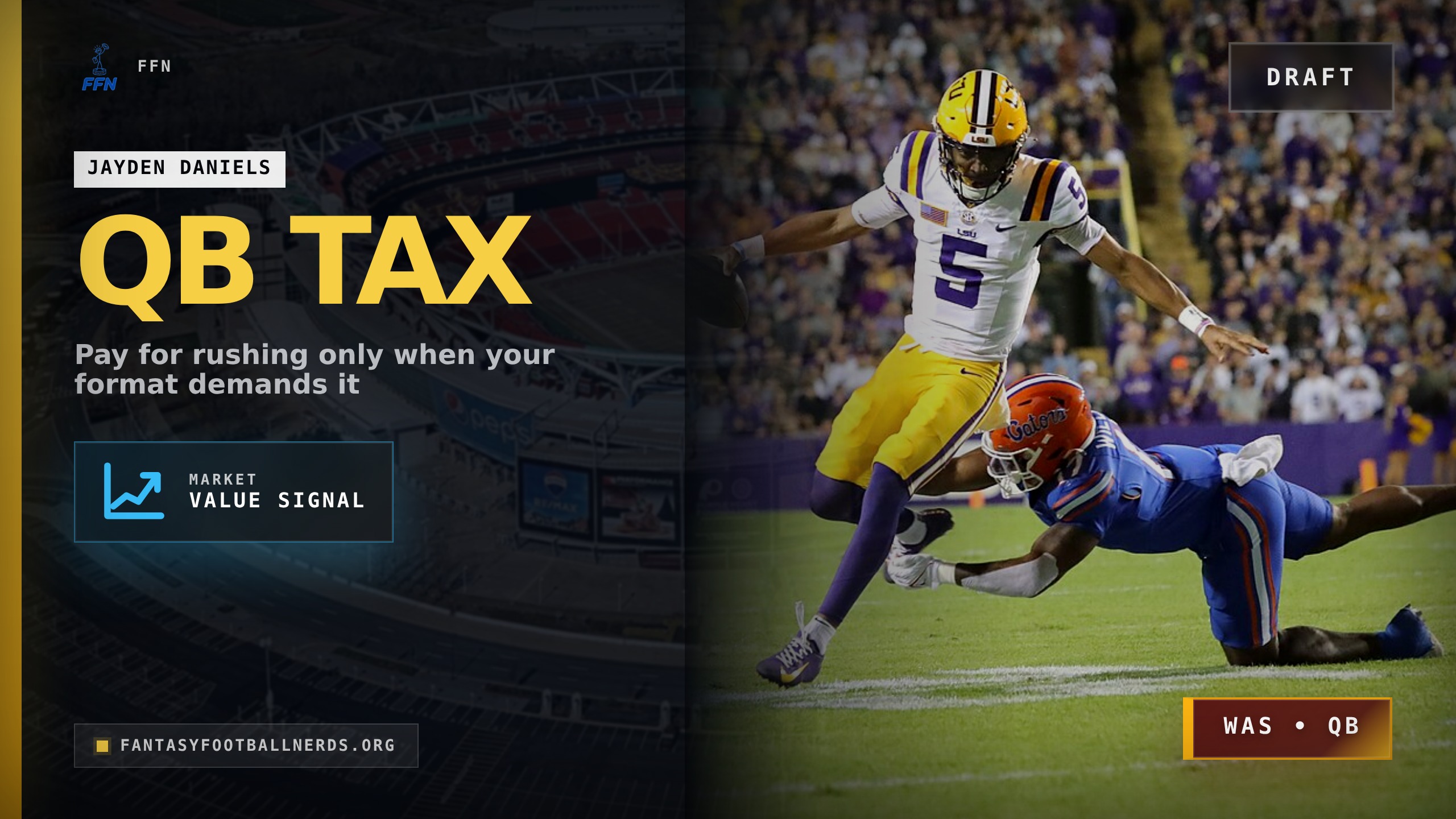
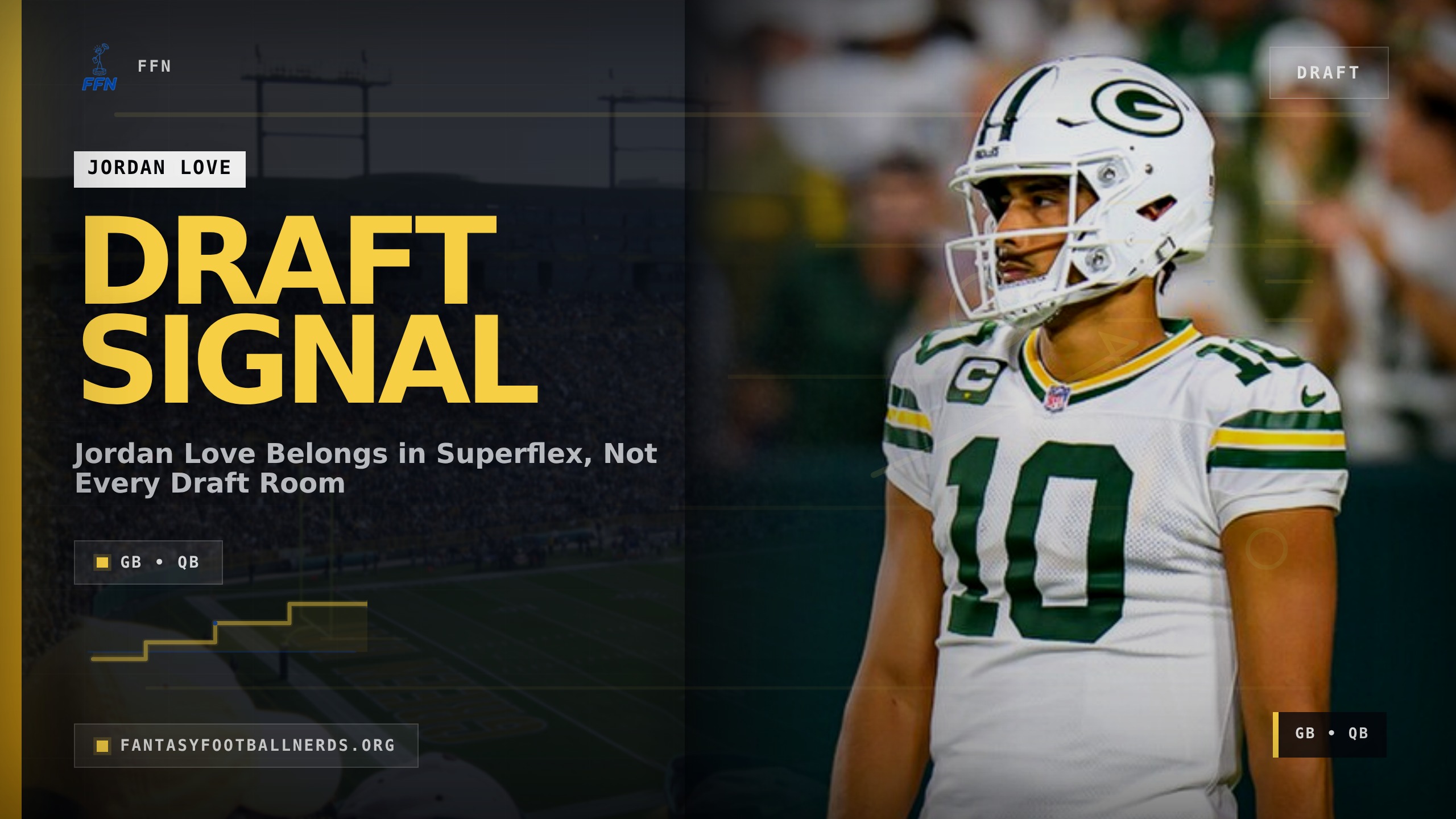
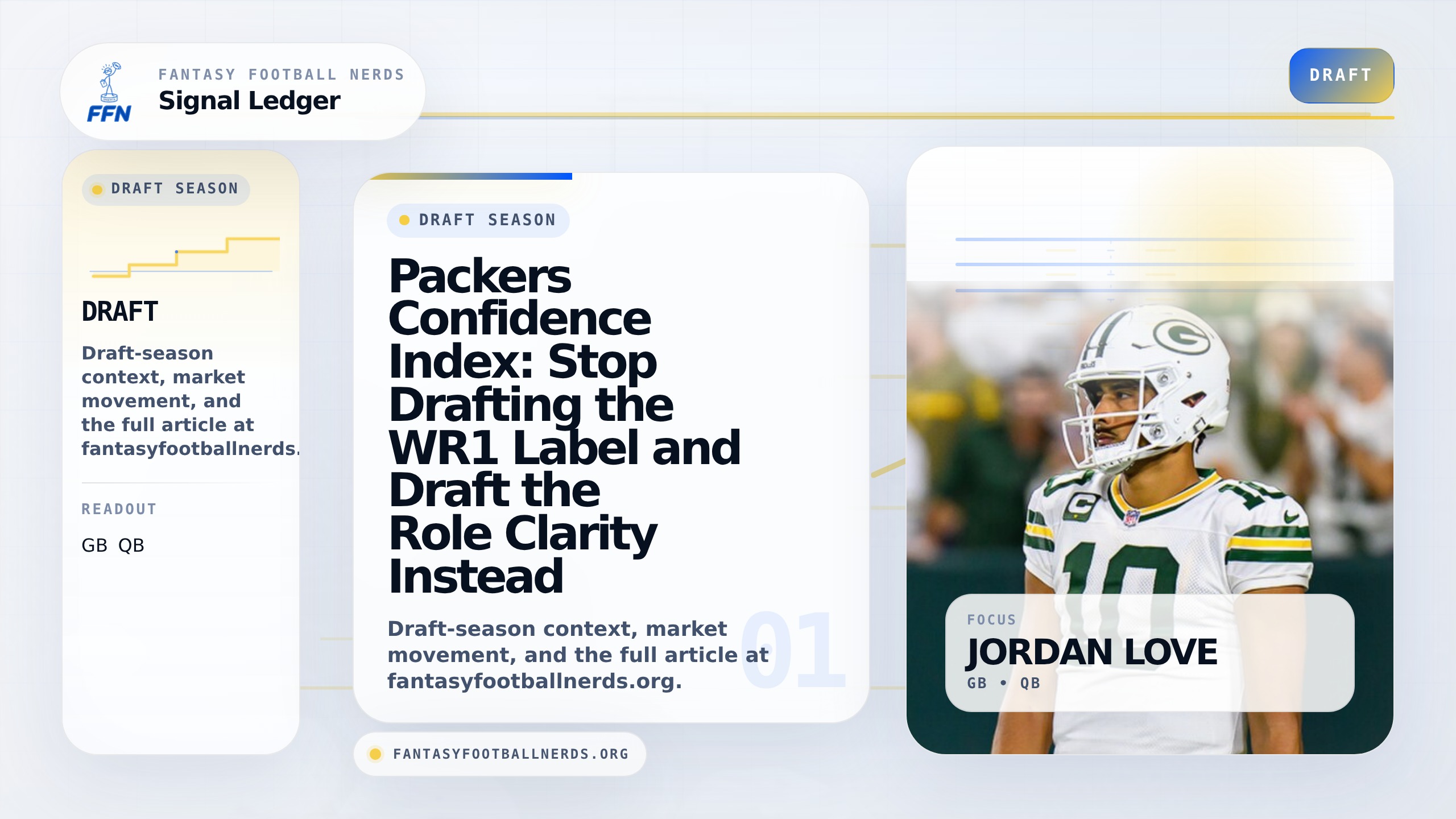
Jayden Daniels is worth the rushing premium only when the tier fits, while Drake Maye and Jordan Love give drafters cheaper format-specific QB paths.
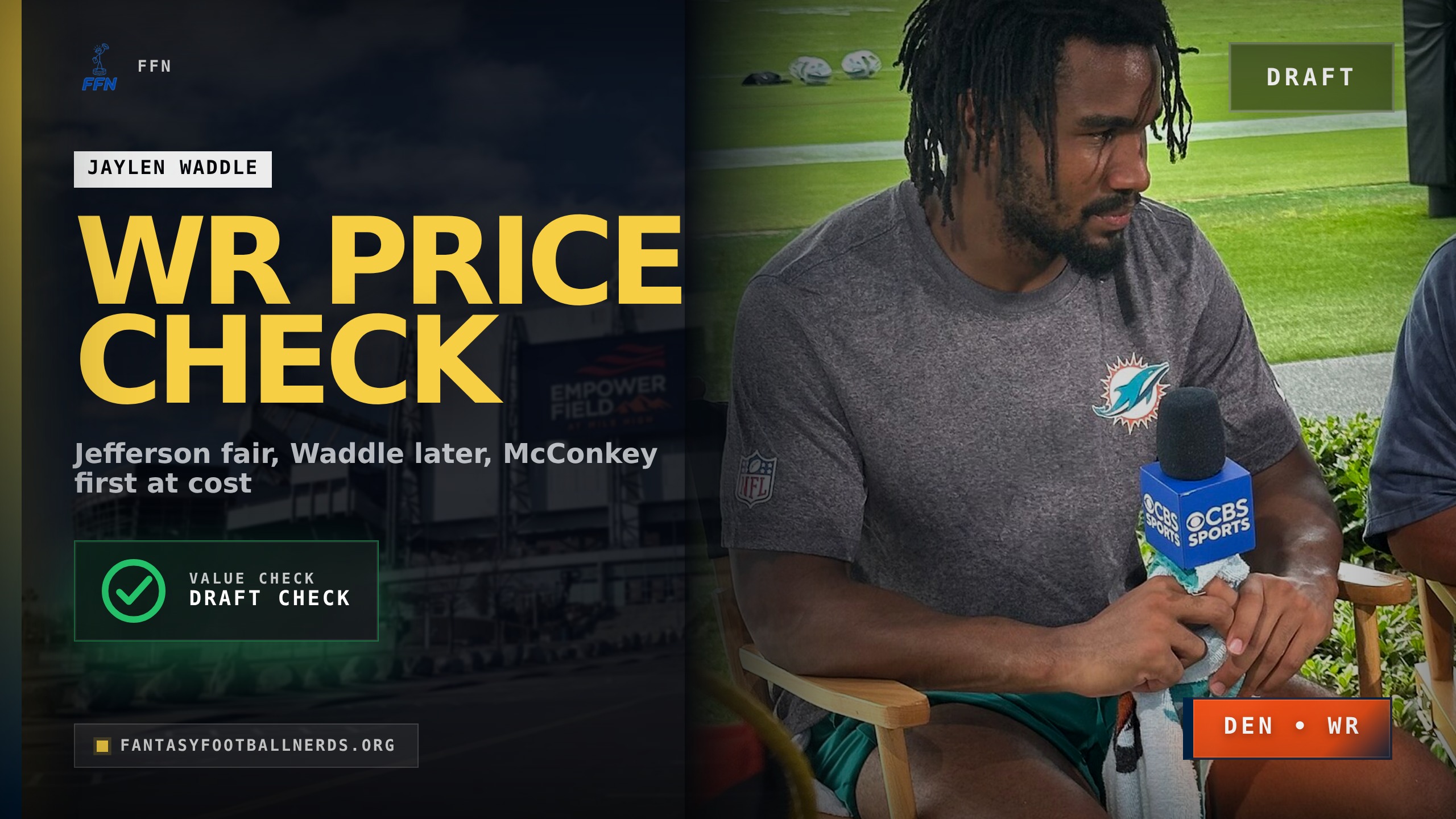
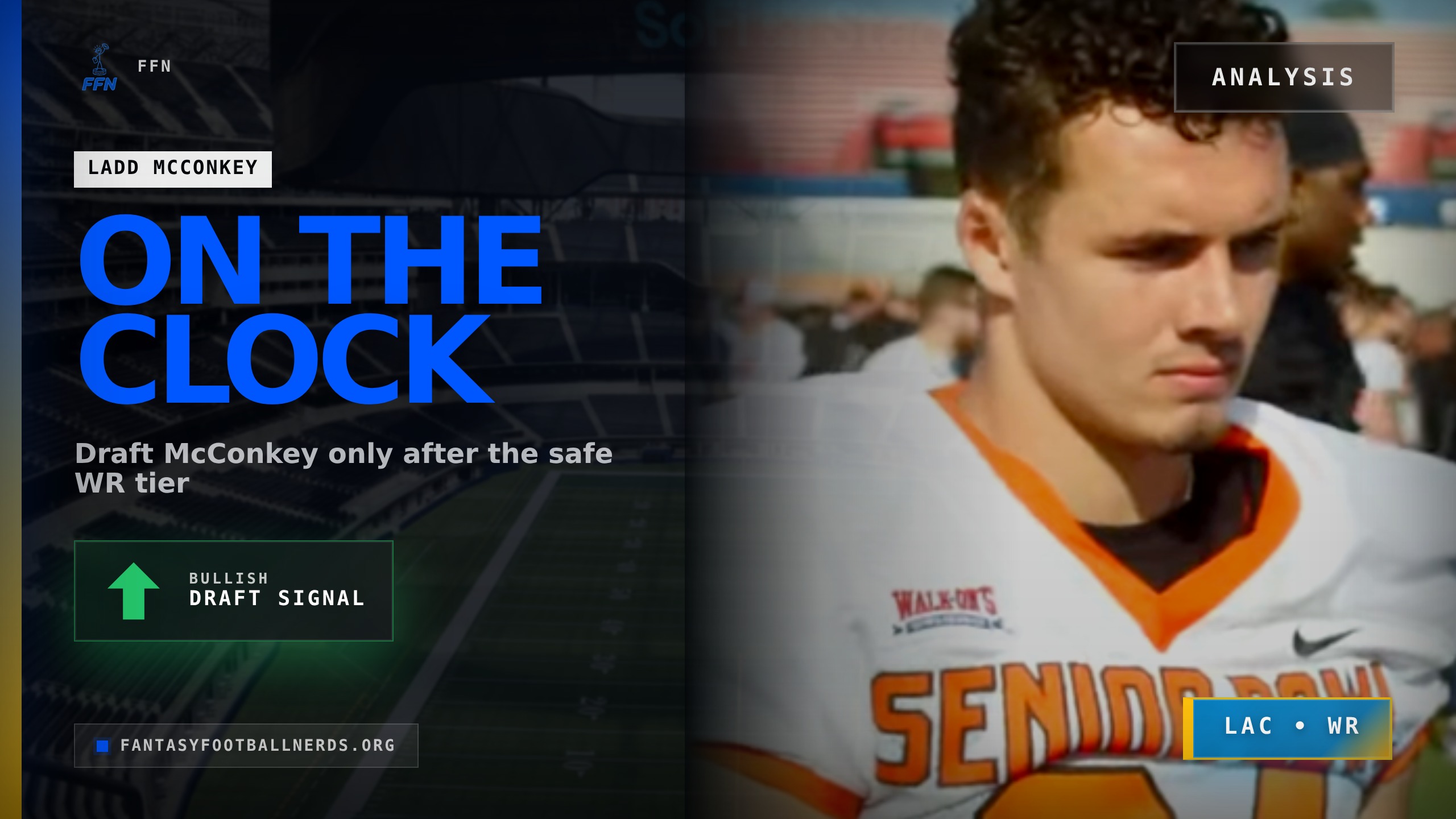
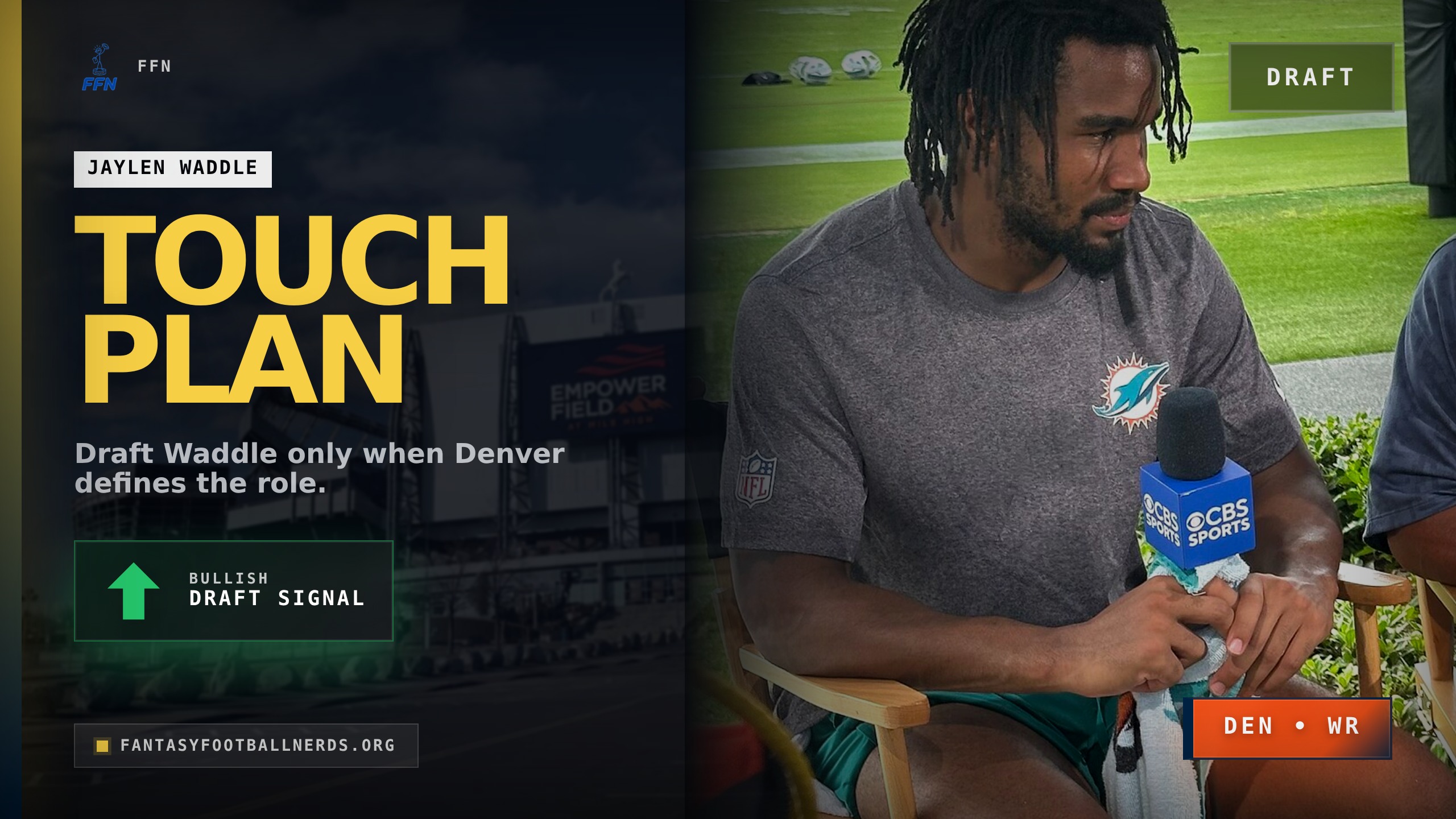
Jefferson is an anchor at fair cost, Waddle needs a real Denver route tree, and McConkey is the WR discount to target when PPR volume slides.
Brandon Aiyuk has late stash appeal only after stable WR4s are gone. Keep Terry McLaurin priced by his Washington role, not rumor churn.
Kansas City is not one automatic draft click. Target Kelce at the right tight end tier, wait on Mahomes, and make Pacheco prove the role.
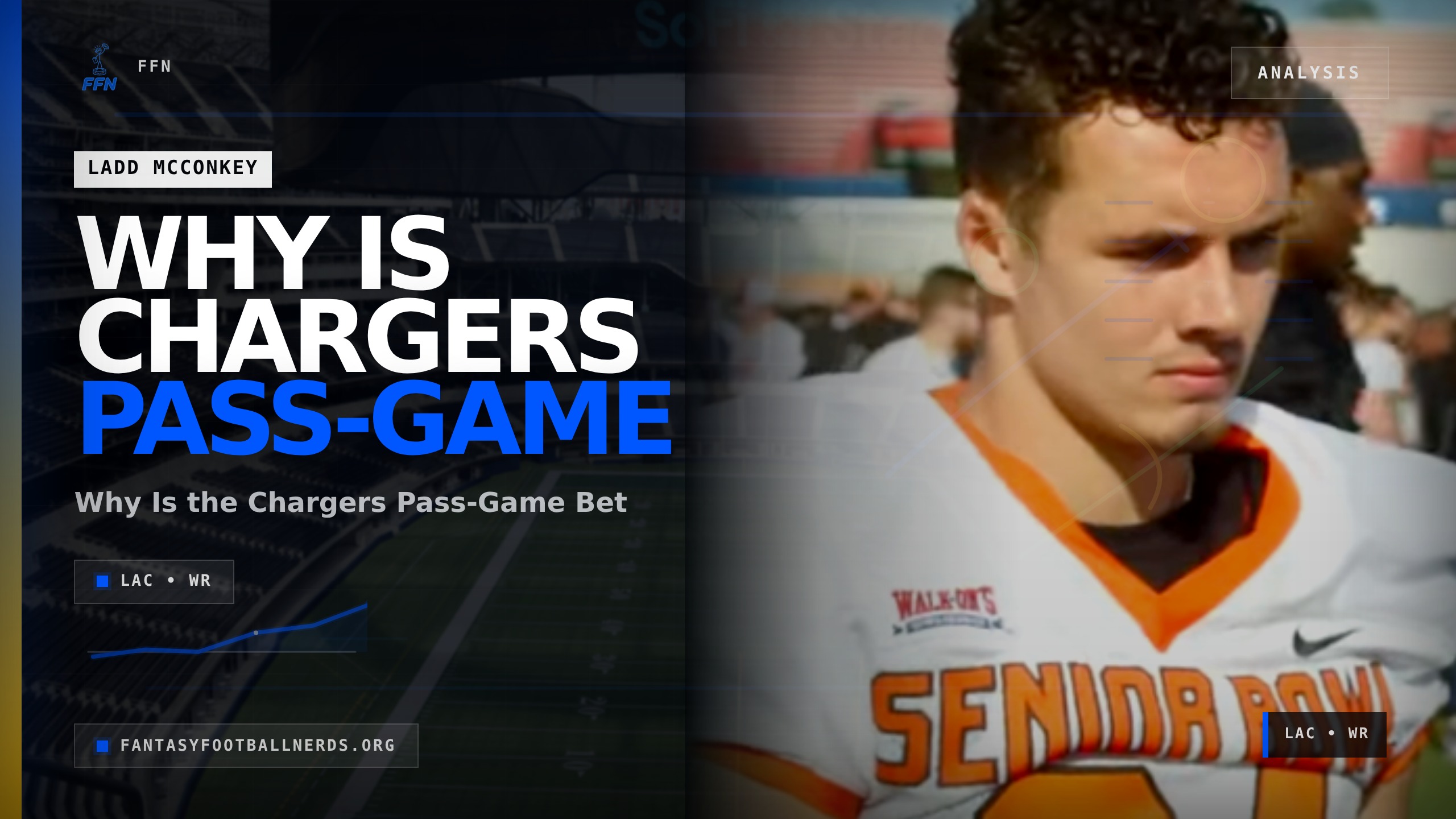
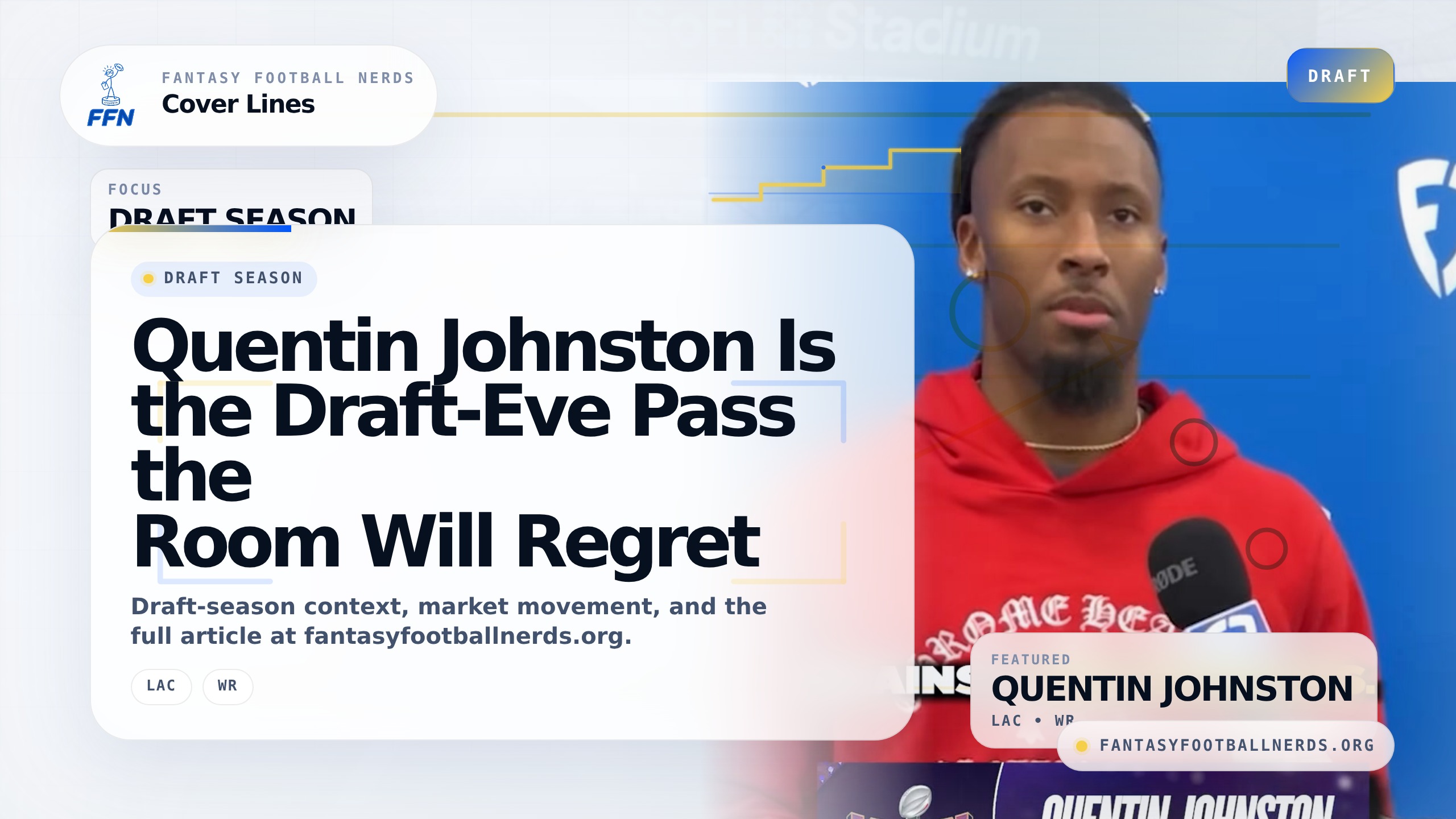
Ladd McConkey is the Chargers receiver to start, Quentin Johnston is the later vertical swing, and Omarion Hampton has to earn his early cost.
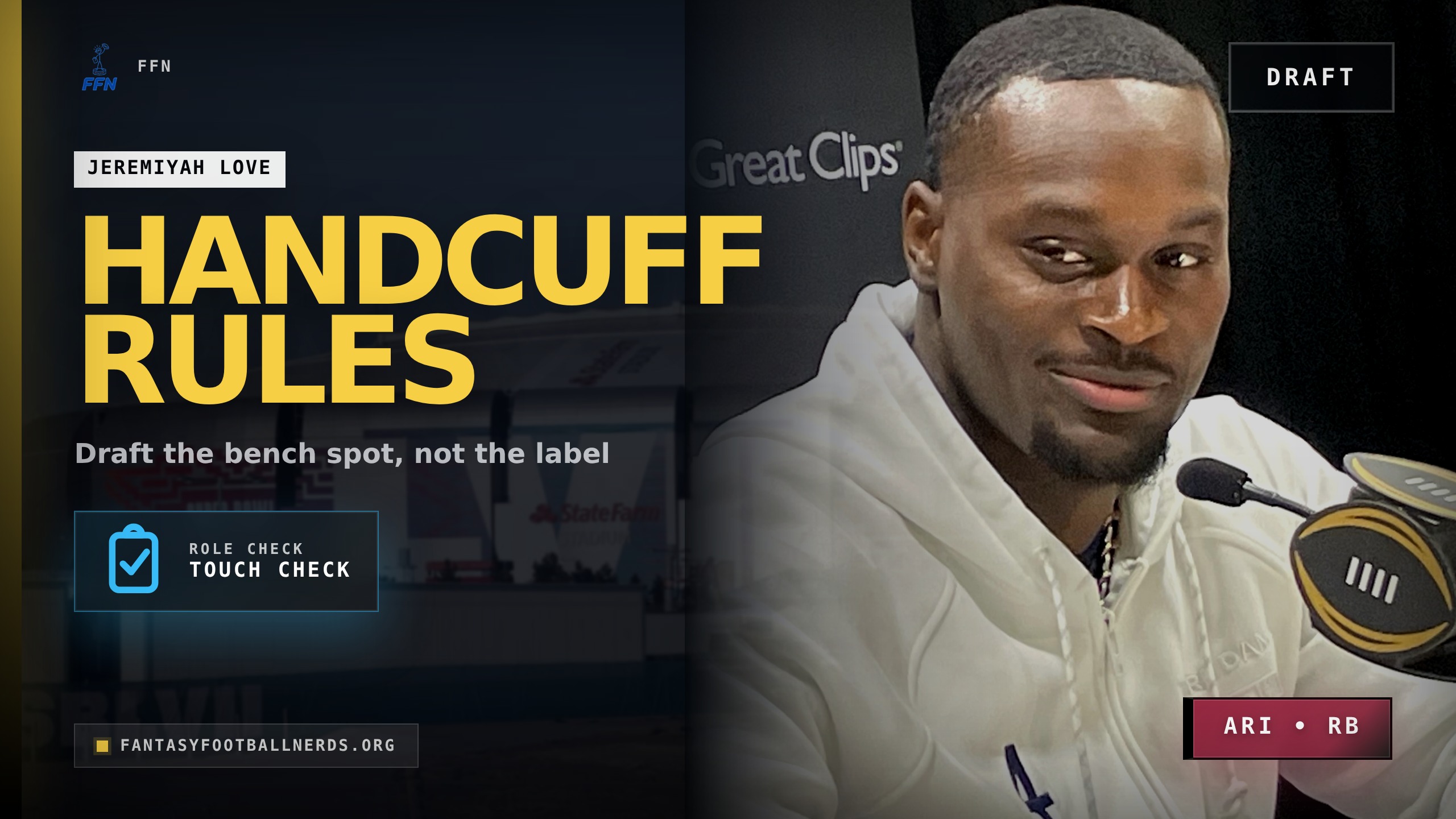
Use De'Von Achane and Jaylen Wright to set a smarter handcuff rule: stash Wright in deeper leagues, but make Arizona prove a role first.
A.J. Brown has WR1 talent in a Patriots offense with enough pass volume, but drafters should pay only when New England makes him the first read.
Ricky Pearsall has the best route-plus-price case in this WR stash group, while Watson, Burden, Branch, and McConkey require different draft rules.
Ricky Pearsall, Rome Odunze, and Brandon Aiyuk need three different draft rules: buy visible routes, price health, and wait for role clarity.
Jahmyr Gibbs is the early spend, David Montgomery is the roster-fit touchdown bet, and Isiah Pacheco is a late stash after the Detroit-Houston shuffle.
Tony Pollard still offers the safer Titans workload, while Tyjae Spears becomes a PPR bench target only if camp gives him premium snaps.
Ashton Jeanty, Josh Jacobs, and Omarion Hampton are not the same RB1 bet. Use scoring format to separate ceiling, volume, and price risk.
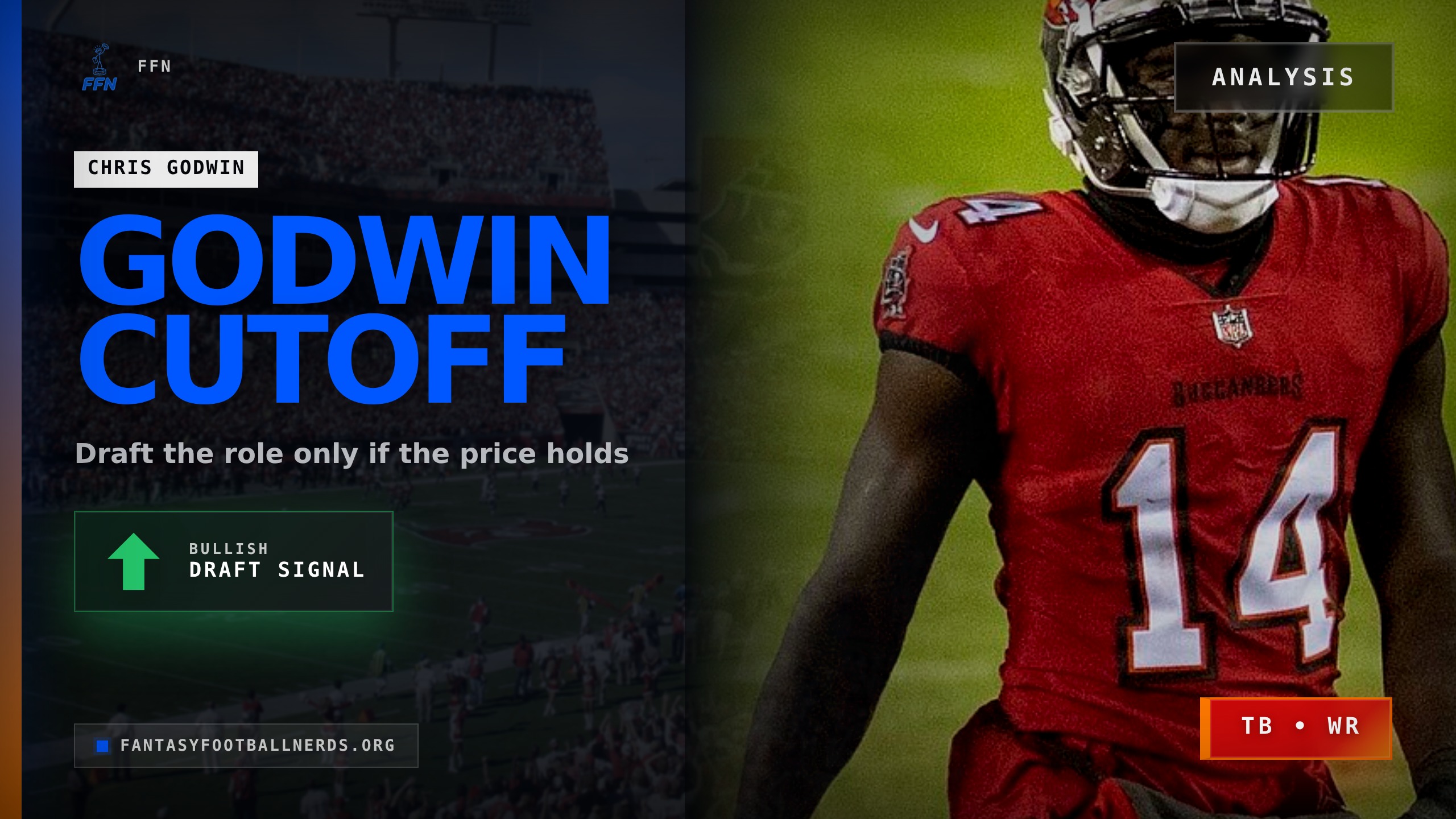
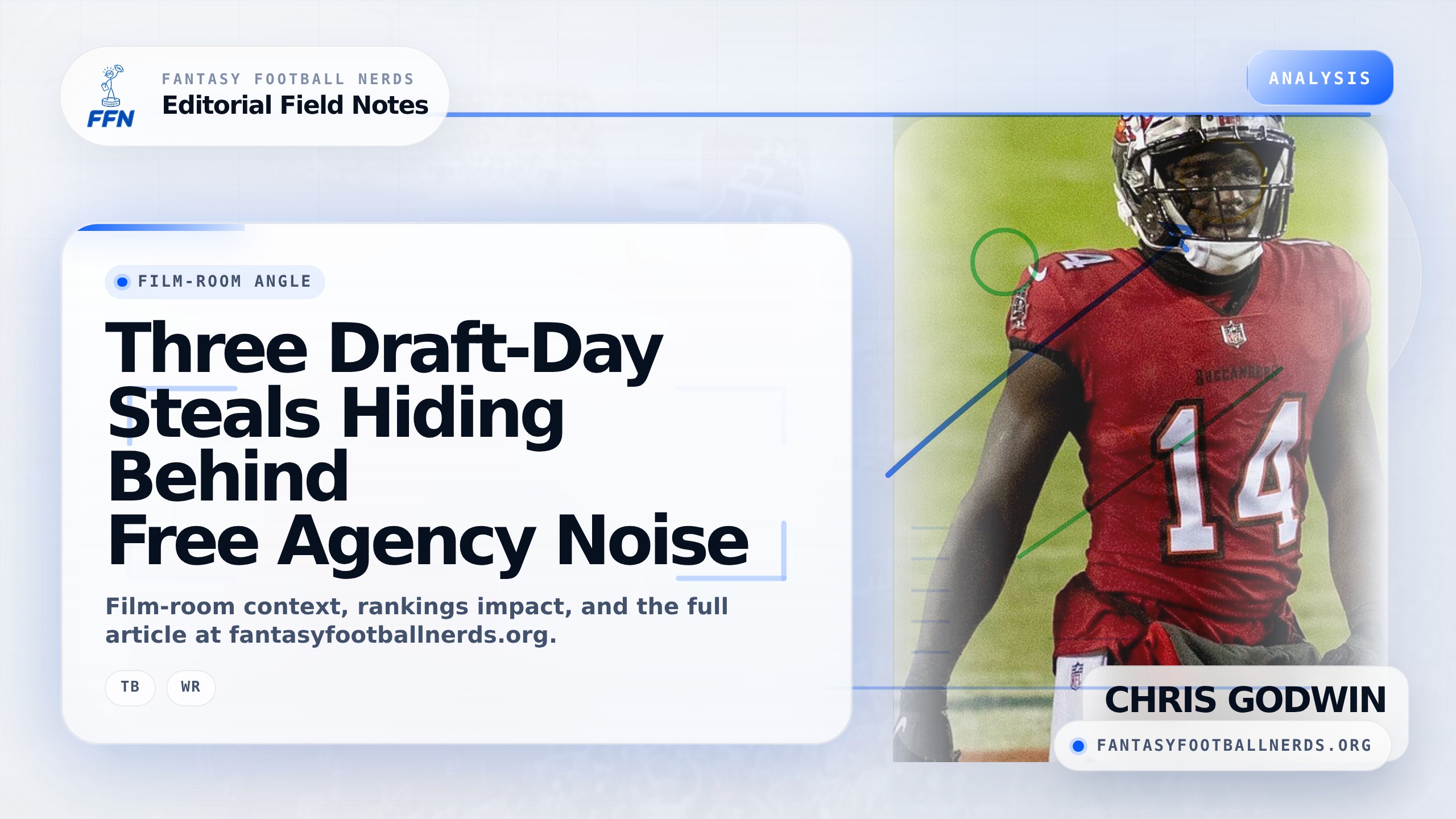
Tampa Bay has several fantasy paths after Evans: draft Godwin for discounted PPR volume, Egbuka for ceiling, Bucky for touches, or McMillan late.
Aiyuk still carries a 49ers tag, but the Washington possibility changes how to draft Pearsall, McLaurin, Evans, and a late stash without pretending anything is final.
Kyle Pitts has the clearest tight end role bump, George Kittle needs camp confirmation, and Tucker Kraft is a wait-until-routes-return draft target.
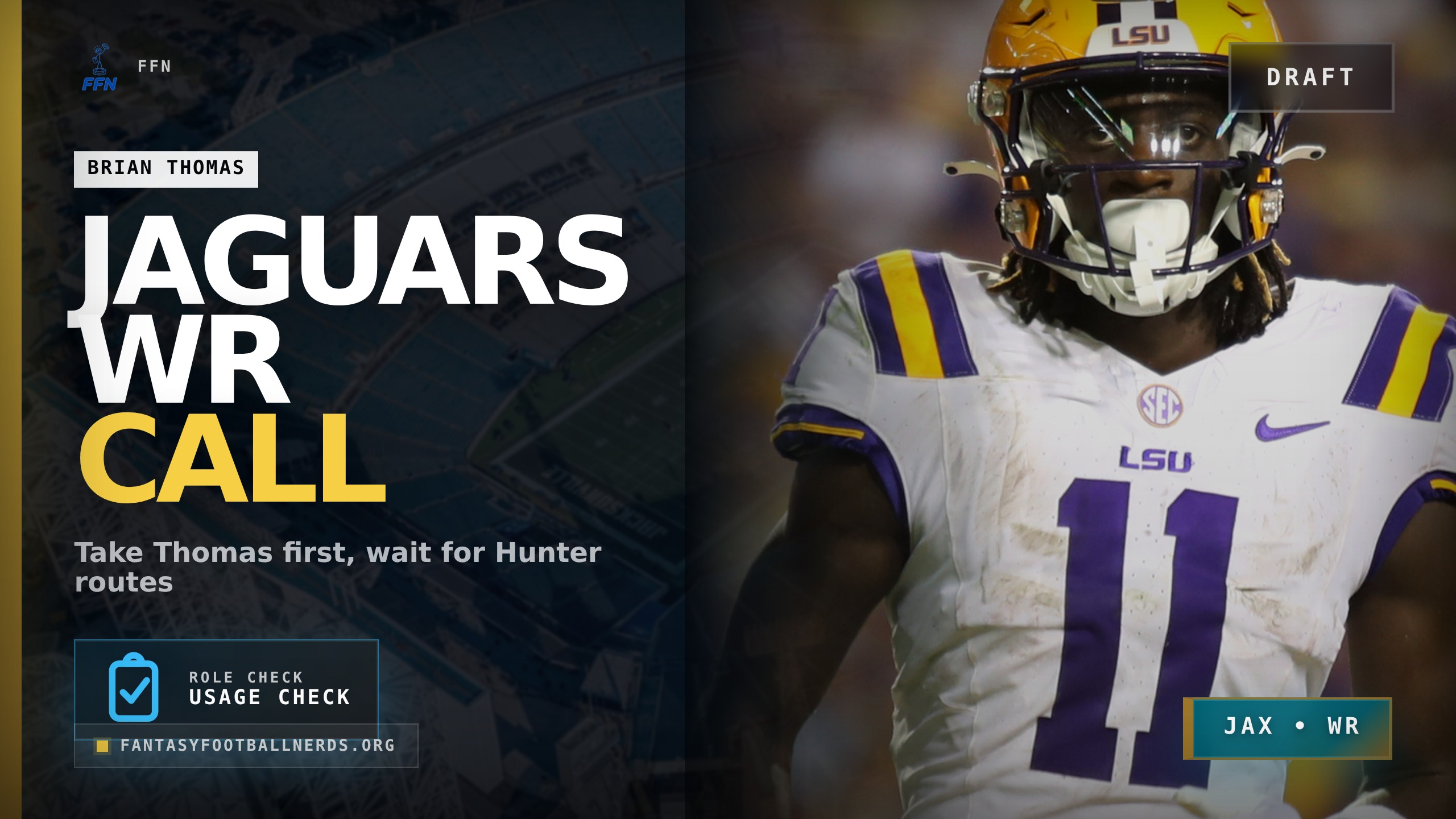
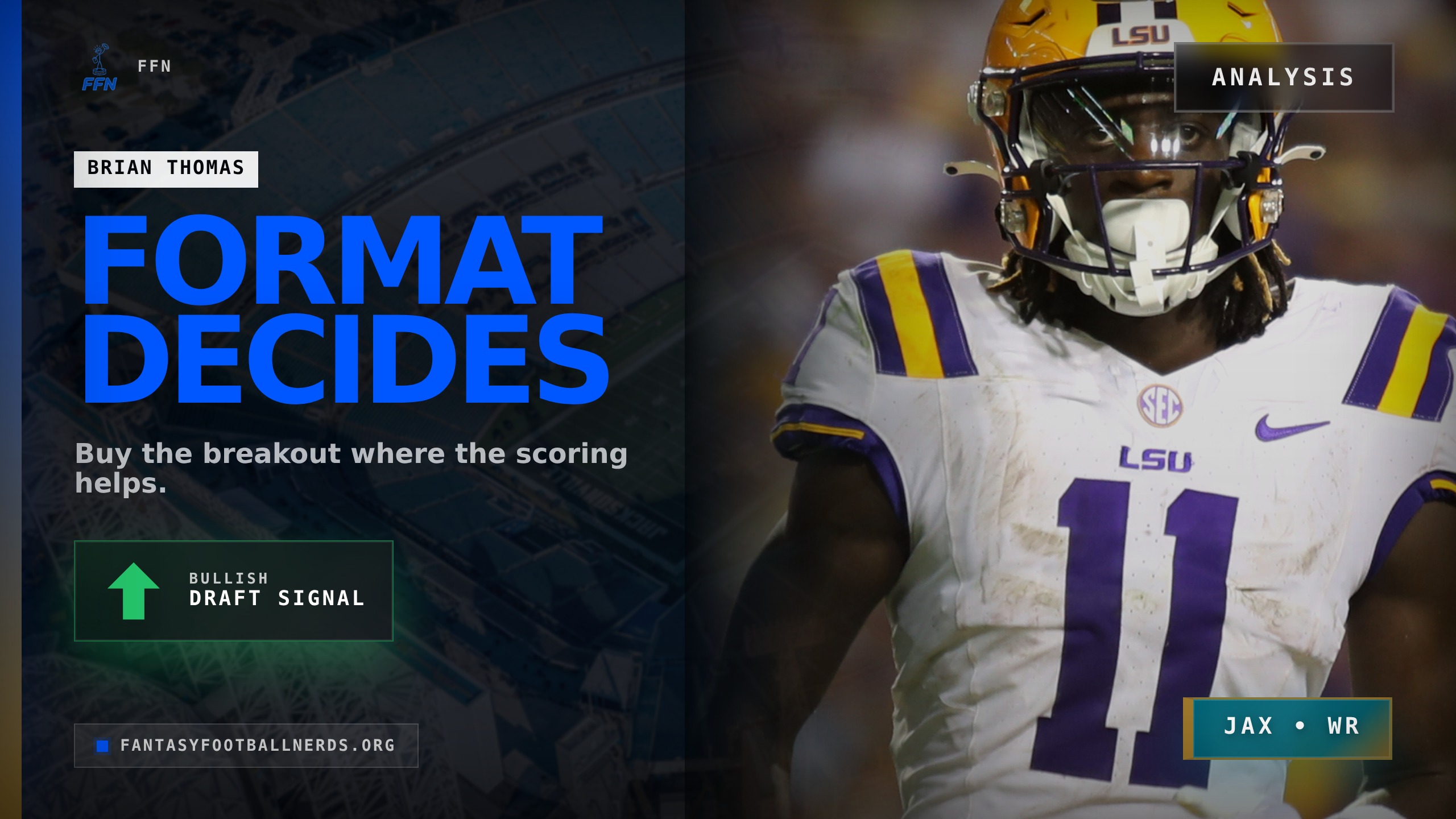
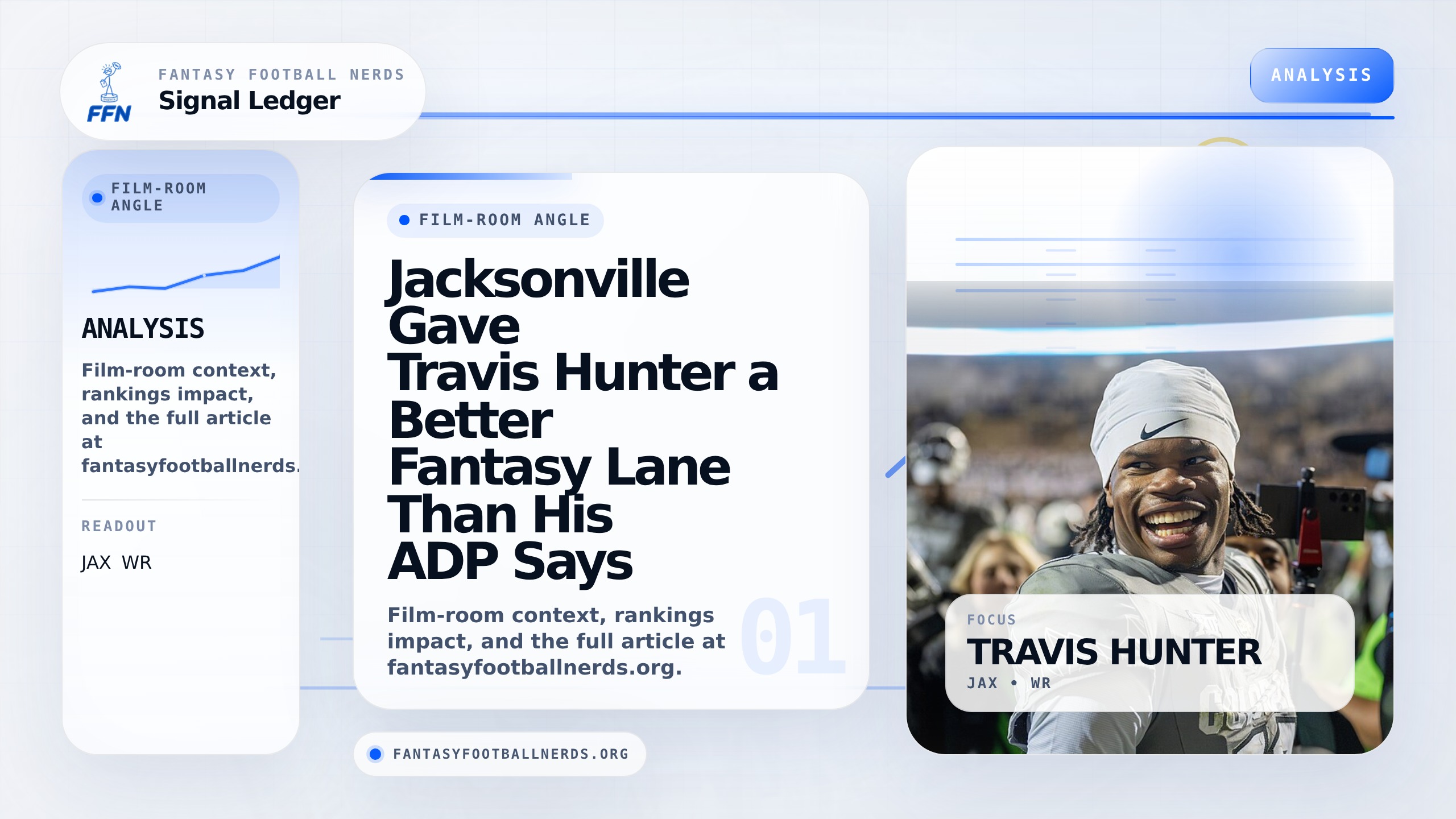
Brian Thomas has the steadier Jaguars receiver job for redraft, while Travis Hunter needs real third-down and hurry-up routes before drafters move him up.
Sort the Jaguars tight ends by target path: Brenton Strange is the late redraft swing, while Tanner Koziol and Nate Boerkircher need summer usage.
Ricky Pearsall is the 49ers swing pick, Mike Evans fits touchdown builds, and Brandon Aiyuk belongs on transaction watch, not in the route-share math.
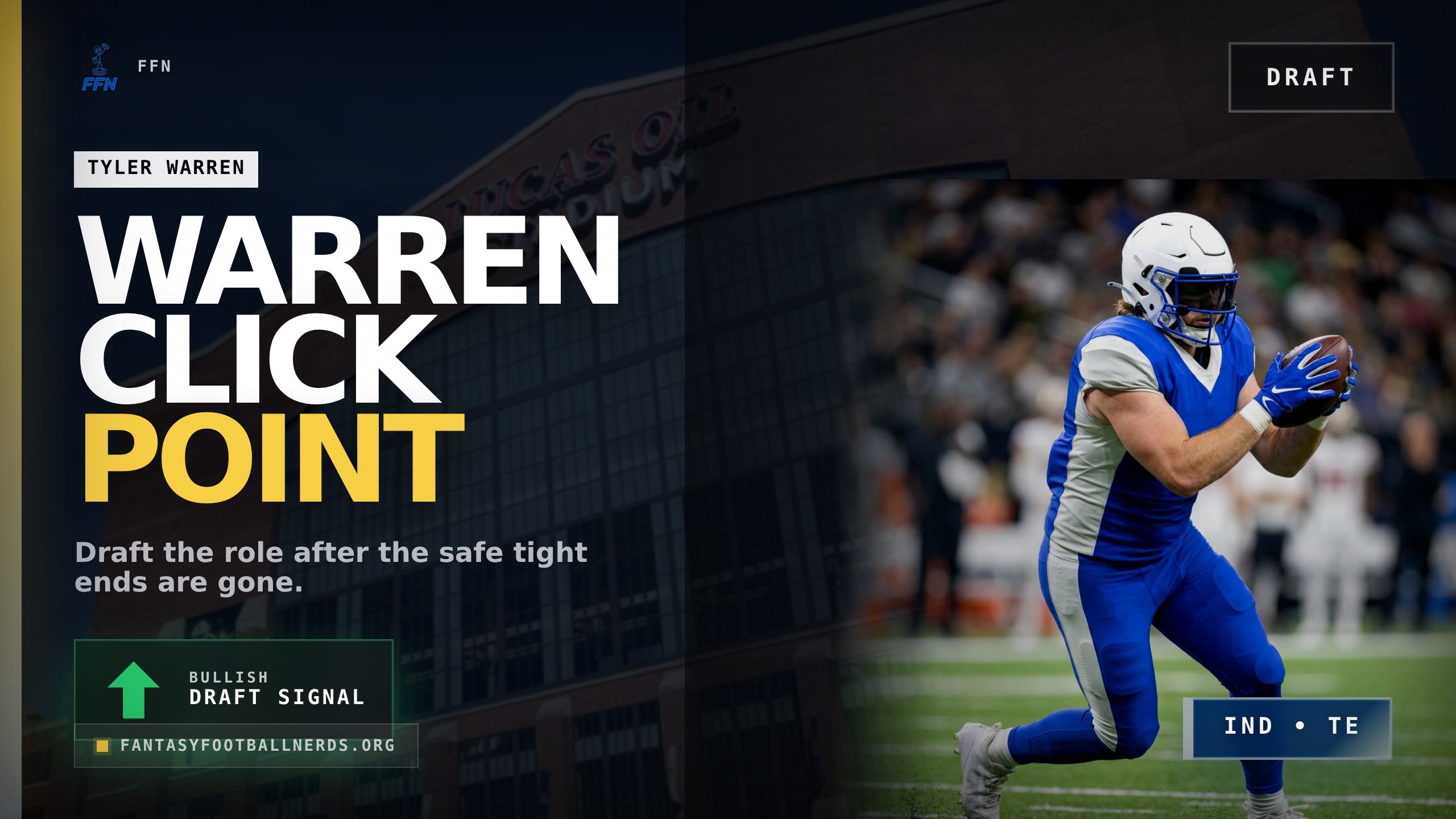
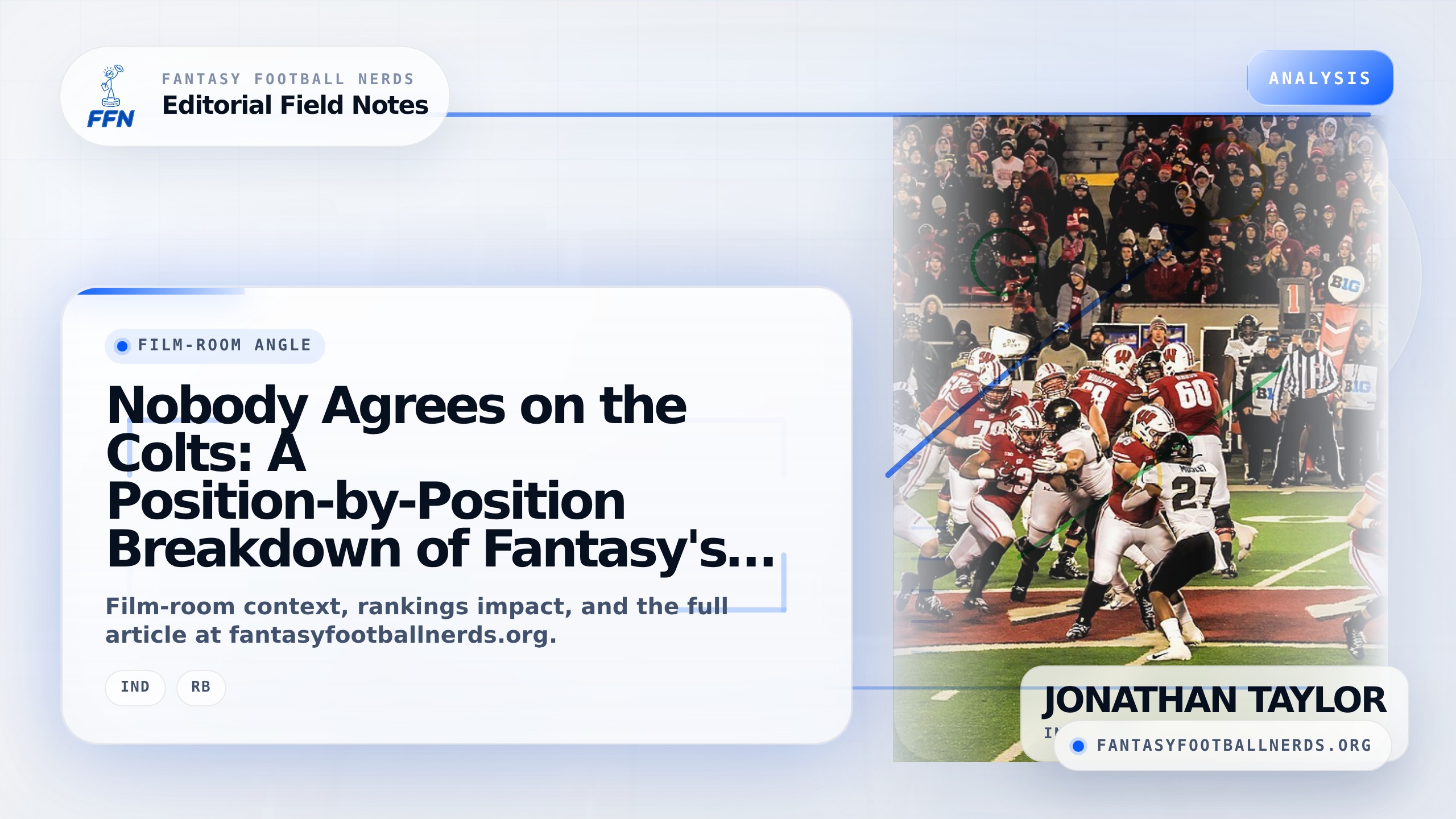
Draft Jonathan Taylor as the Colts anchor, then target Tyler Warren only after the stable TE tier if the route role still beats the price.
Camp notes should move your draft board only when they change snaps, health, or first-team routes. Daniels, LaPorta, Warren, and Green Bay show the line.
Sort June camp blurbs by the action they deserve: draft the volume, wait on the price, tier the tight end, and reject bad roster inputs.
Golden's closing sample showed more field time than receiving payoff, so routes have to become first-read throws before he is more than a bench bet.
It makes him the kind of veteran who can hit the flat route, take the glance throw, and keep you from starting a non-quarterback in a superflex slot.
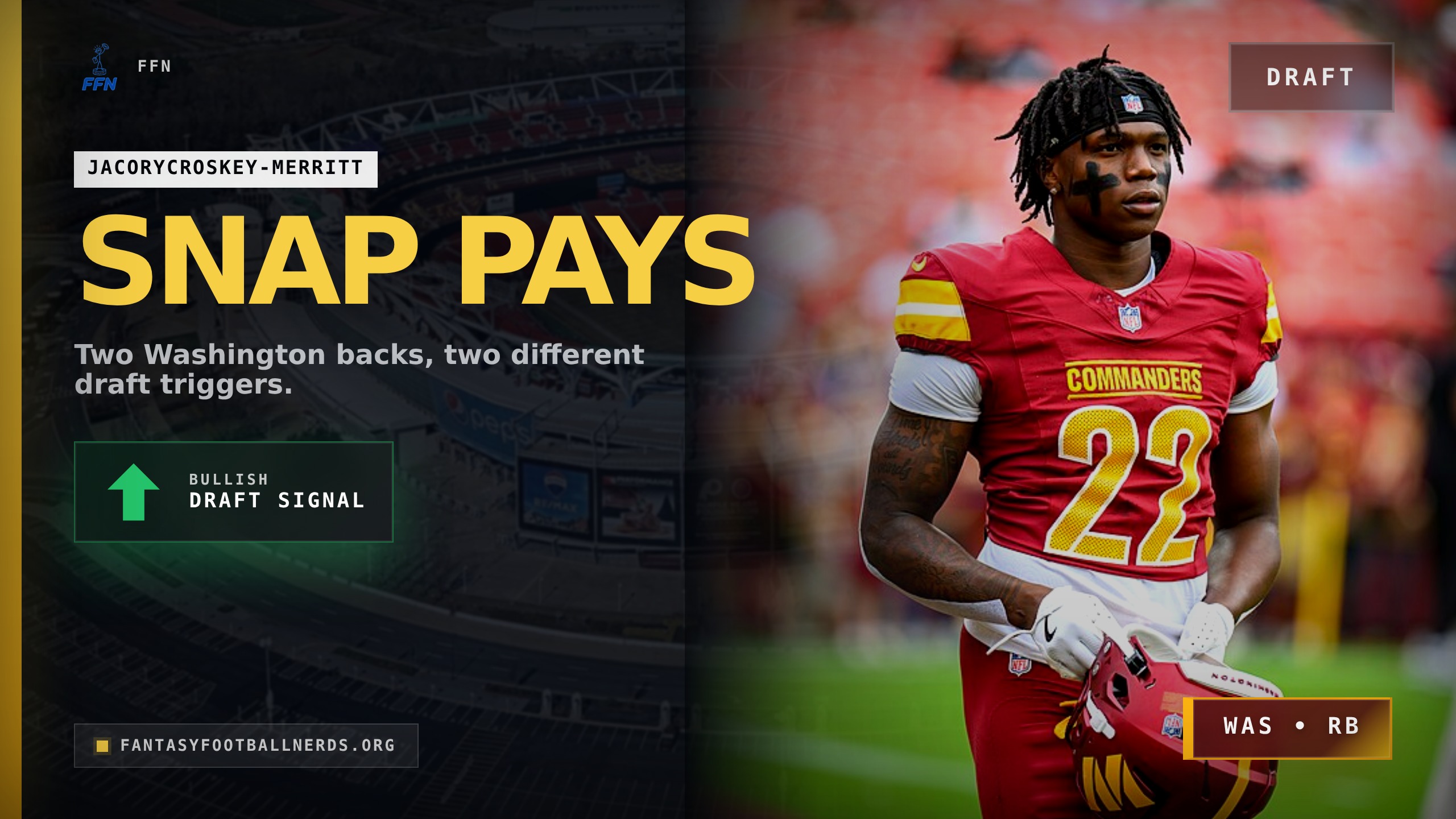
Croskey-Merritt still answers the first-down question Croskey-Merritt's case starts with the boring thing fantasy managers often skip: he is listed first.
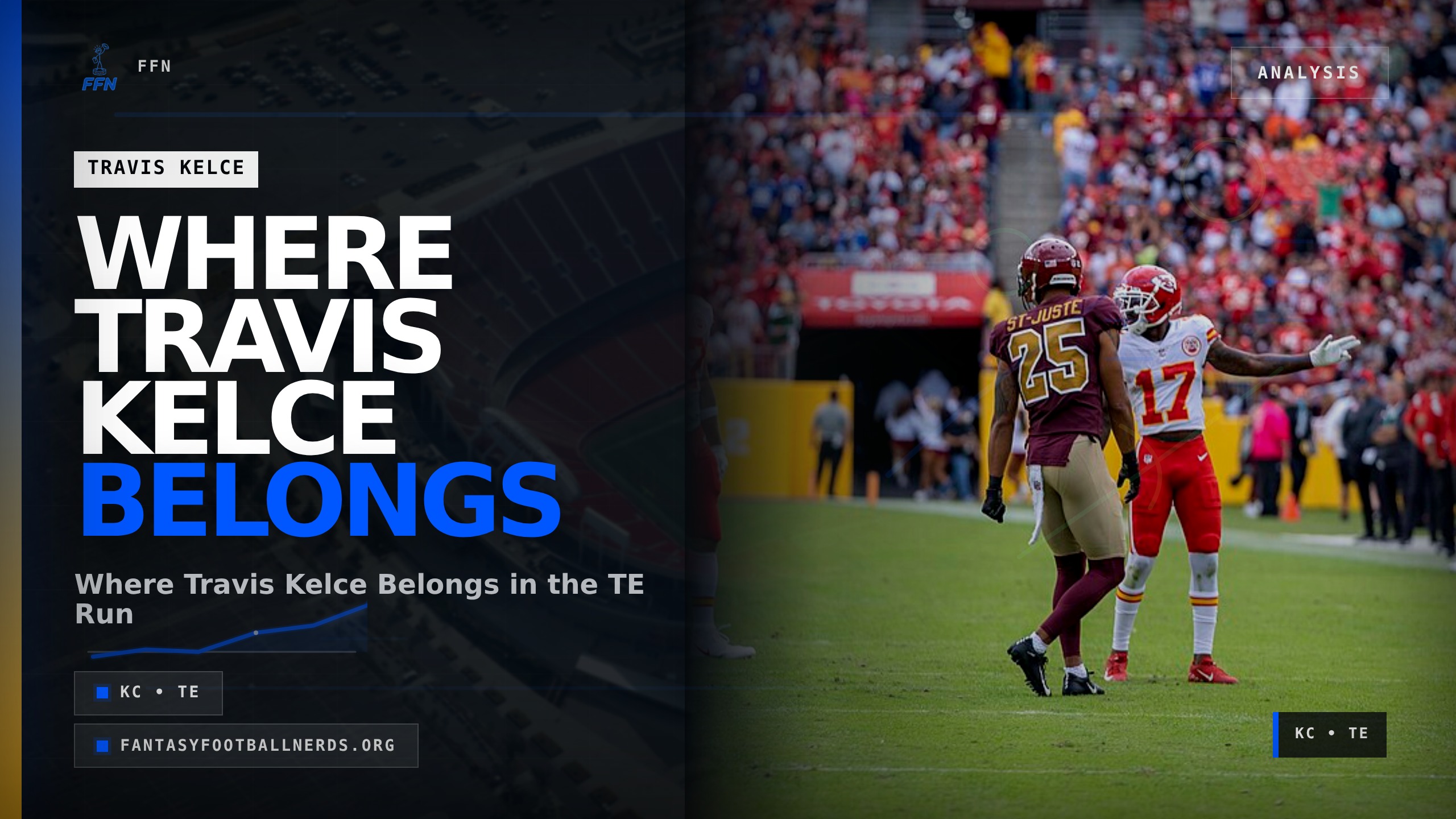
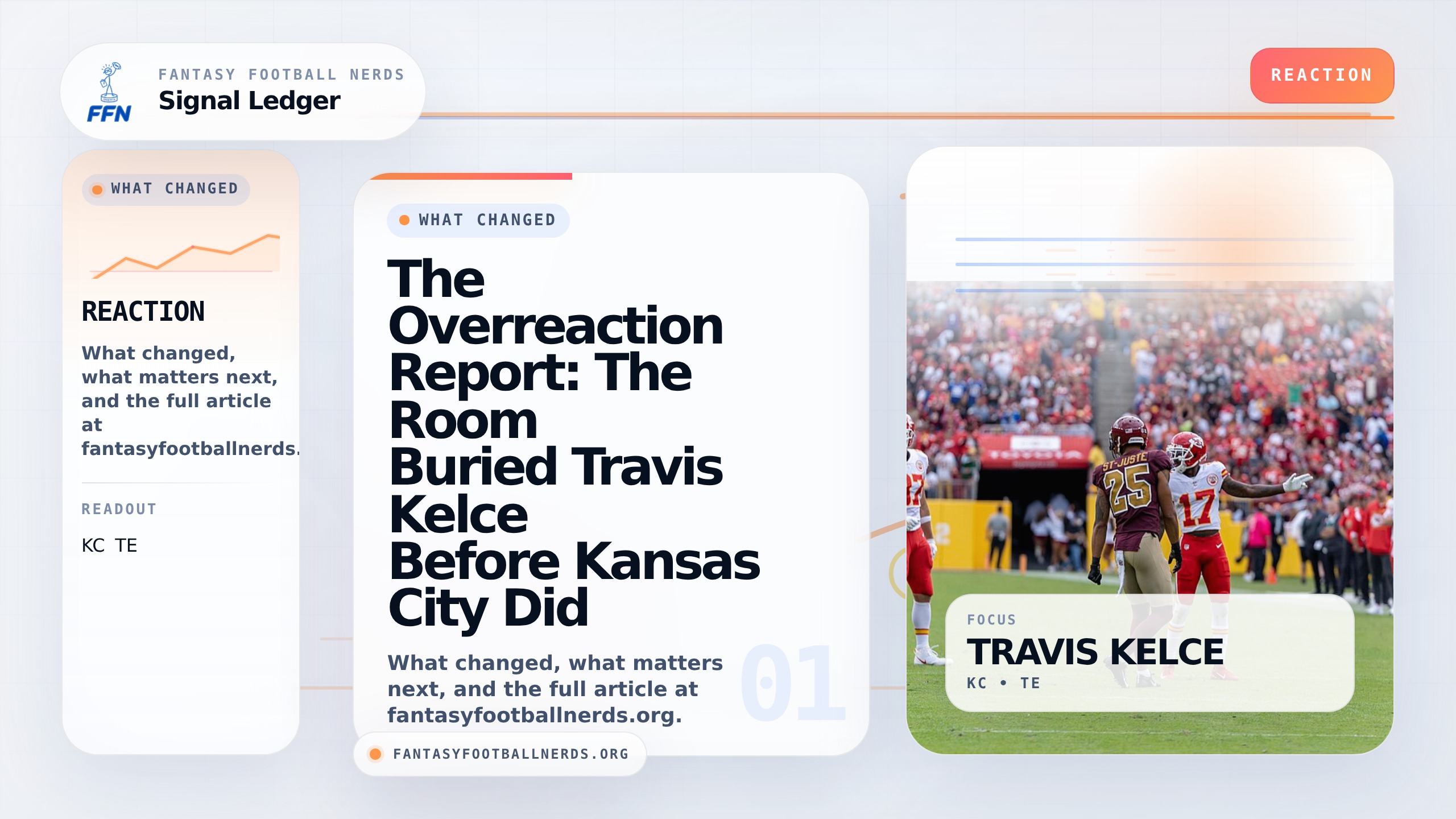
Kelce is a format lever Travis Kelce still has the most valuable connection a later tight end can have: Patrick Mahomes diagnosing coverage after the snap.
This is where situational analysis beats an ADP-only or projection-only reaction: ask what opportunity changes if the practice report lingers.
Lamb carries a first-round PPR ADP around pick 11, while FFN's board is a little more cautious but still treats him as the most stable Dallas piece.
The index only asks which player has verified target earning, which player needs backfield contact, and which player is still in a useful monitor bucket.
For keeper leagues, let the manager carry the role risk instead of forcing a full starter valuation before camp shows protection snaps or goal-line work.
He needs contact work without a management story, third-down reps, and enough two-minute snaps to prove the receiving role survived the injury context.
There are no matchups to exploit in June, so the compelling angle is opportunity creation: how many throws will New England actually design for Brown?
That is Mahomes getting to the top of the drop on third-and-6 and still knowing where the option route should settle between linebackers.
The PPR board projects McConkey for 86 catches on 119 targets, which is exactly why he is more attractive in catch-heavy scoring than in standard.
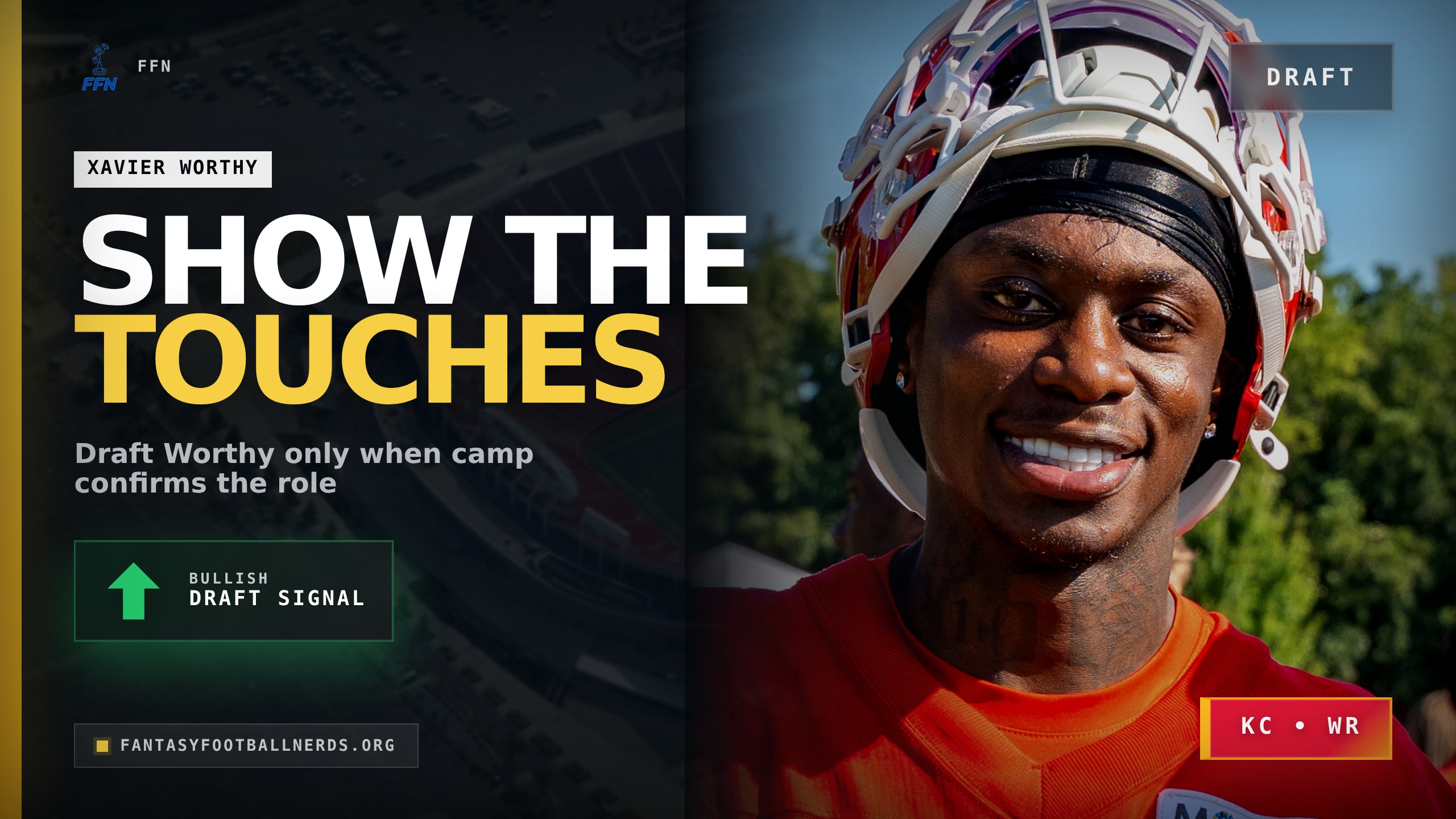
If Worthy is getting motion touches, rub routes, and quick throws inside the 20, the Chiefs are telling us they see him as more than a boundary sprinter.
Fantasy managers need to see him attached to the weekly passing plan when Denver needs a conversion, not just when the call sheet wants one easy touch.
You want either a price break or visible summer evidence that the target work, protection snaps, and two-minute usage are traveling with the rushing role.
Kraft runs the full route menu, stays in the main passing group, and gets the kind of middle-field and scoring-area looks that made the prior usage matter.
If he slides into a flex-price pocket, especially in reception-heavy formats, he becomes a practical bet on passing-down access and red-zone touch quality.
The current depth chart lists Jerry Jeudy first among Browns wide receivers, then Concepcion, then Denzel Boston, with Cedric Tillman behind that group.
The better read is the second answer: the Vikings can change quarterbacks without changing the identity of the receiver they want winning the first read.
Michael Pittman leaving Indianapolis pulls a familiar target out of the Colts' passing tree and puts more pressure on the players who can win in structure.
He is attached to Jared Goff, an offense that can sustain structure, and a play caller profile that does not need chaos to create explosive chances.
The offense helps the floor, then caps the ceiling Kevin O'Connell is still listed as Minnesota's head coach, with Wes Phillips as offensive coordinator.
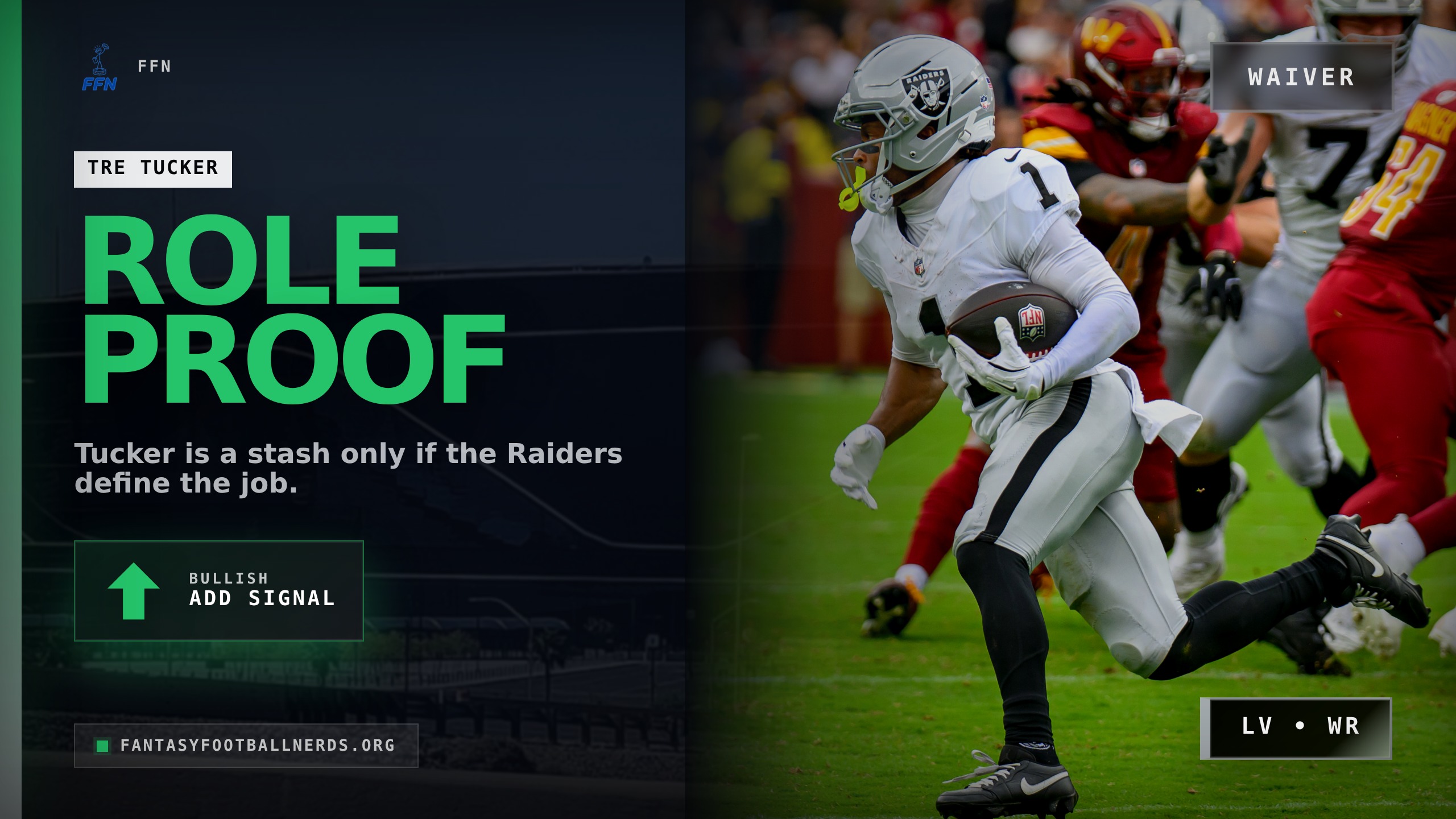
Ashton Jeanty • LV The Raiders also have a receiver depth chart that does not force Tucker to beat an established wideout star just to get on the field.
Flowers is the cleaner Ravens passing bet until that changes Zay Flowers is the pressure point in this article because he keeps the Baltimore case honest.
You are drafting a role that has to reappear, hold up against real target competition, and come with enough room in the cost to cover the ways it can miss.
If the offense spreads the ball and the deep connection is only occasional, he can give you useful real football without enough weekly fantasy control.
Nix falls after the stable QB starters Draft if your build needs QB You are buying Denver's volume and rushing access without paying for a perfect outcome.
At publish day, Kittle sits as TE9 with a market ADP of 99, and the move is to target him after the stable premium tight ends only if that range holds.
If Loveland becomes the easy completion on key downs, Odunze can still be the best Bears wide receiver without separating as a weekly fantasy advantage.
Commissioners should notice that distinction too, because scoring rules and bench structure decide whether the injury delay is a real strategic cost.
The official transaction feed has him traded from Philadelphia to New England, and the 2025 role data shows why that is such a large football problem.
Kittle is still the tight end who can command middle-field attention, and McCaffrey is still a back who can turn pass-game work into weekly fantasy stress.
Drafting Mayfield as your answer after the tier flattens is different from pretending Tampa Bay has already solved every pass-game hierarchy question.
Stevenson can be the first name on the chart and still lose fantasy leverage if another back takes passing downs, hurry-up work, or short-yardage snaps.
That gives the Patriots a clear offensive center, which matters more than the rumor cycle because fantasy managers need a weekly path, not just a headline.
McConkey's tracked target share softened in the closing sample, so his price has to respect the possibility that Los Angeles spreads the ball around.
Condition 3: The new pieces cannot blur the target map Etienne is part of the optimism, but he should not be treated like the same kind of bet.
Draft Barkley when he falls into the late-first or early-second pocket, especially if the top wide receivers and cleanest running backs are already gone.
Joe Burrow becomes the right pick when that pass volume, target quality, and explosive-play push are available after the rushing quarterbacks are gone.
The latest approved news says Achane had offseason shoulder surgery, has no firm public timeline, and previously missed the finale with a shoulder issue.
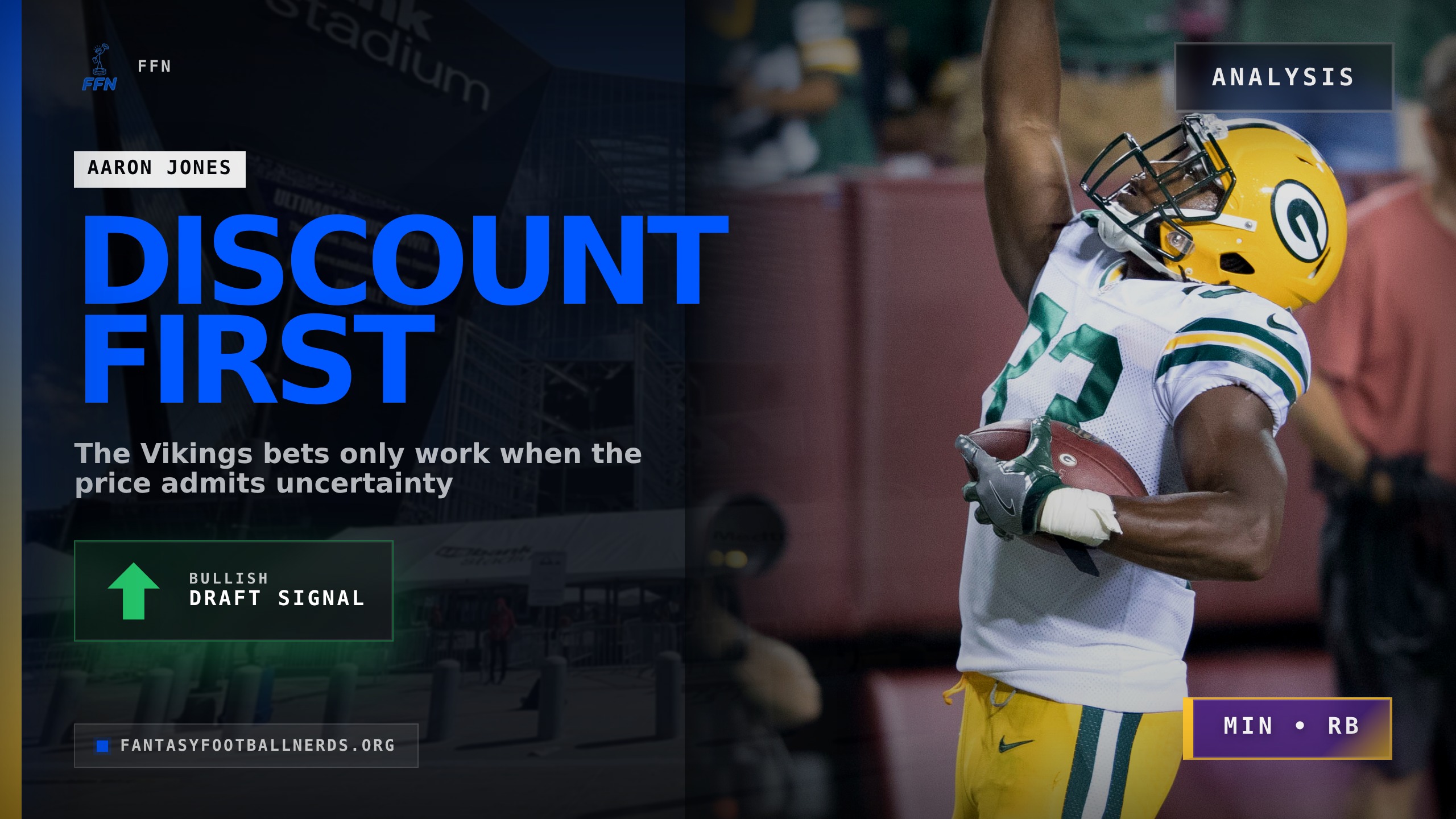
McCarthy only as a deeper-format stash, and attack the Minnesota skill players only when the price gives you something back for absorbing the uncertainty.
If a quarterback run pushes him into a range where you need weekly trust, pivot to stability and let someone else buy the cleanest version of the story.
A receiver with team commitment, depth-chart priority, and a quarterback environment that can support real passing volume should not be shopped casually.
Your entry point starts when the backs around him also carry age, committee, injury, or role questions and his price break actually buys the uncertainty.
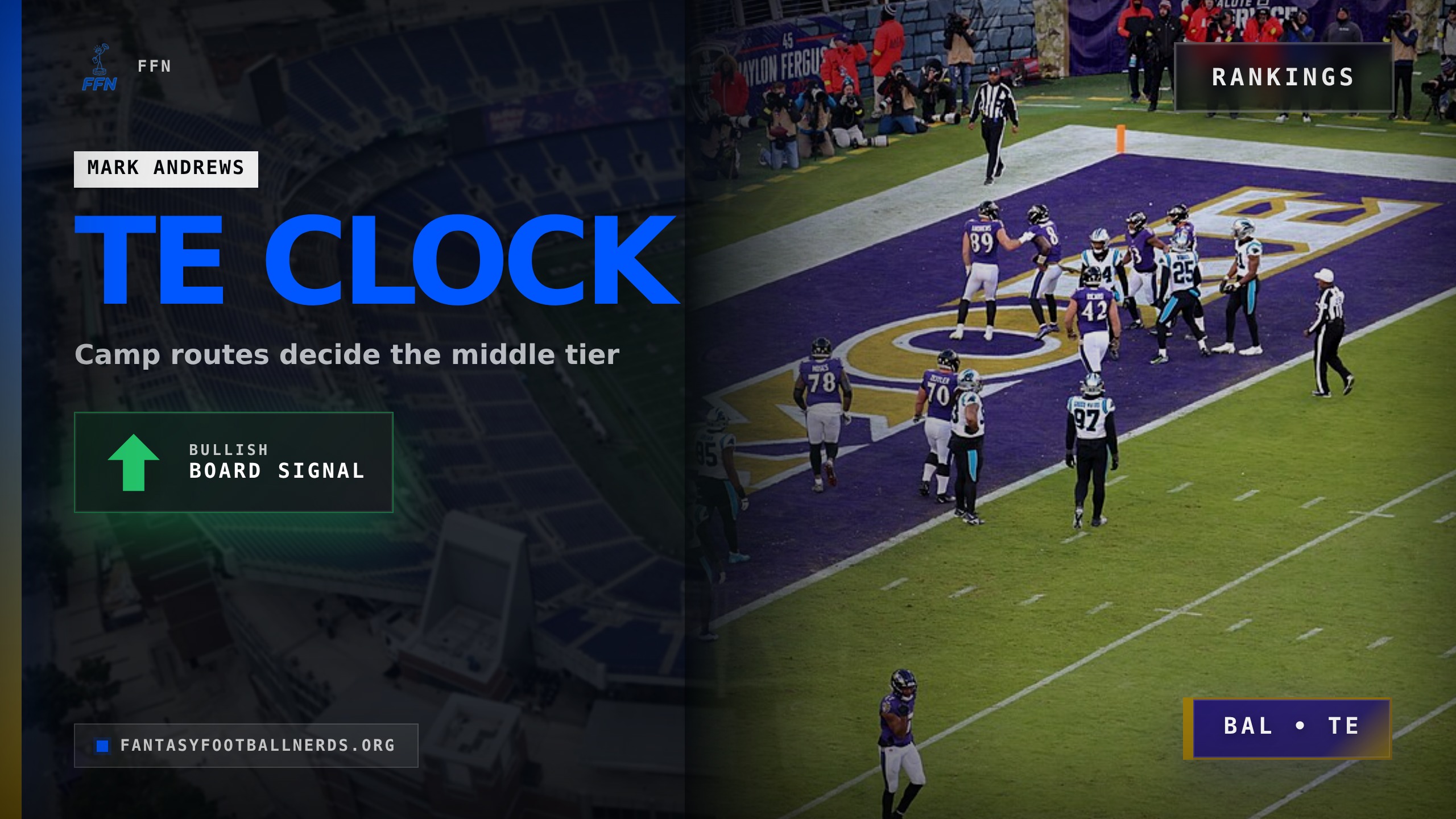
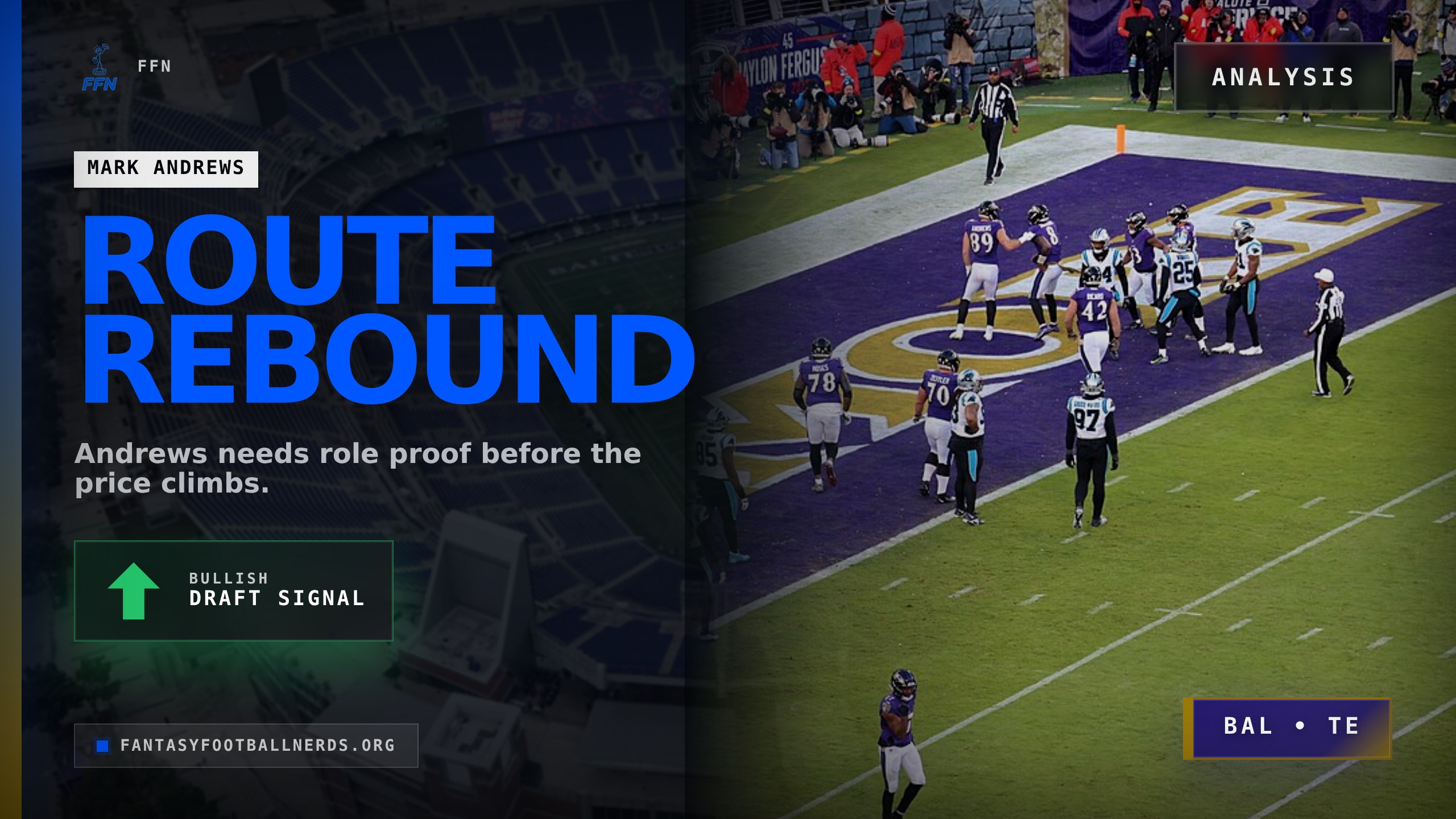
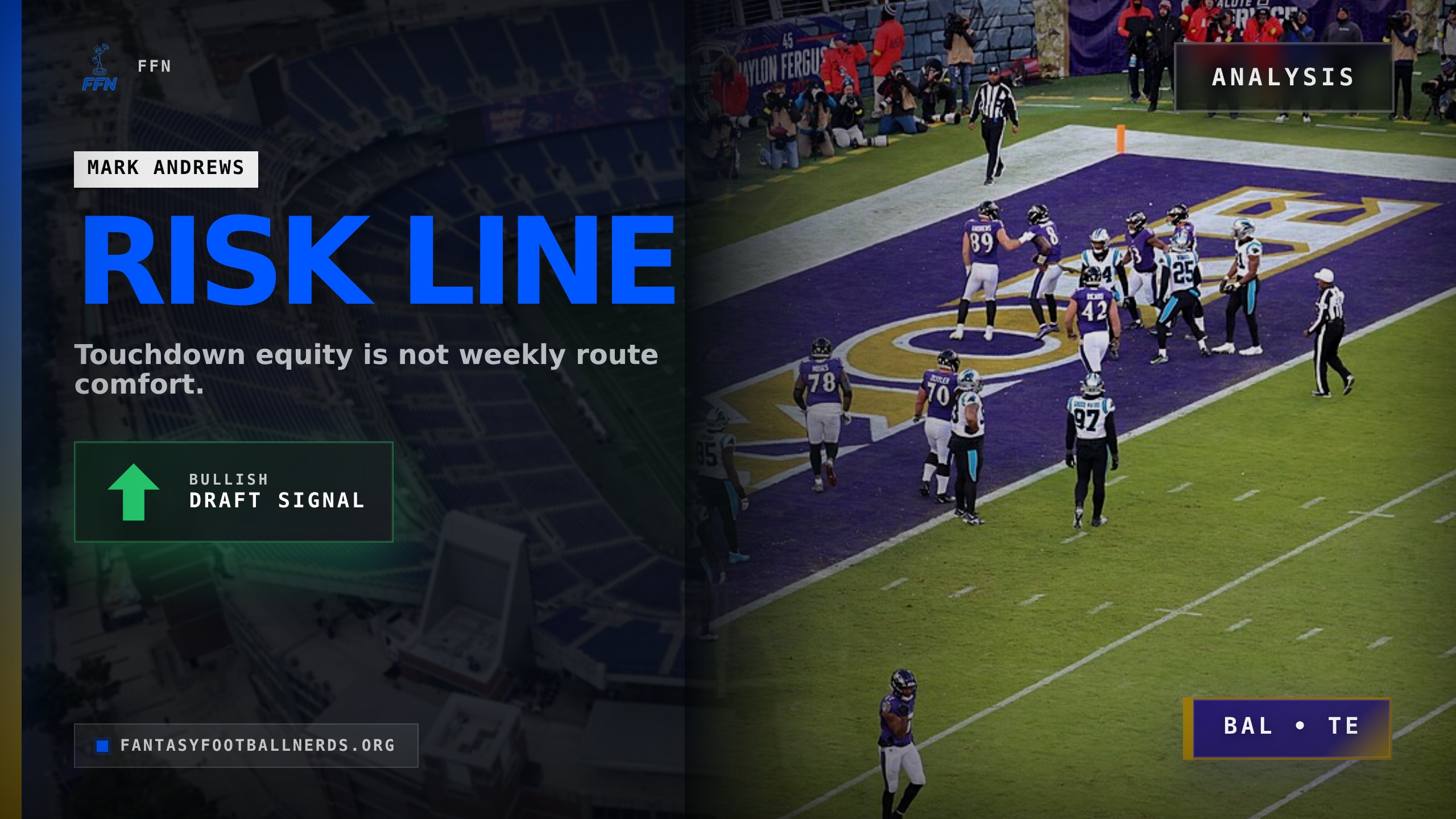
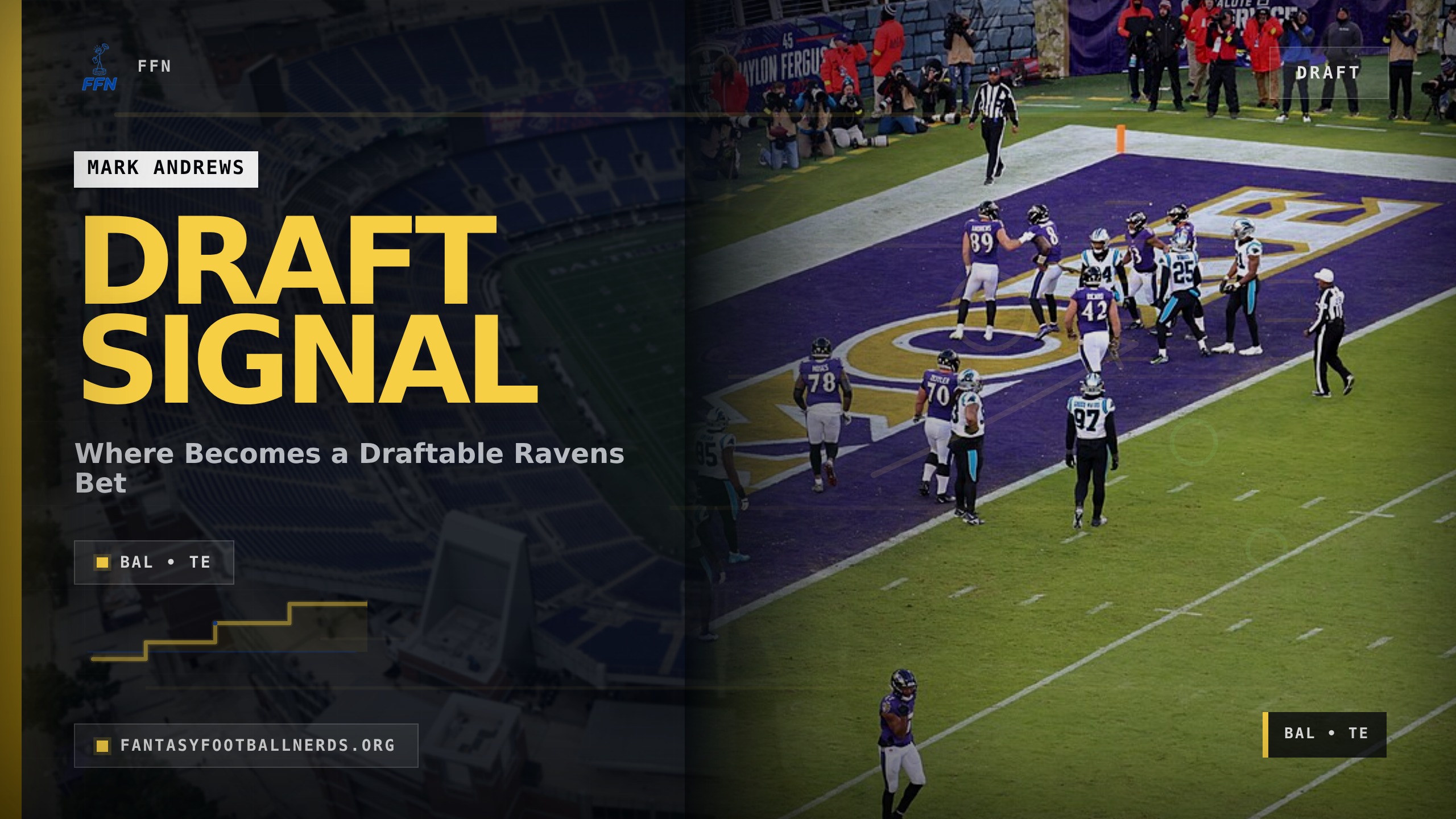
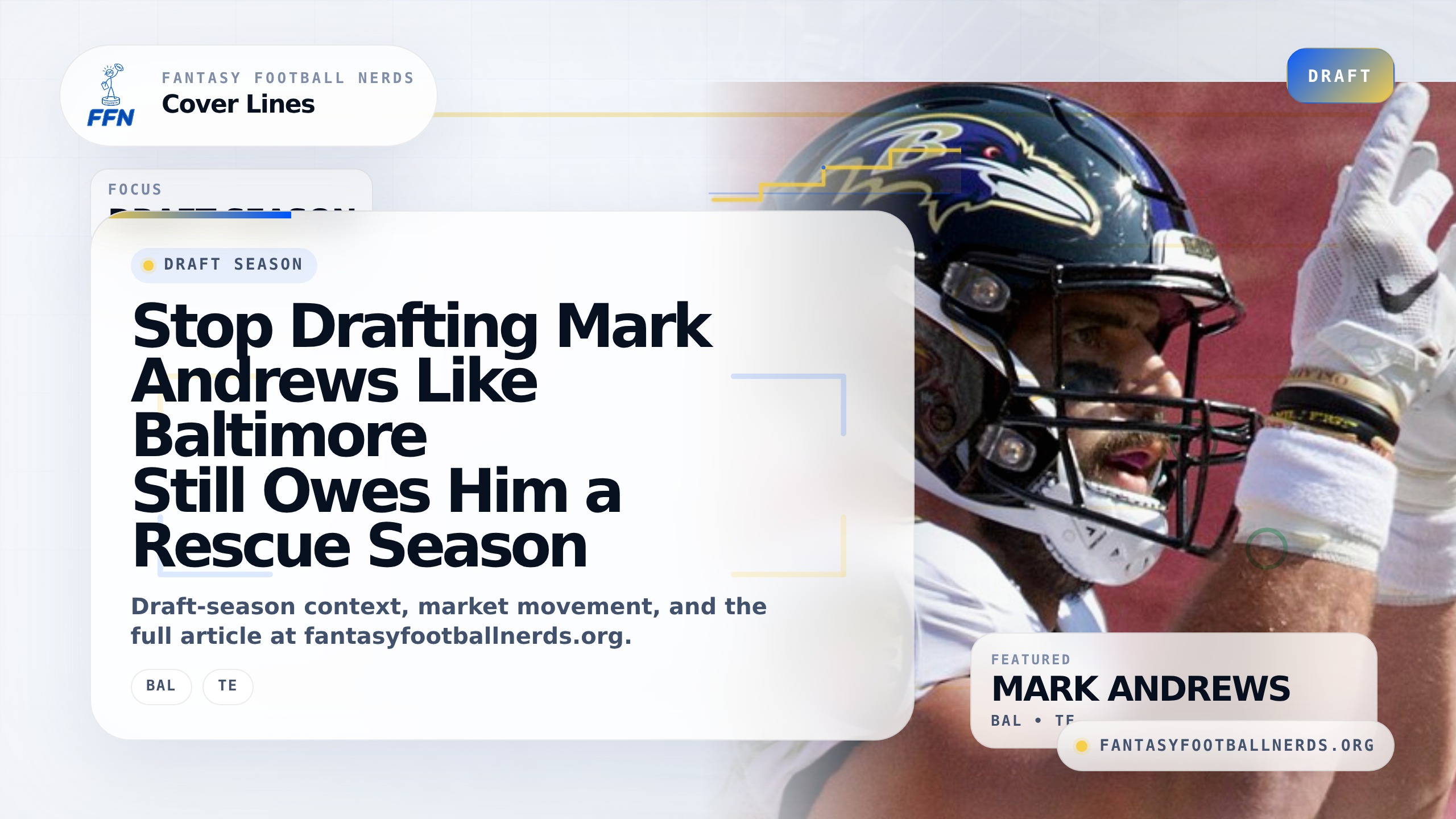
That matters because Lamar Jackson is a quarterback for Baltimore, and his middle-of-field throws can still turn one Andrews target into a matchup swing.
Tennessee's passing efficiency profile was rough, and the early game-environment file gives the Titans low implied totals in the opening coverage window.
A secondary receiver in this offense can have a real NFL job and still leave fantasy managers staring at the bench after his good week already happened.
The draft rule Draft Williams when your roster already has bankable target volume and needs a player who can change a week on fewer touches.
A good league should reward managers who identify role growth early, but it should not let them bank every uncertain late breakout without roster pressure.
You are drafting him because the target map has a clear first stop, and that matters in a room where the alternatives still need help from role movement.
That is real work, and it matters in drafts where managers can come out of the first few rounds with receivers everywhere and no stable running back plan.
Use McConkey as the dividing line, not the enemy McConkey is the cleaner Chargers receiver pick because his role asks fewer things to break right.
If your early roster already has stable receiving production, Ashton Jeanty is a cleaner swing because you can absorb the offense taking time to settle.
Jones can still help a roster that opens with receivers, waits on RB2, or needs a player who can give usable weeks while the bench chases ceiling.
Elijah Mitchell was released by New England in late April, and the current depth chart lists Jam Miller and deeper backs behind Stevenson and Henderson.
He is a format-sensitive second-wave tight end whose value depends on whether the catches, snaps, and scoring-area chances stay attached to the same role.
A stronger backfield can let Kansas City play from more scripts, lean on early-down efficiency, and keep Kelce's role valuable without making it oversized.
If Green Bay keeps rotating bodies by matchup, he can be efficient without becoming the kind of edge that justifies chasing him past your tier plan.
Tyjae Spears still has the role that can become useful if the offense leans into checkdowns, hurry-up work, and messy second halves around Cam Ward.
He played 16 tracked games and had strong snap involvement late, but the target share profile was not stable enough to make him a first-read assumption.
It is whether your roster can afford to spend on a quarterback who still needs New England's supporting cast and protection to stabilize around him.
Dallas gives the role a better runway A field stretcher needs an offense that will actually throw enough for the low-volume weeks to be worth tolerating.
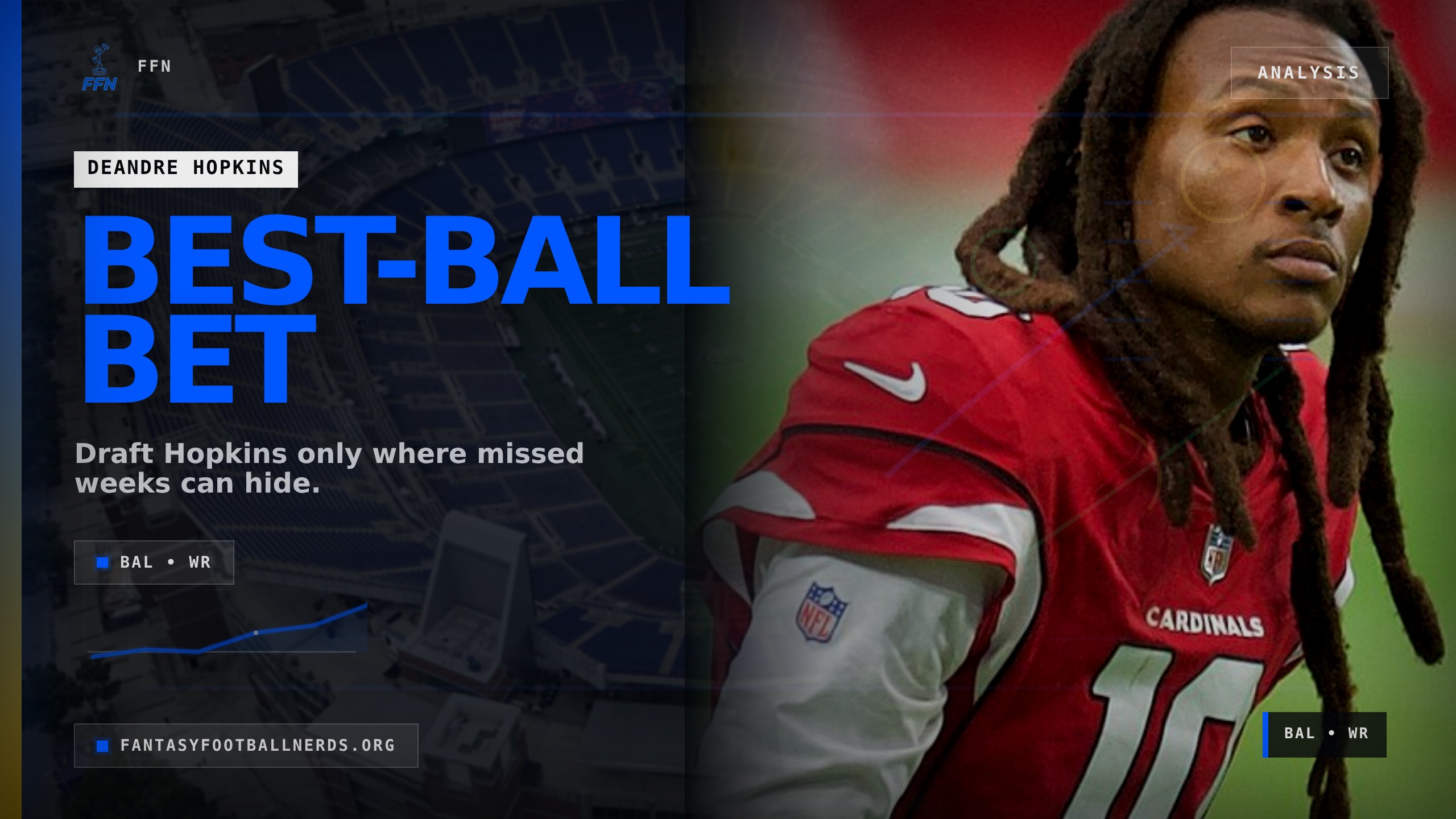
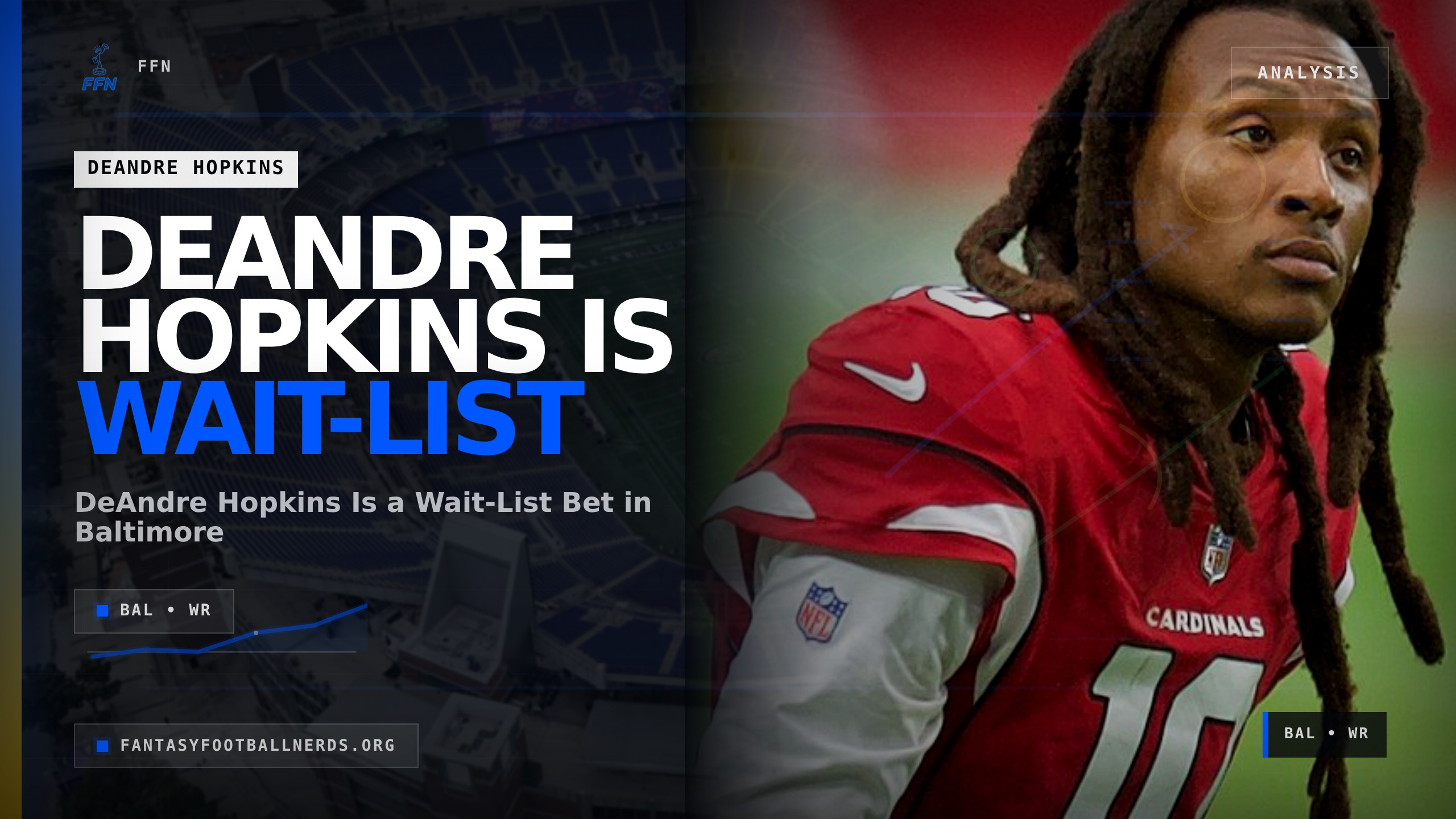
If roster clarity and route usage confirm that Hopkins is actually part of the Ravens' receiver rotation, he can be a late best-ball or deep-bench swing.
In a shallow one-quarterback league, let the room chase the future starter story unless he falls into a range where the roster spot no longer hurts.
Wait for the room to push past him, or let someone else pay for a pocket-leaning quarterback in an offense that does not need to chase volume every week.
You are drafting a rushing quarterback who can survive a messy passing day better than most backups because he creates points outside the structure.
Pearsall's path is more believable if you are buying him as the receiver most likely to absorb a larger role in a changing room, not as a guaranteed alpha.
A pass-heavy team can still squeeze a secondary receiver if the first read, tight end answers, backfield targets, and weekly game plan all take their turn.
He is a role bet: draft him late only if you are buying a designed vertical job, not hoping a crowded target tree accidentally turns into weekly WR3 usage.
If your league rewards long touchdowns or yardage thresholds, Williams should move up your target list after the roster already has safer weekly volume.
Sarratt is a first-year wide receiver prospect from Indiana assigned to Baltimore, and Cuevas is a tight end prospect from Alabama assigned to Baltimore.
You are betting that a pass-leaning team can keep one possession receiver startable while the deeper threats and specialty pieces stretch the target tree.
The failure case for being cautious is obvious: if camp usage shows Reed staying on the field across personnel groupings, the market will catch up fast.
If the Vikings treat Jones as one piece of a three-back rotation instead of the trusted receiving back, the draft pick becomes touchdown-dependent fast.
He needs the first carry lane, the first scoring-area lane, and enough passing-down leakage that he is not coming off the field every time Tampa speeds up.
FFN's current injury monitor still has Mahomes in a return-window bucket after ACL and LCL rehab, with Kansas City measuring the timeline against Week 1.
6 percent pass rate last season, yet the same team profile carried negative passing EPA and allowed pressure to turn too many drives into survival mode.
If the efficiency slips, or if New England becomes more rush-heavy near the goal line, Maye loses the clean edge that makes him the first Patriots click.
He needs the Chargers to keep one receiver lane consolidated, not to abandon the run, bench Hampton in scoring areas, or turn every week into a shootout.
The Montgomery comparison is useful only as a warning Montgomery's exit matters because it vacates a job, not because it hands that job to Pacheco in full.
Kraft has to keep the better receiving work, Musgrave has to avoid flattening the role, and the price has to leave profit if the target lane consolidates.
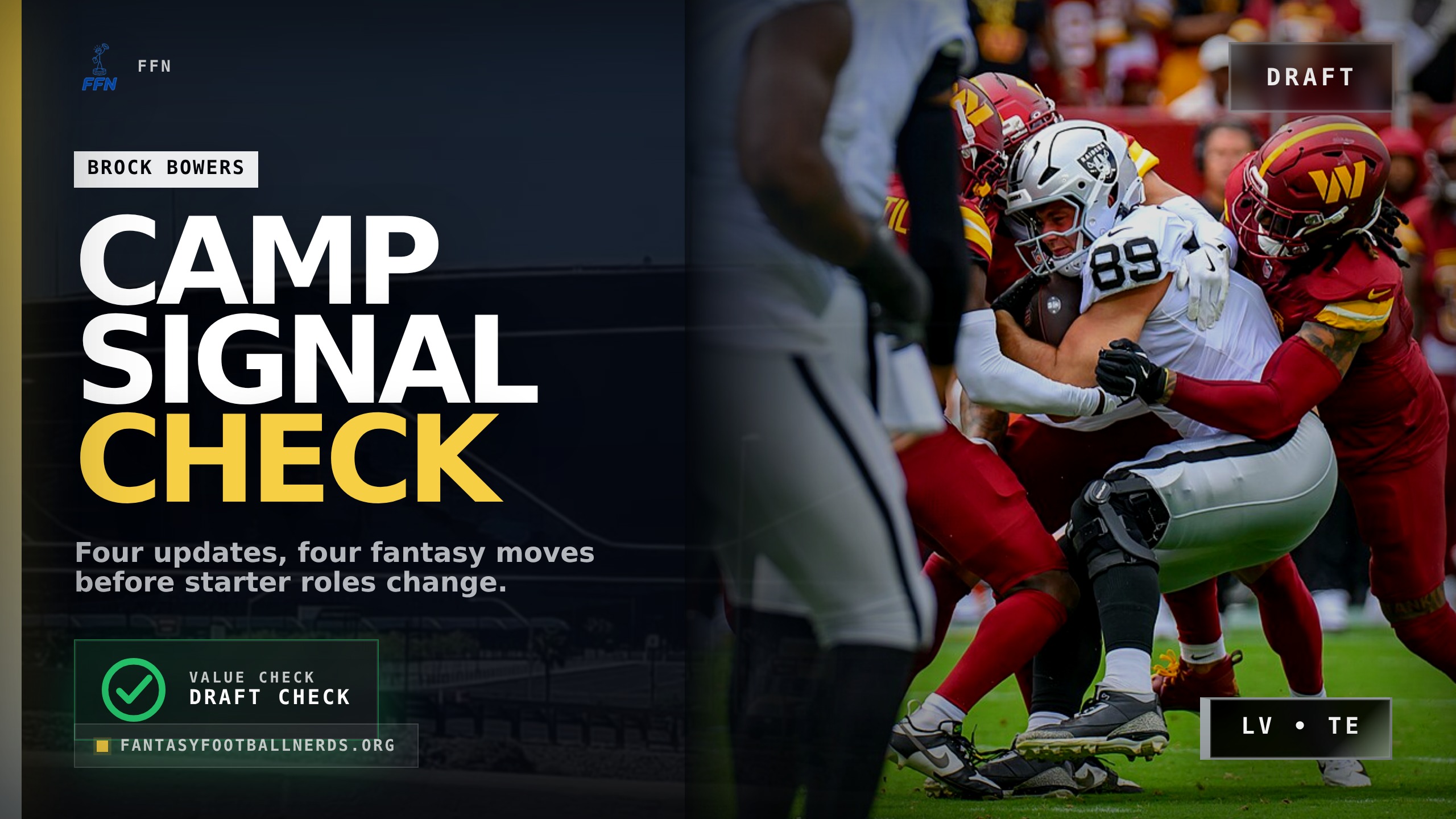
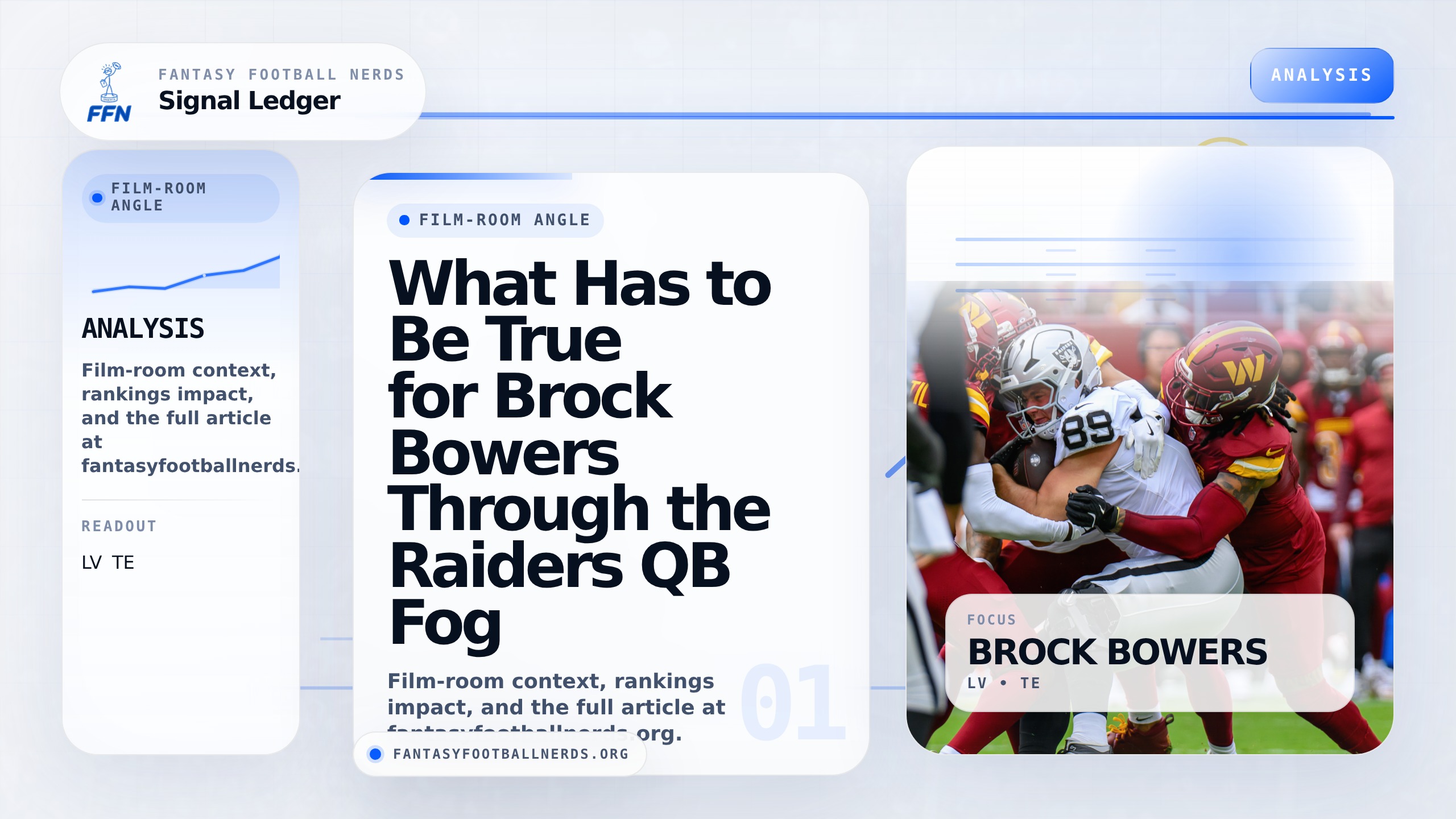
Brock Bowers gives the passing game a real middle-field answer, which should keep defenses from treating the backfield as the only thing worth stopping.
Jordan Mason is a better immediate comparison point because Minnesota's backfield has a known veteran in Aaron Jones and a price gap the model can see.
The usable path is specific: target him in defense-premium formats, DL-required leagues, or deeper benches where interior production has a weekly floor.
Bryce Young's attempts rose late in the tracked sample, and Tetairoa McMillan already carries the cleaner target-based profile in Carolina's draft room.
Late in the tracked sample, Cousins was still playing full snaps and handling normal quarterback volume, with roughly 29 attempts in that closing window.
The passing environment is efficient, and his tracked passing profile still supports the idea that San Francisco can create useful weeks through structure.
He needs enough routes that the offense has to account for him weekly, especially in a pass-leaning structure under Kellen Moore and Doug Nussmeier.
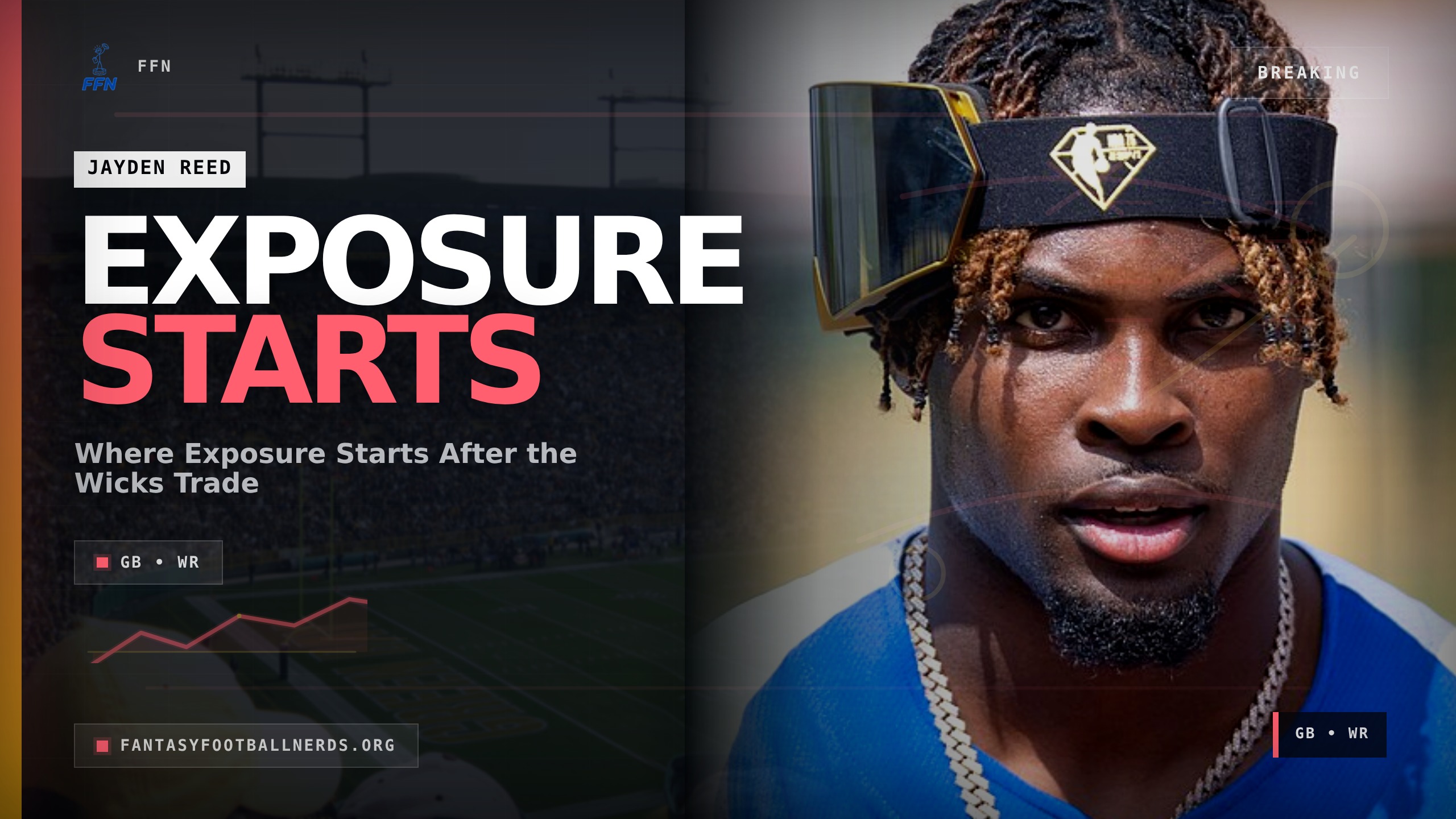
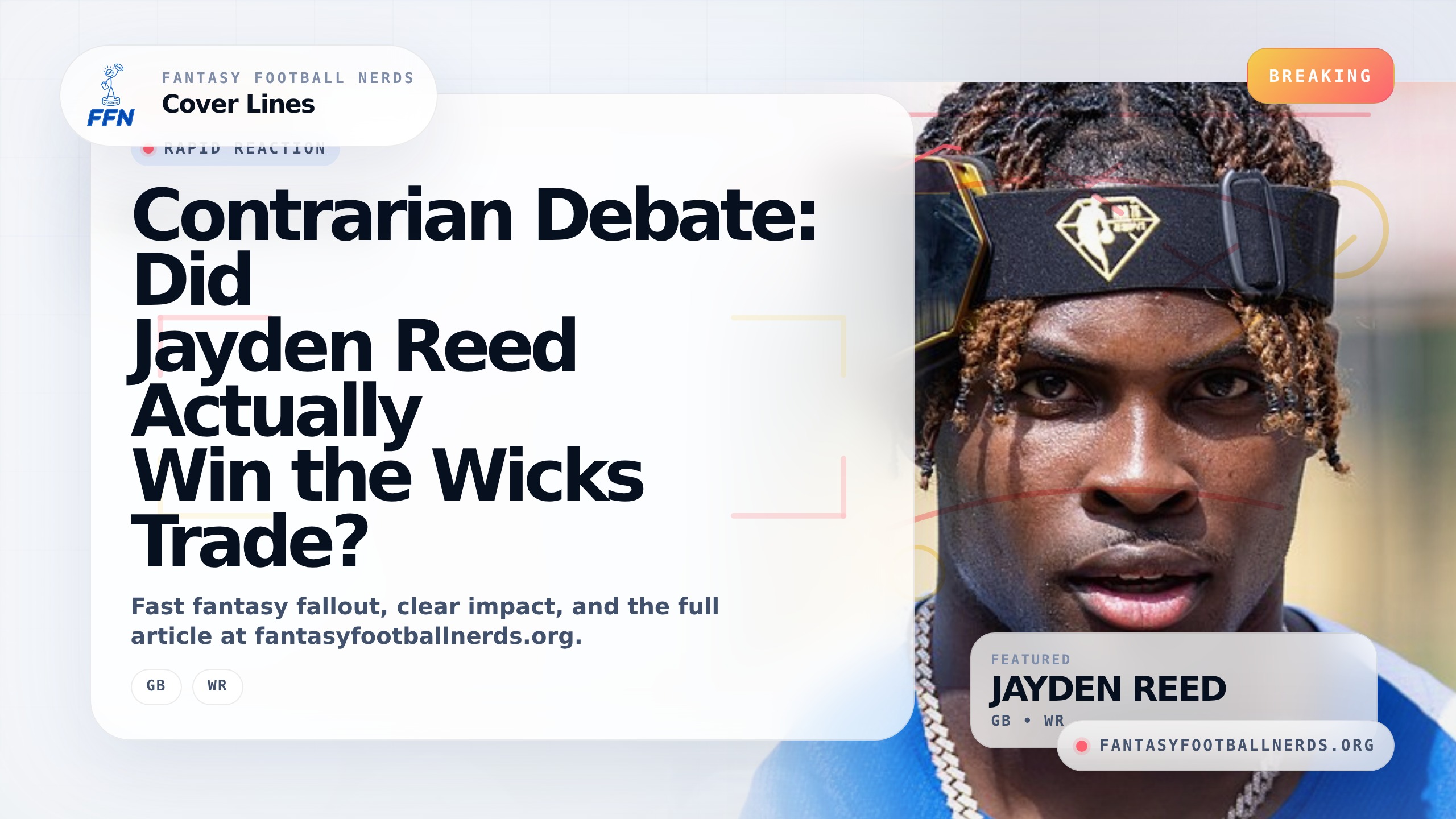
Reed is still a bet, not a conclusion Reed is the easiest name to promote after the trade, which is exactly why he is the easiest place to overreach.
Brian Thomas brings the explosive pull, Travis Hunter brings the draft-week curiosity, and Liam Coen gives the whole offense a fresh layer of intrigue.
If you opened with an early running back, the better use of Tampa's Round 1 choice is to understand Irving more clearly, not to jam him onto every roster.
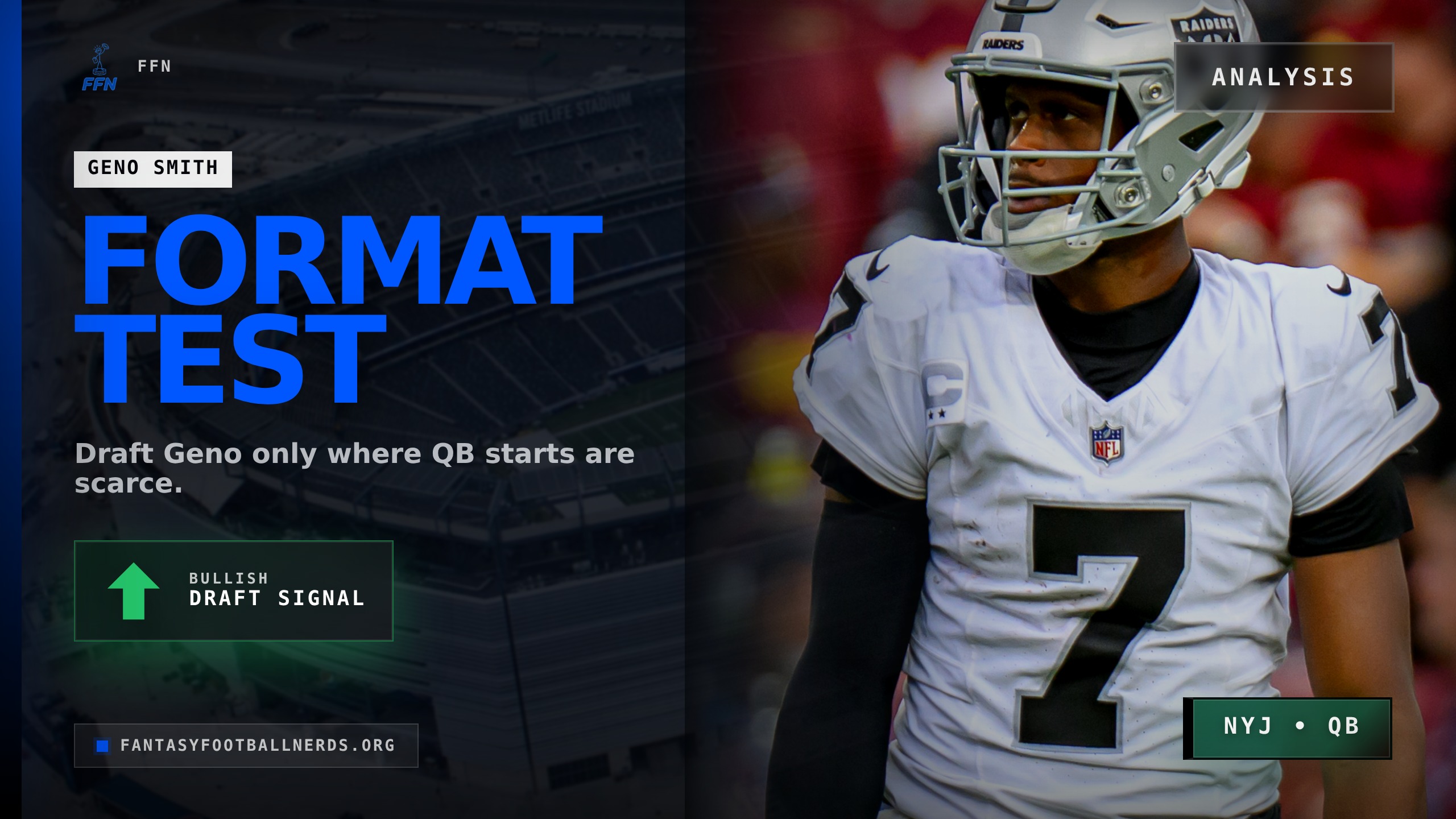
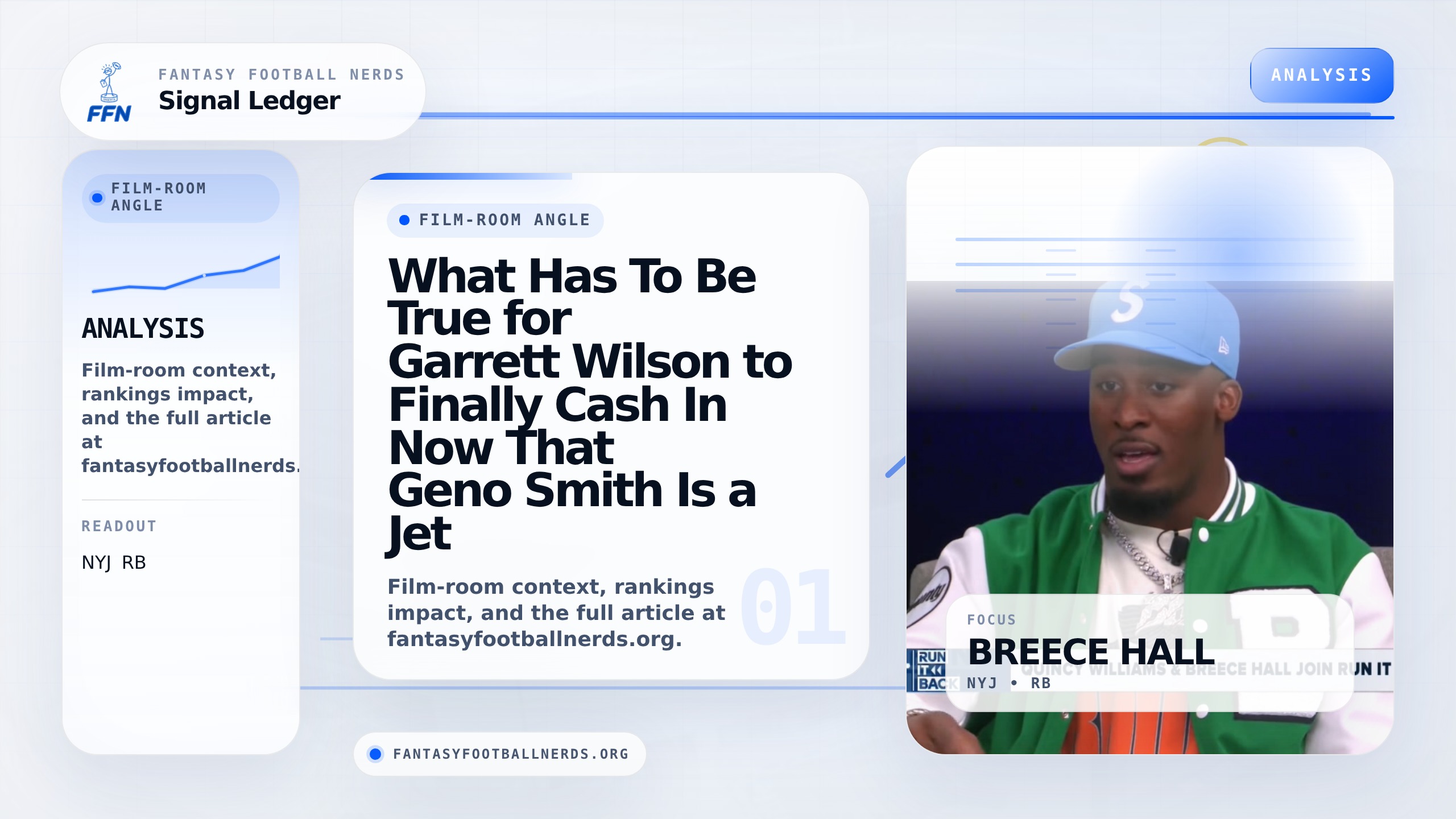
Geno Smith was traded to the Jets, Ashton Jeanty is now part of the touch equation, and Las Vegas has every reason to change how this offense operates.
Draft verdict: pass at the current cost, and only come back if the role starts looking bigger than the one Baltimore actually showed you late last year.
A pass-heavy offense can support a field-stretcher even when the target pecking order is imperfect, because the role still gets enough chances to breathe.
Aaron Jones is the reminder that not every veteran role discount is equal Aaron Jones is useful here because he shows what a worse veteran bet looks like.
Minnesota tightened the workload late, Jones responded with better fantasy output, and the team kept him around instead of ripping up the depth chart.
Even with his own falling snap-share flag, he is still the easiest excuse for an offense that wants to shorten the game and let the defense carry the mood.
That gap exists because the room is paying for three things before they happen: cleaner snap control, cleaner touchdown access, and a quieter backfield.
Draft action: if you want Chargers exposure early, do not force the backfield story just because it sounds cleaner on paper than it looked on the field.
His last-five-game receiving usage says he can live in obvious throwing situations, and that matters in an offense that already threw more than most teams.
Draft the part of the Giants offense that already fits the way this team wants to play, then decide whether the quarterback price ever comes back to earth.
Failure case: the Panthers still posted negative passing EPA last year, so better volume does not automatically mean cleaner weekly scoring.
Failure case: if camp usage finally shows Green Bay treating Reed like the one receiver who can live in every situation, this caution will age badly fast.
Dontayvion Wicks was officially traded from Green Bay to Philadelphia on April 13, and fantasy drafters immediately did what fantasy drafters always do.
When pass attempts and scramble points are already part of the weekly shape, you do not need a perfect receiver room for the quarterback to matter.
If Henderson owns the screen game and the long-down-and-distance work, then the bet gets a lot more interesting because the role finally matches the price.
He makes more sense as the bench receiver who can grow into your lineup than as the player you need to cover a shaky WR2 spot in September.
If Jacksonville really uses Hunter as a full-time cornerback and only a part-time receiver, the old late-round upside case gets much thinner.
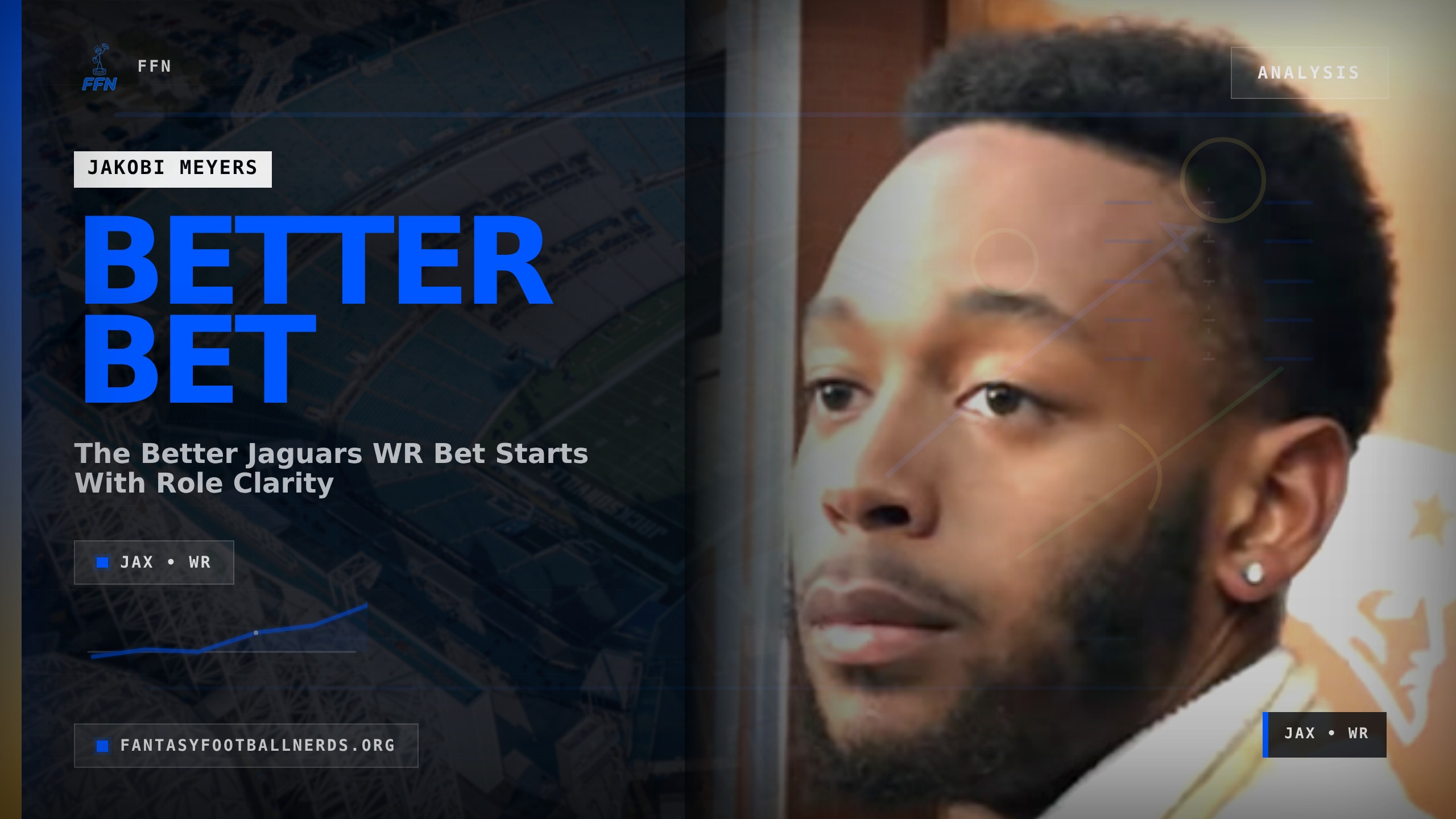
Draft action: after McConkey, use Meyers as the calmer full-PPR answer and spend the saved pick on another position or on a different ceiling swing later.
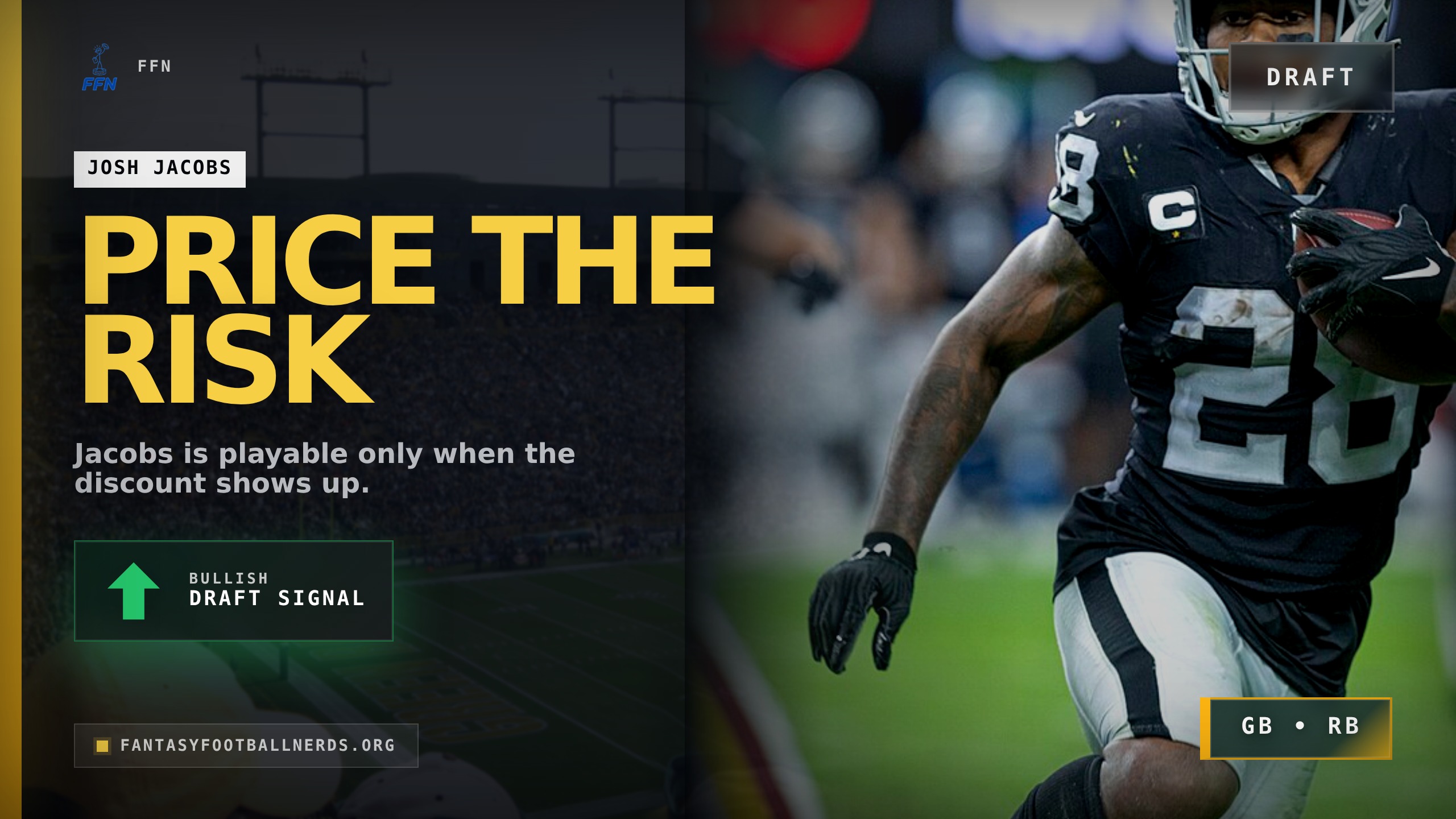
Draft action: if you want Green Bay early, start with Jacobs and stop there unless the next Packers pick comes at a friendlier part of the draft.
Jacksonville already has Brian Thomas, Jakobi Meyers, and Parker Washington, so Hunter needs the weekly role to declare itself before he becomes startable.
WR20 asks you to pay like Tampa already showed us the answer, and the rest of the roster says the room is not that simple yet.
When the quarterback is still low confidence and the surrounding pass-catcher tree is crowded, the clean breakout path gets narrower.
The market is not asleep, his ADP is 13 in PPR, but the profile still holds up because he is the only Texan being priced like a weekly difference-maker.
The model sees Hampton carrying a significant rushing workload for the Chargers, and that rushing volume is worth the same in every format.
Philadelphia's offensive line remains elite, and Barkley's receiving work in the Hurts offense gives him a PPR floor most backs in this tier cannot match.
In standard scoring, Purdy's projection rank climbs to 10th overall, which tells you the model sees top-10 production potential when he is on the field.
Here's the sneaky play in this range: Jennings and Kittle project nearly identically, but the positional scarcity math is completely different.
What Confidence Actually Means Behind every fantasy ranking lives a confidence score -- how sure we are that this player lands near their projected value.
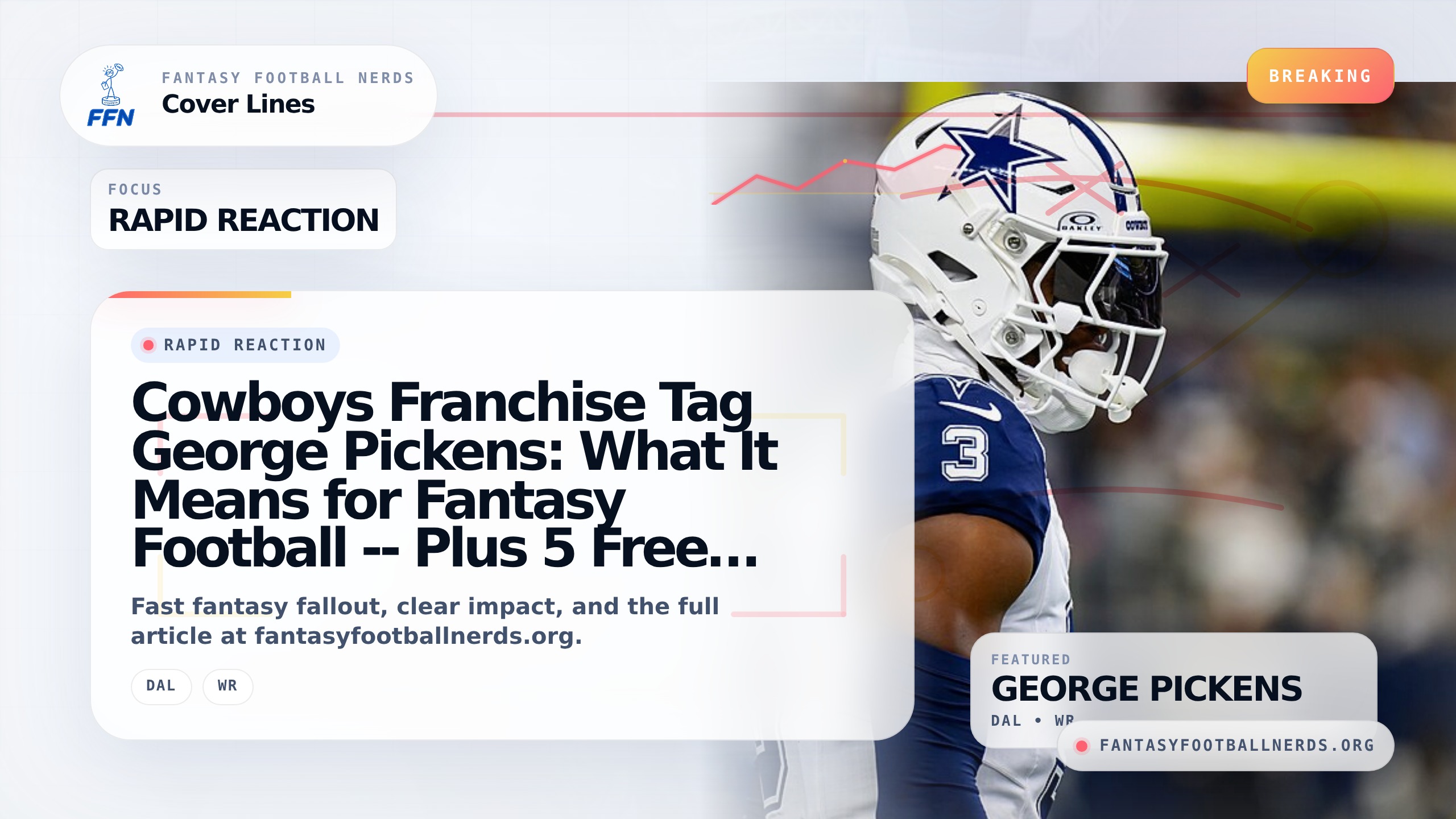
He also just arrived in Dallas via franchise tag, where he has to learn a new system while fighting for targets alongside CeeDee Lamb and Javonte Williams.
Brandon Aiyuk is still technically on the 49ers roster, but the expectation around the league is that he won't play another down in San Francisco.
Pick 15: This is where discipline beats excitement The second turn is usually Bucky Irving, Ja'Marr Chase, Justin Jefferson, and Breece Hall.
The Bears traded their most reliable target to Buffalo on March 11, leaving Caleb Williams without the veteran presence who caught 96 passes last season.
Medium confidence in a world where most Chiefs assets grade out as low tells you the model trusts this landing spot more than the passing game around it.
That 86-spot gap between where he is being drafted and where our model projects him is the largest disconnect in the top 100, and it is not close.
His confidence band is also "low," but the projection gap is not close -- Andrews outprojects Ferguson by more than a full tier of production.
The Bottom Line The Colts have first-round running back talent, a premium tight end, and a quarterback battle that will not resolve until August.
That is a lot of draft capital committed to one offense -- especially one anchored by a quarterback rehabbing ACL and LCL injuries.
In a tier packed with volatile, low-confidence backs (Walker at "low," Etienne at "low," Mason at "low"), Hampton is the safest floor play available.
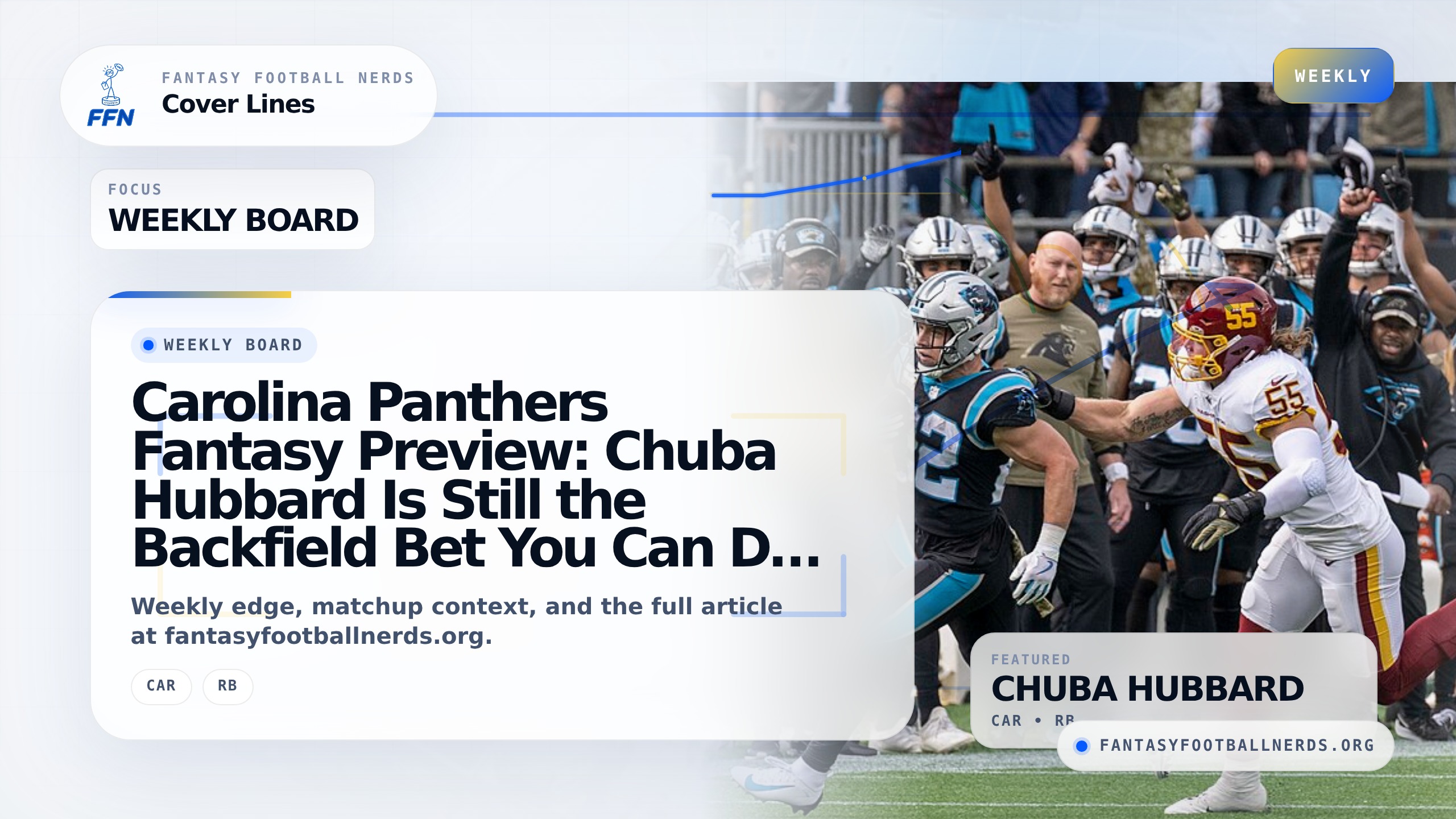
But Hubbard's volume floor as the undisputed lead back gives him a weekly baseline that most running backs drafted two rounds earlier cannot match.
But Murray is a two-time Pro Bowler at 28 -- in his prime, with dual-threat upside that translates directly to fantasy production.
Per ESPN's Adam Schefter, the Eagles rejected New England's offer of a first-round pick plus a third and are holding out for a first plus a second.
Landing Spot Matters Less Than You Think The conventional wisdom in dynasty circles is that landing spot determines a rookie quarterback's fantasy value.
De'Von Achane (RB, MIA) -- ADP 8 Achane's PPR value is heavily tied to the passing game, and the Dolphins are openly shopping their starting quarterback.
Kevin Stefanski to Atlanta: Kyle Pitts Is About to Eat Bijan Robinson sits at ADP 2 for a reason, and nothing about Stefanski's hire changes that.
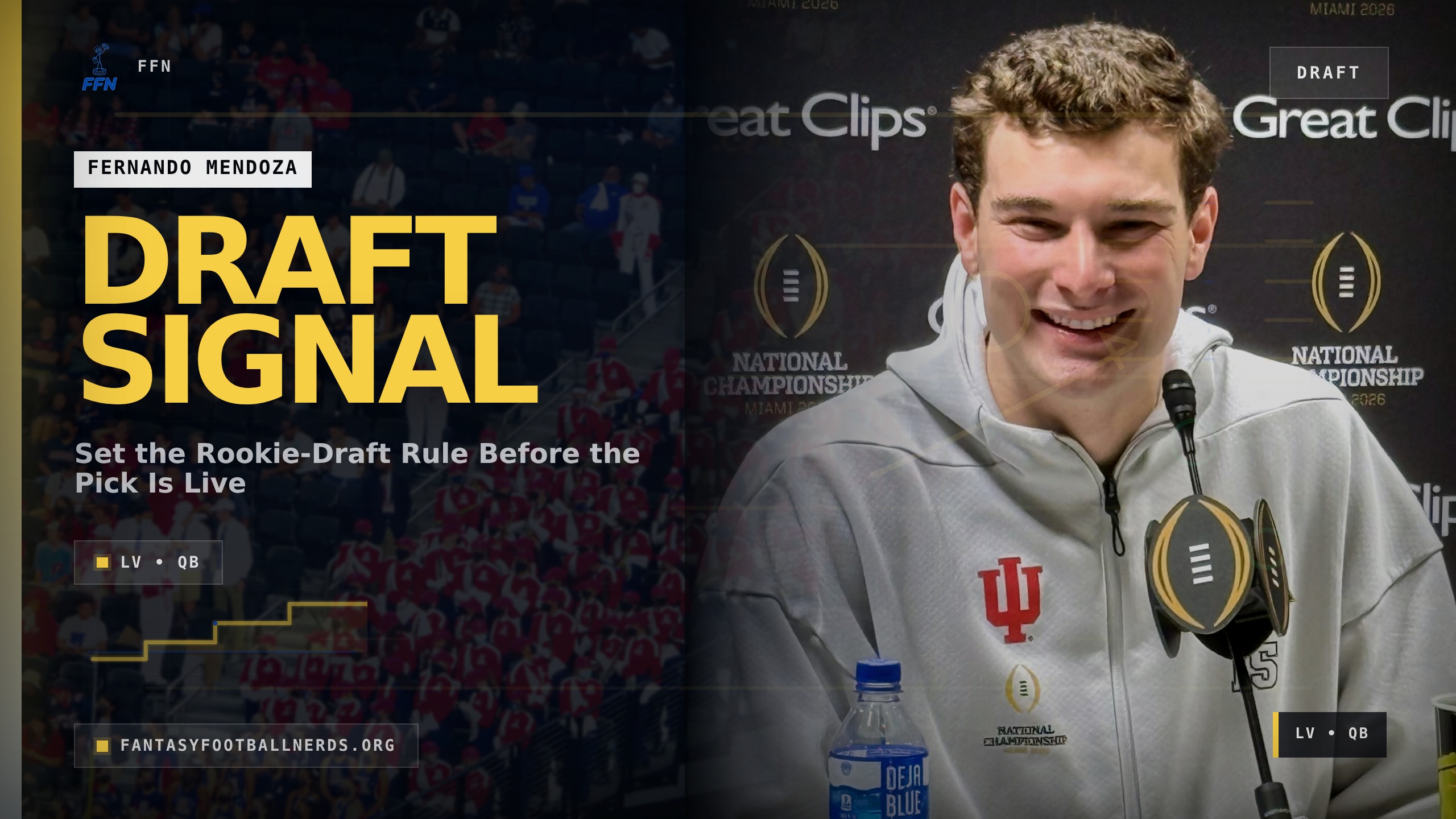
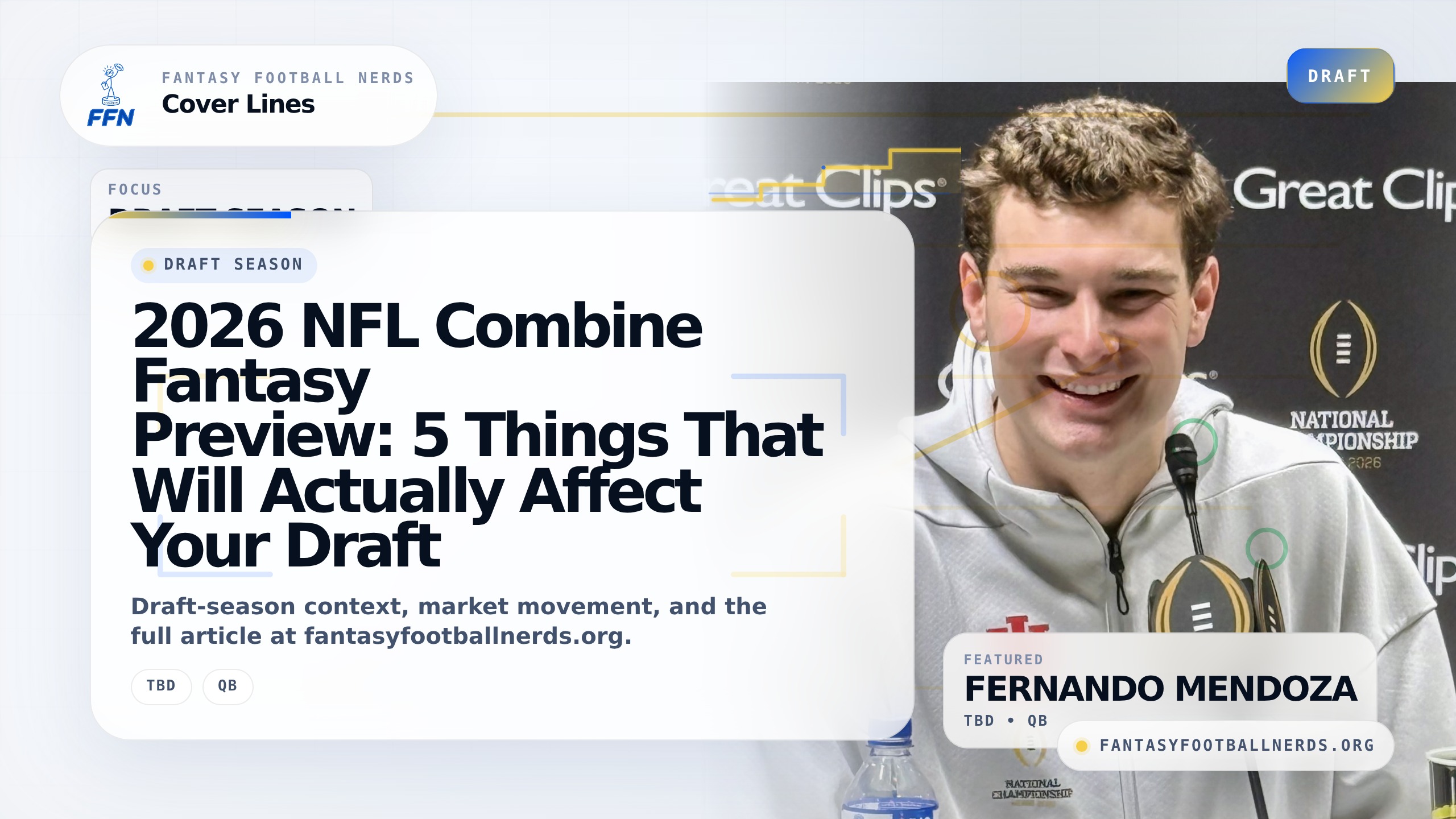
Teams that miss out on Mendoza have limited options, which increases the trade market for both players and makes premium landing spots more likely.
The offensive infrastructure has been unstable, their skill position group lacks a true alpha receiver, and Breece Hall's tag situation remains unresolved.
The tag guarantees opportunity -- he's not going anywhere -- but it doesn't fix the maddening week-to-week disappearing acts that have defined his career.
That dynamic could suppress the veteran market and create even more value for fantasy managers willing to bet on the older names at deflated ADPs.
For fantasy purposes, plan on Mahomes missing at least the first two to three weeks, with a real possibility he's not fully locked in until October.
Fantasy managers would breathe easy -- his ADP stabilizes in the mid-to-late second round, right where it was trending before the tag news broke.
Pickens Locked In: The Fantasy Floor Just Got Higher The franchise tag eliminates the biggest variable in Pickens' 2026 outlook: where he'd play.
Players to watch: Curtis Samuel (Bills likely cut), James Conner (Cardinals letting him walk), and Mike Evans (exploring free agency, Steelers interested).
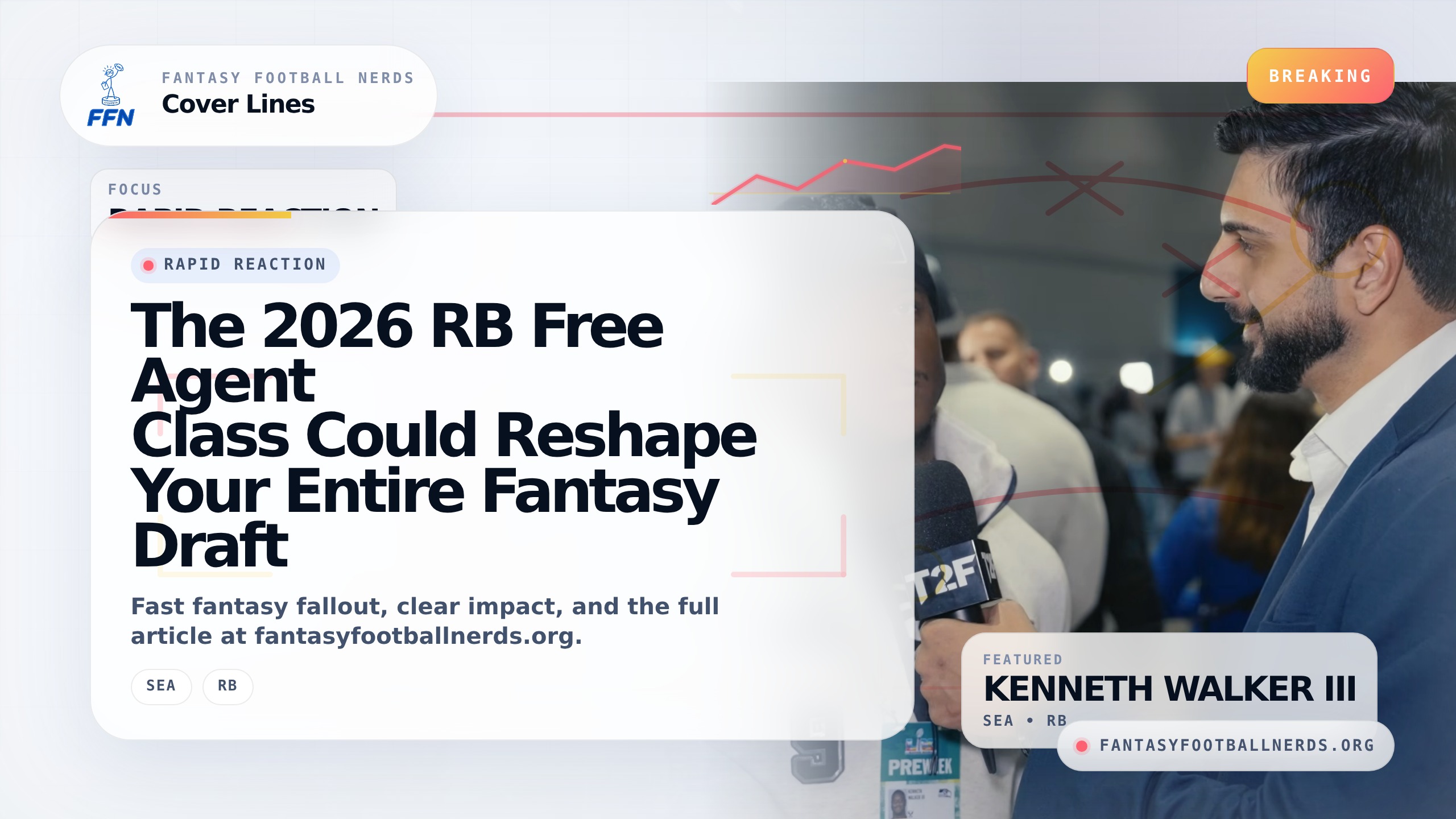
The Deepest RB Class in Years Here's what makes this offseason unprecedented: seven notable running backs are all hitting the open market simultaneously.
Move from an article into the recurring FFN hubs for waiver claims, lineup calls, draft rooms, dynasty values, and player research.
Waivers, start/sit, draft strategy, dynasty, mock drafts, and player pages stay one click from the archive.
Articles answer adjacent player and format questions while the hubs stay focused on current decisions.
Recurring pages help readers continue from a finished story into the next action.
Recurring add/drop decision hub.
Season hubStart/SitRecurring weekly lineup decision hub.
Week 1 boardWeek 1 RankingsCurrent weekly ranking board from the archive.
Week 1 lineupsWeek 1 Start/SitCurrent start-or-bench page.
Week 1 streamingWeek 1 DST RankingsDefense stream and matchup path.
DynastyDynasty Rookie RankingsRookie values and landing-spot context.