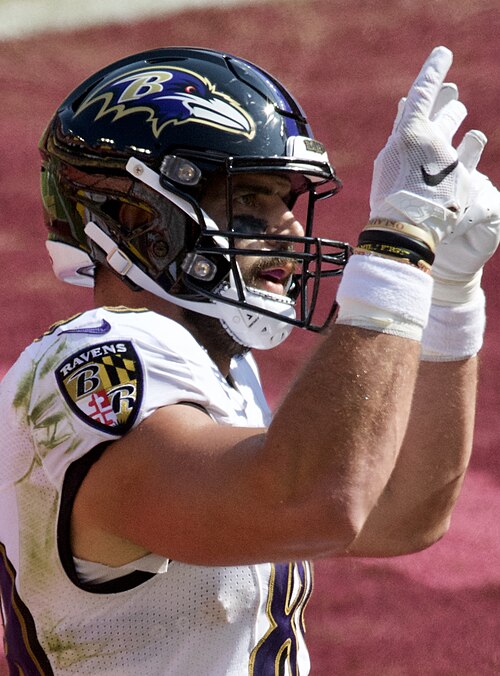
Mark Andrews is still going to get pushed by name memory, but the role no longer deserves an automatic rebound price. He is draftable after the safer tight end tier softens, but Baltimore no longer offers a clean rebound bet.
Andrews averaged 4.7 targets, a 20.1 percent target share, and a 59 percent snap rate.
Late in the tracked sample, that line fell to 3.3 targets, a 17.6 percent target share, and a 48 percent snap rate.
Stretch it to the last five and he was still only at 3.6 targets, an 18.6 percent target share, and a 50.6 percent snap rate.
The market is paying for the memory of Andrews, not the late-2025 role he actually carried. That matters because the Ravens did not finish the year looking like an offense ready to drag a fading tight end back to fantasy safety. They looked like a team still comfortable winning through Lamar Jackson, the run game, and a structure that asks the pass catchers to earn every bit of volume.
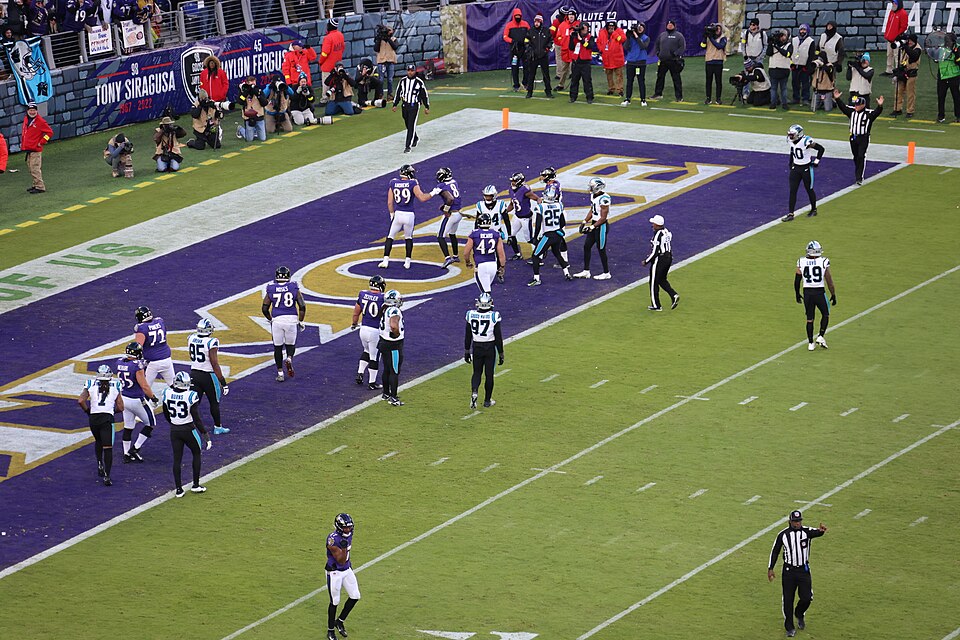
That is why I do not care much for the lazy touchdown-regression version of this debate. Touchdowns are not the starting point here. Route volume is. Weekly snap security is. Andrews can still matter when Baltimore treats him like a central answer. The late-season usage said that answer was getting thinner, not stronger.
Here is the clean way to say it. Baltimore can support a star tight end. It does not specialize in rescuing one.
What still worked last year, and what stopped working
When Andrews still worked last year, the path was clear. He did not need vintage peak volume. He just needed enough snaps and enough target share to stay central to Baltimore's passing answers.
The earlier tracked window before the late dip still looked usable. Andrews averaged 4.7 targets, a 20.1 percent target share, and a 59 percent snap rate. It was not prime Andrews, but it was at least a believable fantasy-starter profile.
The problem is what came after it. Late in the tracked sample, that line fell to 3.3 targets, a 17.6 percent target share, and a 48 percent snap rate. Stretch it to the last five and he was still only at 3.6 targets, an 18.6 percent target share, and a 50.6 percent snap rate. The role trend file flags the same problem plainly: falling snap share.
This was not one bad box score. It was the job getting smaller.
This is the part drafters keep trying to wave away. If you draft Andrews as your default starter, you are betting that the late-season role slide was noise. Maybe it was. But at ADP 96, you are still paying for the optimistic explanation.
Draft action: let someone else make the rescue-season bet first.
Failure case: late-season samples can lie, especially with veterans. If the closing stretch was more about wear and tear than role preference, Andrews could bounce back faster than this argument expects. But when the bullish case starts by excusing the workload, the workload is already the issue.
Why Baltimore makes the squeeze worse
The older Andrews fantasy case made sense because Baltimore could feed him concentrated work even without becoming a pass-happy offense. He did not need ten targets every week. He needed to stay one of the offense's few trusted middle-field answers.
That margin looks thinner now.
Baltimore's 2025 team tendencies still screamed run-led football. The Ravens posted a 53.6 percent pass rate, only a 46.6 percent early-down pass rate, and a 54.8 percent red-zone rush rate. Their average pass rate over expected sat at minus-8.18, while rushing EPA averaged plus-2.48. That is not a profile built to hand out easy volume just because a familiar fantasy name needs it.
So the football problem is bigger than Andrews alone. He is attached to an offense that already knows how it wants to win. If his snap share stays in the 48 to 51 percent neighborhood instead of climbing back toward a true lead role, there is no soft landing here. A half-time tight end in a run-first environment is living on efficiency and touchdowns, and both of those are bad things to beg for at this price.
The coaching file adds uncertainty, not comfort. Jesse Minter is the head coach. Declan Doyle is the offensive coordinator. Maybe that turns into a slightly different version of Baltimore. We just do not have owned proof yet that the Ravens are about to become a friendlier pass-volume team for an older tight end.
Why the price is a consequence, not the thesis
FFN's standard board is not subtle about the risk because the football case is already thin. Mark Andrews sits at No. 136 overall and TE13, while the market ADP is still 96. The note attached to him is blunt: the market is materially richer than FFN rank. In a run-led offense with falling snap share, that pricing gap makes sense.
But the ranking gap is not the main argument. It is the receipt.
The main argument is that Andrews is now 30, entering year eight, and coming off a late-season role slide in an offense that already preferred to solve problems on the ground. That is exactly the kind of profile that turns into a fragile bet when drafters keep pricing the older, cleaner version of the job.
What has to go right now
For Andrews to beat this price, more than one thing has to swing back his way.
He needs the snap share to climb well above the late 48 to 51 percent range. He needs the target share to live closer to 20 percent than 17 percent. He probably needs Baltimore to throw a little more, or at least lean back toward the tight end in scoring situations after spending last year as one of the more run-heavy red-zone teams in football.
That is too many conditions for a player going at ADP 96.
Can it happen? Of course. Andrews is still talented enough to matter, and useful weeks are still on the table. Useful is not the same thing as worth this bet. The draft mistake is acting like you are buying insulation when you are really buying a fragile rebound script.
So here is the call. Draft Andrews only as a discounted role-rebound bet, not as an automatic starter with the old job still attached. If the price drops and the role evidence improves, revisit it. Right now the sharper move is to let someone else pay for the older version of the job.
Draft verdict: pass at the current cost, and only come back if the role starts looking bigger than the one Baltimore actually showed you late last year.