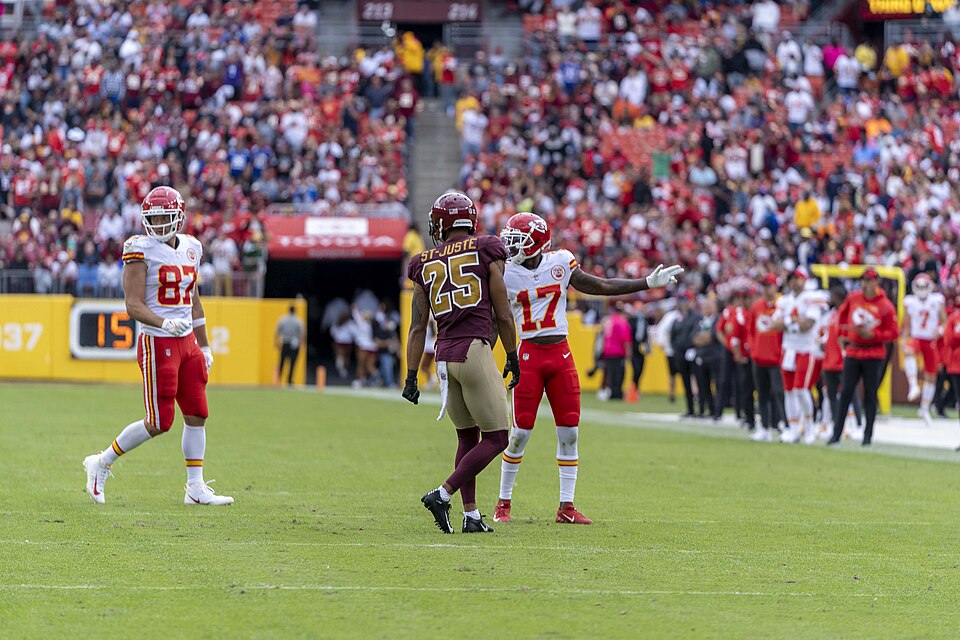
Kansas City did not bring Travis Kelce back to pretend the old cheat code is untouched. It brought him back because there is still a specific job he can win.
Kansas City remained a pass-heavy offense in the tracked team sample, throwing on 66.9 percent of plays and 61.4 percent of red-zone.
Condition four: the cost has to stay small At publication, Kelce sits in the middle-tight-end pocket rather than the elite one, roughly.
That makes the draft move simple: wait. Draft Kelce only after the younger tight end tier is gone, and only if the price treats him like a smaller high-leverage bet instead of the automatic weekly edge he used to be. If he costs a premium tight end slot, take the cleaner route volume elsewhere.
This is not a nostalgia pick. Call it a conditions pick. The role can still matter, but the role has to win first.
Condition one: the routes still have to be real
Kelce's case starts with the part that did not disappear. When he was on the field in 2025, he still drew targets like a player Kansas City trusted. In the broader late window, he was still around a six-target player with a meaningful share of the passing game.
The problem is not whether Mahomes knows where Kelce is. The problem is whether the Chiefs need him living in every route the way they used to. Kelce is entering his 14th season, and the tracked role data already showed a falling snap-share signal late in the sample. That changes the bet.
You do not need him to run every route like peak Kelce. You need Kansas City to keep him attached to the throws that matter: third down, red zone, scramble-drill spacing, and the soft spots Mahomes has punished for years. Managed snaps are fine if the routes are still premium. Managed routes are not.
That is where drafters can get trapped by the name without making this a blanket fade. Kelce can still help you if the Chiefs preserve the valuable pieces of the job. He gets thin fast if his playing time turns into ordinary snaps between younger receivers.
Condition two: the scoring-area role has to survive
This is the best reason to keep him on the list. Kansas City remained a pass-heavy offense in the tracked team sample, throwing on 66.9 percent of plays and 61.4 percent of red-zone plays. That shape keeps an older tight end alive because he does not need every empty target if the offense still calls his number near scoring chances.
Kelce's current ranking profile still points to the same pressure point: the red-zone target lane is doing the work. That is the football case. Not projected points, not a legacy badge, not a highlight reel from a different version of the offense. The bet is that Kansas City still wants him in the condensed-field answers.
The failure case is just as clear. If Rashee Rice absorbs the weekly layup volume, Xavier Worthy owns more of the explosive and red-zone design work, and Noah Gray handles enough tight end snaps to protect Kelce, the old target monopoly is gone. A similar target count can mean very different things depending on where those throws happen.

So draft the target type, not the target total. If Kelce is still a first-read or leverage-read player near the goal line, he can beat a discounted tight end cost. If he becomes a chain-moving accessory while the best calls flow elsewhere, the name will feel safer than the lineup result.
Condition three: the Mahomes attachment has to hold
Kelce's best case still runs through Patrick Mahomes, but that should be priced as a dependency, not treated as magic dust. FFN's current injury monitor still has Mahomes in a return-window bucket after ACL and LCL rehab, with Kansas City measuring the timeline against Week 1. That is not a reason to panic. Use it to keep the bet honest.
If Mahomes is operating normally, Kelce gets the one thing older tight ends need most: a quarterback who can turn leverage and timing into production without asking the player to win every rep athletically. The easy fantasy version is touchdown trust. The football version is more specific than that. Kelce can settle into windows, adjust with Mahomes when the first answer breaks, and stay useful in the parts of the field where separation is not always about speed.
If that connection is less stable, the whole profile gets narrower. The Chiefs have other ways to move the ball now. Rice can command short-area volume. Worthy can stretch the coverage. Kenneth Walker gives the offense a real backfield gravity point, and that can help drives without automatically helping Kelce's target count.
That is why the Mahomes attachment matters, but it does not erase the other conditions. It gives Kelce a path. It does not guarantee the weekly role.
Condition four: the cost has to stay small
At publication, Kelce sits in the middle-tight-end pocket rather than the elite one, roughly around TE11 in FFN's PPR view with a market price in the same overall neighborhood. That range is playable because it asks a fair question: can a narrower Kansas City role still beat a modest tight end cost?
That is the version I can draft. I do not want Kelce as the answer if the earlier tier is still on the board. I do want him when the draft has already punished the age, the route risk, and the possibility that Kansas City spreads the ball through a deeper cast.
The edge disappears if drafters move him up because the name feels familiar. The conditions are real: enough routes, enough scoring-area work, normal Mahomes function, and no full target takeover from the younger pass catchers. Those are playable at a discount. They are not worth paying for like certainty.
This is the line: Kelce is not dead. The old edge is.
Draft verdict
Wait on Kelce. If the young tight end tier is gone and the cost has settled into the middle of the position, draft him as a discounted high-leverage role bet in Kansas City.
Pass if the room tries to buy the past. The best case is not a full return to peak usage. The payoff is a pass-heavy offense keeping Kelce on the field for the throws that still decide drives. The failure case is managed routes, more receiver target gravity, and a price that remembers the name before it checks the role.
Draft the role if the cost stays small. Let someone else pay for the museum version.