
San Francisco did not draft De'Zhaun Stribling to erase Ricky Pearsall. It drafted him because the 49ers receiver room needed another answer, and that distinction matters for fantasy. A second-round receiver creates pressure. It does not automatically delete the incumbent who was already earning more useful work down the stretch.
The 49ers threw on 59.7 percent of their plays, used motion on 56 percent of tracked snaps, and finished with positive passing efficiency.
San Francisco used pick 33 on Stribling, then added Kaelon Black at pick 90.
In the closing tracked sample, Pearsall averaged 6 targets, a 20.8 percent target share, and a 28.4 percent air-yards share.
The compelling offseason angles are situations and opportunities, not game matchups, and San Francisco just created one. The move is to target Pearsall after the safer weekly-volume receivers are gone, treat Brandon Aiyuk as a conditional discount until his role is clearer, and keep Stribling on the watchlist before turning him into a redraft lineup piece. The 49ers draft grade is not a panic button. It is an exposure test.
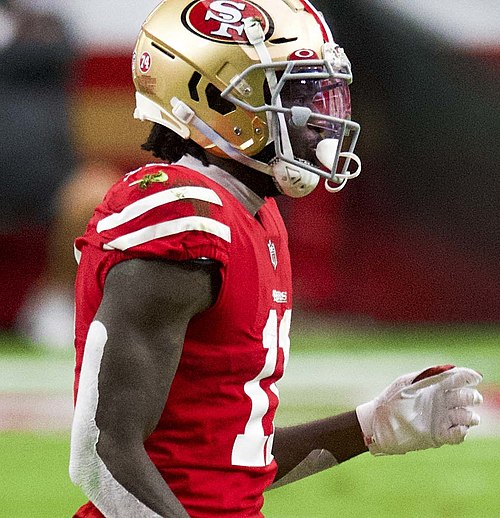
The draft changed the route fight, not the whole offense
What worked for San Francisco last year was the structure. The 49ers threw on 59.7 percent of their plays, used motion on 56 percent of tracked snaps, and finished with positive passing efficiency. That kind of offense can make moderate receiver volume matter because the throws are usually attached to leverage, spacing, and timing instead of empty comeback mode.
What changed is the crowding. San Francisco used pick 33 on Stribling, then added Kaelon Black at pick 90. That is real investment in the skill group. It also comes into a room where Pearsall, Aiyuk, Christian McCaffrey, George Kittle, Mike Evans, and Christian Kirk already show up in FFN's current fantasy context. This is not an empty depth chart waiting for one new player to solve it.
That is why the answer is price discipline, not a blanket fade. Pearsall has enough role growth to remain draftable. Aiyuk has enough name value and past ceiling to stay interesting. Stribling has enough draft capital to matter. The edge is knowing which one has the clearest usable path at the right point in the draft.
Pearsall is still the constructive bet
Pearsall's case is not just that the 49ers liked him before this draft. The part worth buying is what changed in his role. In the closing tracked sample, Pearsall averaged 6 targets, a 20.8 percent target share, and a 28.4 percent air-yards share. The earlier tracked window was much thinner, which matters because his role was moving toward actual weekly route relevance instead of empty depth-chart hope.
Now the new receiver adds pressure. That should keep Pearsall from being drafted as if the summer is already solved. But it should not bury the profile either. He does not need to become the unquestioned first read. He needs one lane to stay open in an offense that can turn efficient routes into usable fantasy weeks.
At publication, Pearsall sits 66th overall on the FFN standard board against ADP 86, with a Value label. In PPR, the current context also keeps him as a value-side player rather than a pure story pick. The exact rank is not the argument. The football argument is better: he had late role growth before the draft, and the new competition has not yet taken that role from him.
Draft him as an upside WR4 or flex swing after the established receiver tier. If your roster already has stable weekly targets, Pearsall is the kind of bet that can fit. If you need him to be your WR2, the Stribling pick is your warning to wait.
Aiyuk is a discount only after the role clears
Aiyuk is the name that can make this whole room feel more emotional than it needs to be. What worked before was easy to understand: when he is right and featured, San Francisco can turn sharp routes and efficient throws into fantasy value without forcing him into a target avalanche. This offense has supported that kind of player before.
The issue is clarity. At publication, FFN's roster context still has Aiyuk in San Francisco, but there is no fresh availability note giving him a clean runway. The board prices him much later than the old peak version, with ADP 177 and a value-side label. That is exactly how a status-dependent receiver should look: interesting, cheap enough to discuss, but not clean enough to chase early.
Make him a conditional bet. If camp gives you health, first-team route work, and a clear role, the discount can become playable. If the summer gives you only vague optimism, you are buying a familiar name in a room that just added Stribling and already had multiple ways to divide targets.
That can still work. It just has to be priced like uncertainty. Aiyuk is not a fade by default. He is a late bet that needs proof before he becomes more than that.
Stribling matters, but the role has to win first
Stribling is not a throwaway rookie. Pick 33 is premium capital, and San Francisco does not need to spend that kind of pick on a receiver it has no plan to use. In dynasty and best ball, that is enough to push him onto the board immediately.
Redraft is different. The football case needs more than the pick. FFN's public prospect context does not yet give Stribling a separate tracked fantasy profile to lean on, and the current 49ers room still has veterans and established target earners in front of him. Until camp gives us first-team route evidence, he is a pressure point more than a lineup answer.
That does not mean ignore him. Watch where he lines up, whether he gets red-zone work, and whether Kyle Shanahan and Klay Kubiak use him as a movable piece instead of a simple boundary receiver. If he runs with the top group early, the Pearsall bet gets thinner and Aiyuk's clarity gets even more important.
For now, respect the investment without inventing the role. Draft capital opens the door. Routes decide whether fantasy managers should walk through it.
Purdy is the warning label on paying for the whole logo
Brock Purdy is the reminder that good NFL offense is not the same thing as a clean fantasy price. The passing environment is efficient, and his tracked passing profile still supports the idea that San Francisco can create useful weeks through structure. That is the good part.
The price is the harder part. At publication, Purdy sits 96th overall on the FFN standard board against ADP 37, with an Avoid label. That gap says the draft room is still paying for the clean version of the offense while the target tree has become less clean. Stribling adds a new route variable. Black adds another backfield wrinkle. Aiyuk still needs clarity. Pearsall still has to hold the late role growth.
That does not mean the 49ers offense is one to avoid. It means the cleanest fantasy move is targeted exposure. Pearsall after the tier break is the constructive receiver bet. Aiyuk is the late conditional discount. Stribling is the stash to track, not the player to force into September lineups.
Draft the role path, not the helmet. San Francisco is still an offense worth attacking. The mistake is acting like every 49ers name became the same bet after the draft.