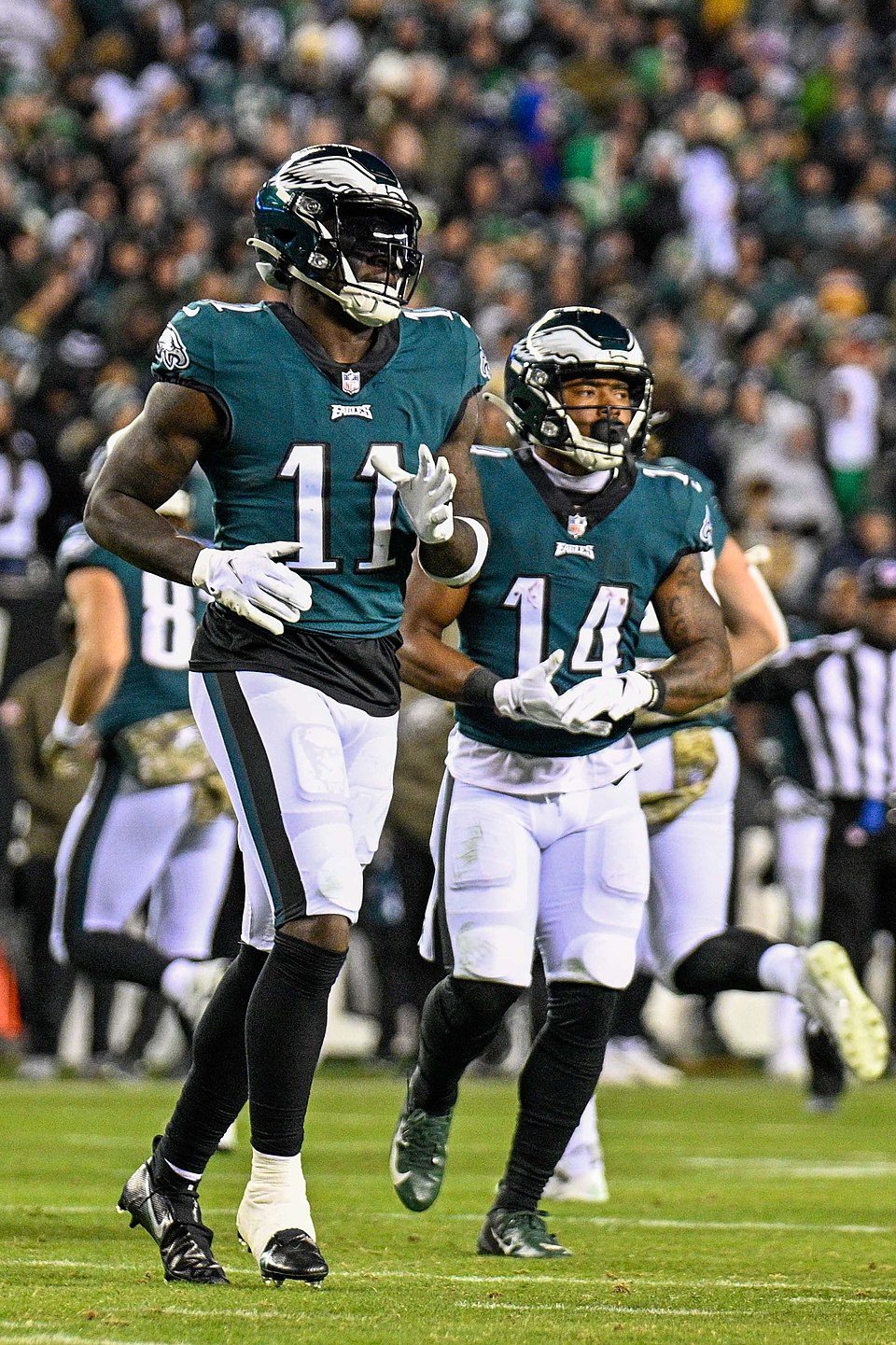
The market says Bucky Irving is a top-30 pick. One of FFN's own ranking systems says he belongs at 149th overall. That is a 120-spot disagreement, and there is no splitting the difference. One side is right, the other is very wrong, and which camp you land in could define your fantasy year.
Irving goes at PPR ADP 29 as the RB13 off the board.
The FFN enriched model projects 243.3 PPR points at 14.31 per game -- solid RB2 production and a perfectly fine return on a third-round.
Kenneth Gainwell sits behind him at ADP 173, projecting for 77 PPR points at 4.53 per game.
Irving goes at PPR ADP 29 as the RB13 off the board. The FFN enriched model projects 243.3 PPR points at 14.31 per game -- solid RB2 production and a perfectly fine return on a third-round pick.
The low confidence band changes the entire conversation. Here is the case for Irving, the case against, and what you should actually do on draft day.
Why You Want Bucky Irving on Your Team
Start with the one thing nobody is arguing about: the role is his. Irving is 23, entering year four, and he IS the Tampa Bay backfield. Kenneth Gainwell sits behind him at ADP 173, projecting for 77 PPR points at 4.53 per game. That is not a committee. That is a guy fetching Gatorade on the sideline.
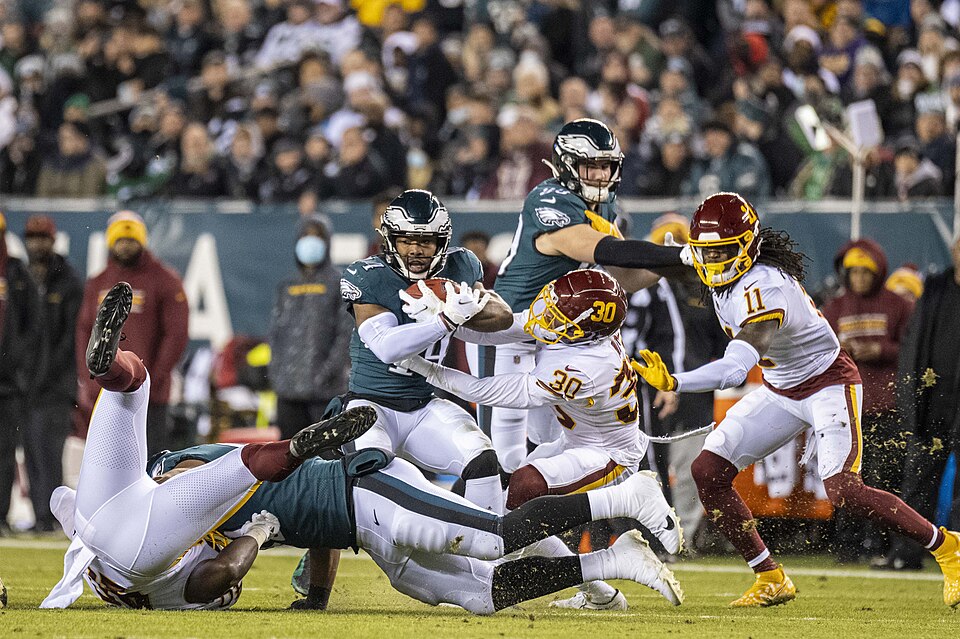
The volume case writes itself. Tampa's offense ran through the passing game when Mike Evans was hauling in 100 balls a year. Evans packed up for San Francisco. The Bucs brought in Emeka Egbuka, a second-year receiver projecting for 224 PPR points with a low confidence band. Chris Godwin is still there at ADP 101 with 301 projected PPR points at 17.71 per game, but again -- low confidence. When nobody trusts the passing game, teams hand the ball off. That is the Irving bull case in one sentence.
Context matters. Irving's 14.31 PPG projection sits in a cluster with Breece Hall (14.66 PPG, ADP 33) and Cam Skattebo (14.71 PPG, ADP 40). Irving is the youngest at 23. He has the clearest path to 250-plus touches. And you draft him four picks before Hall and eleven before Skattebo. If the volume lands, this is the best mid-RB2 value in the entire third-round range.
Third-year backs with established starting roles at 23 are the archetype that takes the next step. Irving does not need a leap. He needs 17 games of steady work in an offense with fewer mouths to feed.
Why the Model Is Waving a Red Flag
The FFN projection model ranks Irving 60th overall by projection. His ADP sits at 29th. A 31-spot gap between market price and projected production should make you put the pencil down and think.
But that is the smaller problem. The 120-spot system divergence is the alarm bell. FFN's legacy ranking system slots Irving at 149th overall. The enriched model puts him at 29th. This is not two scouts disagreeing on a round. This is a 120-position canyon between systems evaluating the same player. When your own models cannot agree on whether a guy is a borderline RB1 or a bench stash, the honest answer is nobody knows.
Low confidence drives the point home. The band tells you the range of outcomes is enormous -- Irving could finish as an RB1, or he could crash outside the top 30 at the position. At ADP 29, you are paying a third-round pick for that volatility.
The passing game question cuts both ways after the Evans departure. Fewer targets for receivers could mean more carries for Irving. It could also mean eight-man boxes because defenses look at Egbuka in his sophomore season and Godwin at 30 years old going at ADP 101 and decide to load up against the run. Baker Mayfield projects for 354.32 PPR points at 20.84 per game -- third among all quarterbacks by projected output -- but carries a low confidence band. The entire Tampa offense is tagged low confidence across every skill position. Irving, Egbuka, Godwin, Mayfield, Cade Otton. All of them. That is not one uncertain player. That is an entire offense the model cannot figure out.
How Your Scoring Format Changes the Math
Irving's value shifts depending on what league you are drafting for, and this matters more for him than most backs in this range.
PPR: 243.3 projected points, ADP 29. Reasonable price for low-confidence RB2 production.
Half-PPR: 219.8 projected points, ADP 28. Similar positioning, slightly less production.
Standard: 196.3 projected points, ADP 15. This is the danger zone. In standard formats, Irving is priced as a second-round pick because pure rushing volume carries more weight without reception bonuses. A second-round investment on a low-confidence back is a much harder sell.
Compare Kenneth Walker across the same formats: 271.6 PPR (ADP 46), 237.6 half-PPR (ADP 43), 203.6 standard (ADP 26). Walker outprojects Irving in every single format, and you get him 17 picks later in PPR. The format comparison makes the Irving-over-Walker argument tough to win on paper.
A.J. Brown tells the same story from the receiver side: 274.4 PPR points at ADP 35 with a high confidence band. Six picks after Irving, 31 more projected points, and the model trusts both floor and ceiling. Rashee Rice at ADP 34 projects for 263.2 PPR points with medium confidence -- five picks after Irving with better production and a tighter band.
If the board presents Irving alongside any of these names in the late third round, the numbers point one direction.
The Verdict
This is not a stay-away. Irving's talent is real, his role is locked in, and 243.3 projected PPR points from the third round is a fine outcome if it hits.
The problem is that word -- "if." A 120-spot system divergence and a low confidence band mean the range on Irving is enormous. You could be drafting the RB8 or the RB25. At ADP 29, the market is pricing in the upside. The model is not convinced the upside is what you are getting.
If Irving slides to the back of the third round in your draft, the risk-reward improves and he becomes a buy. If you are sitting at pick 29 and A.J. Brown is still on the board, take the certainty. If Irving is the last running back in the tier and you need the position, take him and own the risk -- you are buying a talented 23-year-old in a volatile offense where the model has more questions than answers.
Draft him if he falls. Do not chase him at cost.