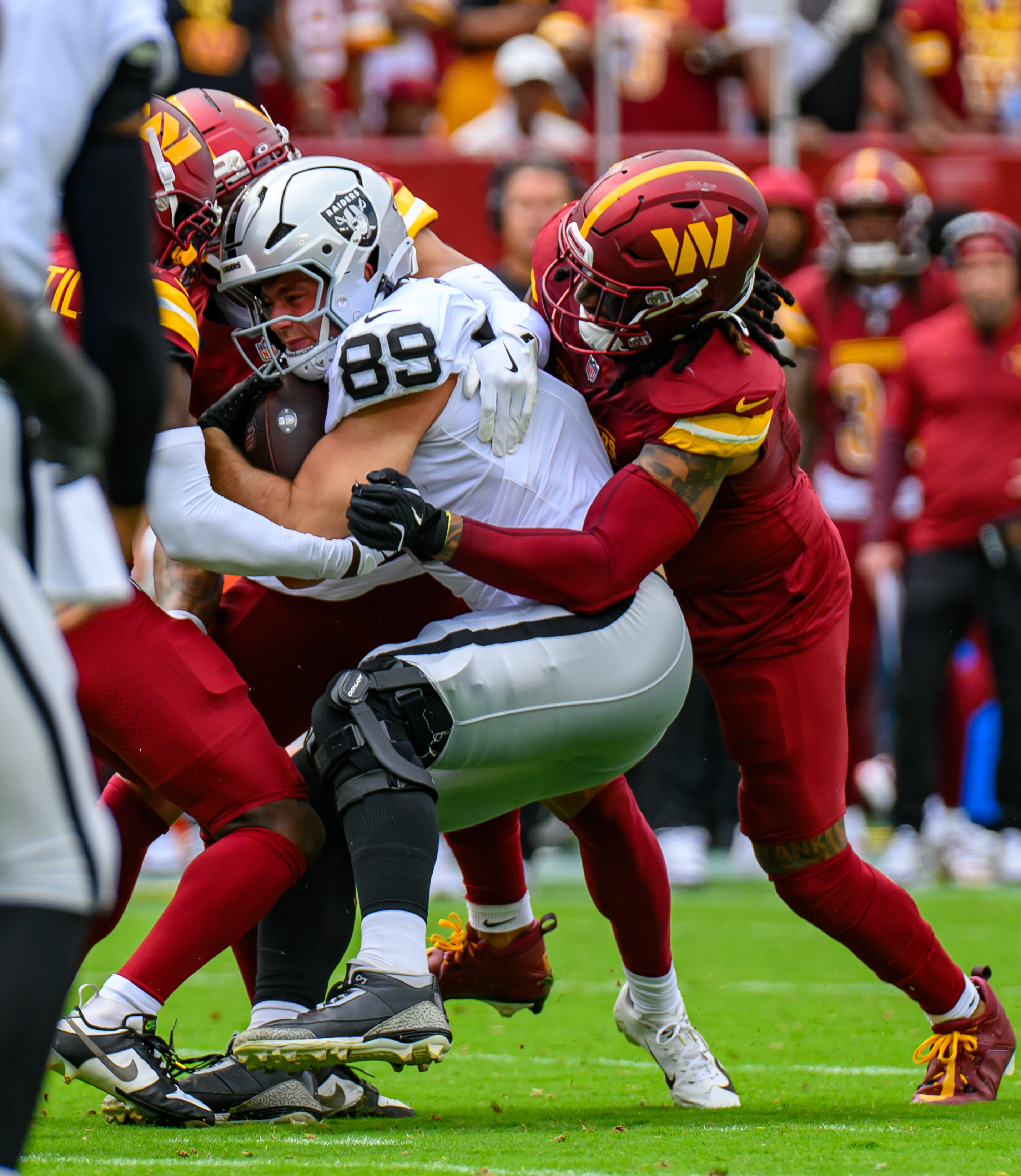
The move is still Brock Bowers.
Bowers is a 23-year-old tight end, and ADP 26 tells you the market is already charging for a premium answer.
Bowers averaged 6.2 targets with a 22.4 percent target share, then held a 24.2 percent share late in the sample.
FFN's team-tendencies file has Las Vegas at a 64.4 percent pass rate and a 59.9 percent neutral pass rate.
If you want Raiders exposure, start there once the elite tight end tier begins to thin and leave the rest of this passing game for later swings. Quarterback fog usually shrinks the target tree before it kills it, and Bowers is still the clearest answer in this offense.
That does not make him a cheap click. Bowers is a 23-year-old tight end, and ADP 26 tells you the market is already charging for a premium answer. The rest of the bet is much harder. Geno Smith was traded to the Jets, Ashton Jeanty is now part of the touch equation, and Las Vegas has every reason to change how this offense operates. Bowers can survive that. The question is what has to stay true for him to pay it off.
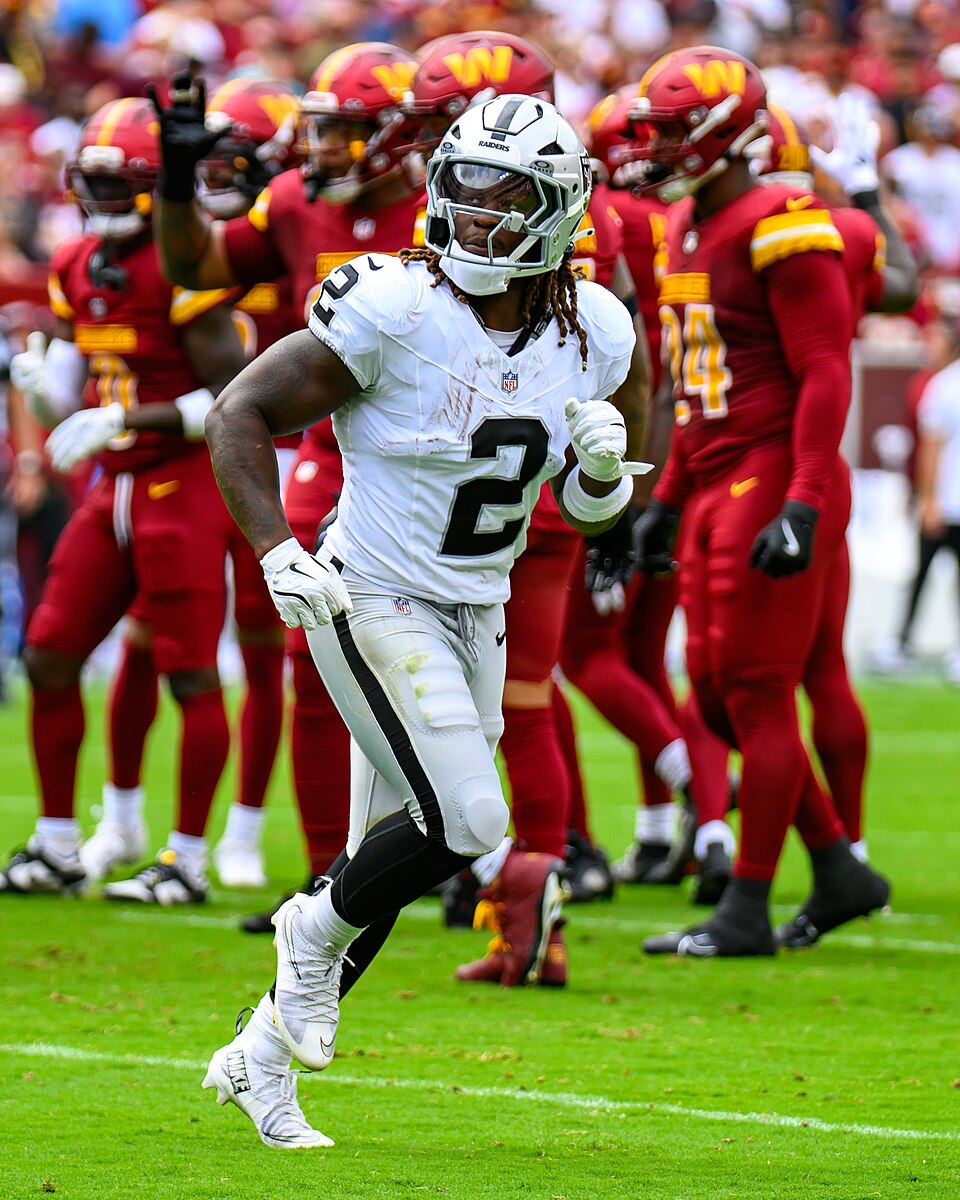
The first thing that has to stay true is the target funnel
Bowers does not need perfect quarterback play to matter. He already showed that part. In FFN's player-role-trends data, he averaged 6.2 targets with a 22.4 percent target share in the broader tracked window, then held a 24.2 percent target share late in the tracked sample while barely leaving the field.
That is the whole point of the bet. Bowers is not living on fragile deep shots or a touchdown binge. He wins by being the easy throw, the inside answer, and the player the offense already trusts when the play needs to get back on schedule.
If that part holds, the quarterback situation does not have to become clean for him to stay useful. A messy passing game can still feed one reliable middle-of-the-field option. It usually just stops being generous to the second and third answers.
That is why the move is not "draft the Raiders passing game." The move is "draft the one Raider pass catcher whose role already survived bad conditions."
The second thing that has to stay true is enough volume
The Raiders were messy last year, but they still threw enough to keep a target earner alive. FFN's team-tendencies file has Las Vegas at a 64.4 percent pass rate and a 59.9 percent neutral pass rate. That volume came with ugly efficiency too, including minus-6.33 passing EPA per game and 3.76 sacks suffered per game.
That mix matters because it explains why Bowers could matter without the offense looking stable in real life. The passing game was not clean. It was just active enough to keep funneling chances to the player who could handle them.
Now the shape of the offense has real reasons to change. The Raiders' coaching file lists Klint Kubiak as head coach and Andrew Janocko as offensive coordinator, and the current roster file has Jeanty sitting next to Bowers as the other premium skill player on the roster. That is enough to slow you down before you assume last year's pass volume simply rolls forward.
So this is where the article stops being a blind endorsement. Bowers can still win, but he probably needs the offense to stay pass-friendly enough that six to eight targets remains normal instead of aspirational. If Las Vegas becomes more balanced and more conservative, his floor can live while his difference-making ceiling gets thinner.
The third thing that has to stay true is that nobody else steals the job description
This is the cleanest reason to stay with Bowers instead of chasing the rest of the room. The current LV skill-position file is short: Jeanty, Bowers, Tre Tucker, Jalen Nailor, and Jack Bech. That is not a settled veteran target hierarchy. It is a board full of conditional answers around one established volume piece.
Tucker has enough late-season role strength to stay interesting, and he is the cheaper way to buy uncertainty if you want a dart throw. But Bowers is the only player in this group who already gave you proof of a foundation role instead of a maybe.
That matters even more in an offense still sorting out its next identity. When the structure is in flux, the player who already owns trust over the middle usually has the safest path to surviving the week-to-week noise. That does not guarantee Bowers separates from the field at his price. It does make him the easiest Raider pass catcher to defend.
The wrong way to read this room is to spread your confidence evenly. The uncertainty is not distributed evenly, so your draft exposure should not be either.
What could break the bet
The failure case is not hard to see.
If Jeanty becomes the offense's preferred answer and the Raiders stop leaning on the pass the way they did last year, Bowers can still be good without delivering the kind of edge you want from a premium tight end. That is the trap. A player can survive instability and still fall short of premium expectations.
There is also a version where the role stays healthy but the quality of the targets slides. Bowers has already shown he can carry volume through ugly offense. What he has not proven is that any version of ugly offense automatically makes him a league-winning return at cost.
That is why I would not draft him like he comes with insulation. I would draft him like he comes with the clearest survival path.
Draft verdict
Brock Bowers is still the Raiders pass catcher you can draft on purpose.
What has to be true is simple. His target share has to stay concentrated, the offense has to throw enough to matter, and the rest of the pass-catching room has to remain what it looks like now: complementary pieces rather than real competition for the first read.
If you believe those things, Bowers still works even if the Raiders never give you a clean quarterback story. If you do not believe them, the right adjustment is not to force one of the other receivers. It is to take your Raiders exposure through Bowers only when the board gives you a fair entry point, then let somebody else chase clarity that this offense has not earned yet.