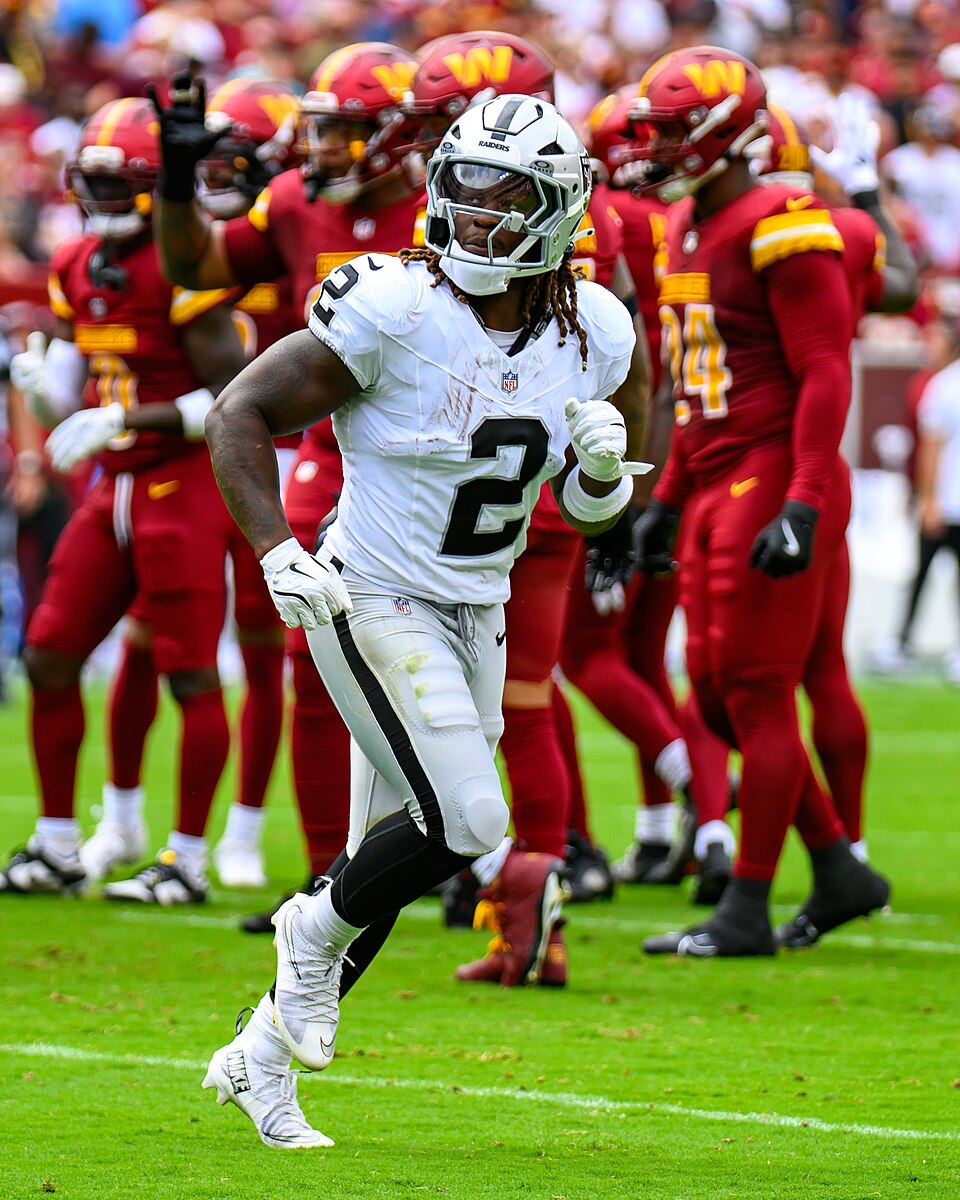
Las Vegas can become easier to project without turning Ashton Jeanty into an automatic premium pick. Here is the draft-room tension. If Kirk Cousins is the bridge, the offense gets a cleaner adult-in-the-room case. If Fernando Mendoza is the longer-range variable, dynasty managers have something to track. Neither one tells you whether Jeanty is worth paying for as if the Raiders backfield is already solved.
In that same closing sample, he averaged 22 carries and played more than 90% of the offensive snaps.
The price test is the article At publication, the PPR board prices Jeanty around ADP 12 and RB9 because the workload is already visible.
The move is to draft Jeanty as a conditional volume bet, not to chase him because the quarterback story sounds less chaotic. If he falls after the early running back push, the role is worth buying. If your room treats the Cousins setup like it already fixed the touchdown runway, wait. Price discipline is the edge.
The commissioner rule: one improvement gets one price
This is where draft rooms get expensive. A manager upgrades the quarterback situation in his head, then gives every attached player the same bump. The back gets more scoring chances. The tight end gets cleaner targets. The wideouts get more drive volume. The offense gets more weekly stability.
Some of that can be true. All of it cannot be fully priced at once.
A quarterback upgrade can make the water warmer. It does not make every boat rise for free.
Here is the Jeanty rule. Cousins can help the Raiders stay on schedule, reduce empty drives, and make defensive fronts pay for overplaying the run. But Jeanty's fantasy case still has to come from the boring stuff: carries, snaps, passing-game usage, and goal-line work. If the price already assumes Cousins fixes all of those, the discount is gone before the season starts.
The better way to play it is to pay for the role you can actually defend. Do not pay for the entire offense you hope shows up.
Jeanty's best argument is role, not optimism
The strongest Jeanty case is not prospect glow or Raiders optimism. It is workload.
FFN's role data flags Jeanty as the top carry riser in the tracked sample, with a 10.7-carry jump down the stretch. In that same closing sample, he averaged 22 carries and played more than 90% of the offensive snaps. This is not a decorative stat. That is the kind of workload that can survive an imperfect team context.
That matters because running back value still starts with control of the backfield. If Jeanty owns early downs, stays involved when the game script tilts, and keeps enough receiving work to avoid disappearing in catch-up mode, he does not need Las Vegas to become a top-five offense. He needs the Raiders to build the week around him instead of treating him like one option in a split room.
The failure case is also clear. Heavy volume can cover a lot, but it does not erase bad run efficiency forever. If the offense stays pass-heavy near the goal line or Jeanty needs 20-plus touches just to reach the same fantasy neighborhood as cleaner backs, the premium price gets fragile.
That is why this is a role bet first. The player can be worth drafting. The assumption still has to earn the price.
Cousins changes the floor, not the full verdict
Cousins matters because competence changes how an offense loses drives. A steadier veteran quarterback can keep the Raiders out of some obvious passing downs, punish loaded boxes, and create more red-zone trips. That helps Jeanty if the improvement turns into better carry quality and more scoring chances.
But the Raiders' offensive profile does not give the backfield a free pass. Las Vegas played through a pass-heavy structure, with a 64.37% pass rate and a 65.32% red-zone pass rate, while the rushing EPA average sat in the red. The profile does not look like one quarterback switch away from a clean rushing environment.
So the right adjustment is modest. Cousins can raise the floor of the Jeanty bet. He should not automatically move Jeanty into a higher tier.
This is the difference between stability and profit. Stability makes the projection easier to live with. Profit only shows up if the market leaves room for the role to beat the price.
Mendoza belongs in the long-range file
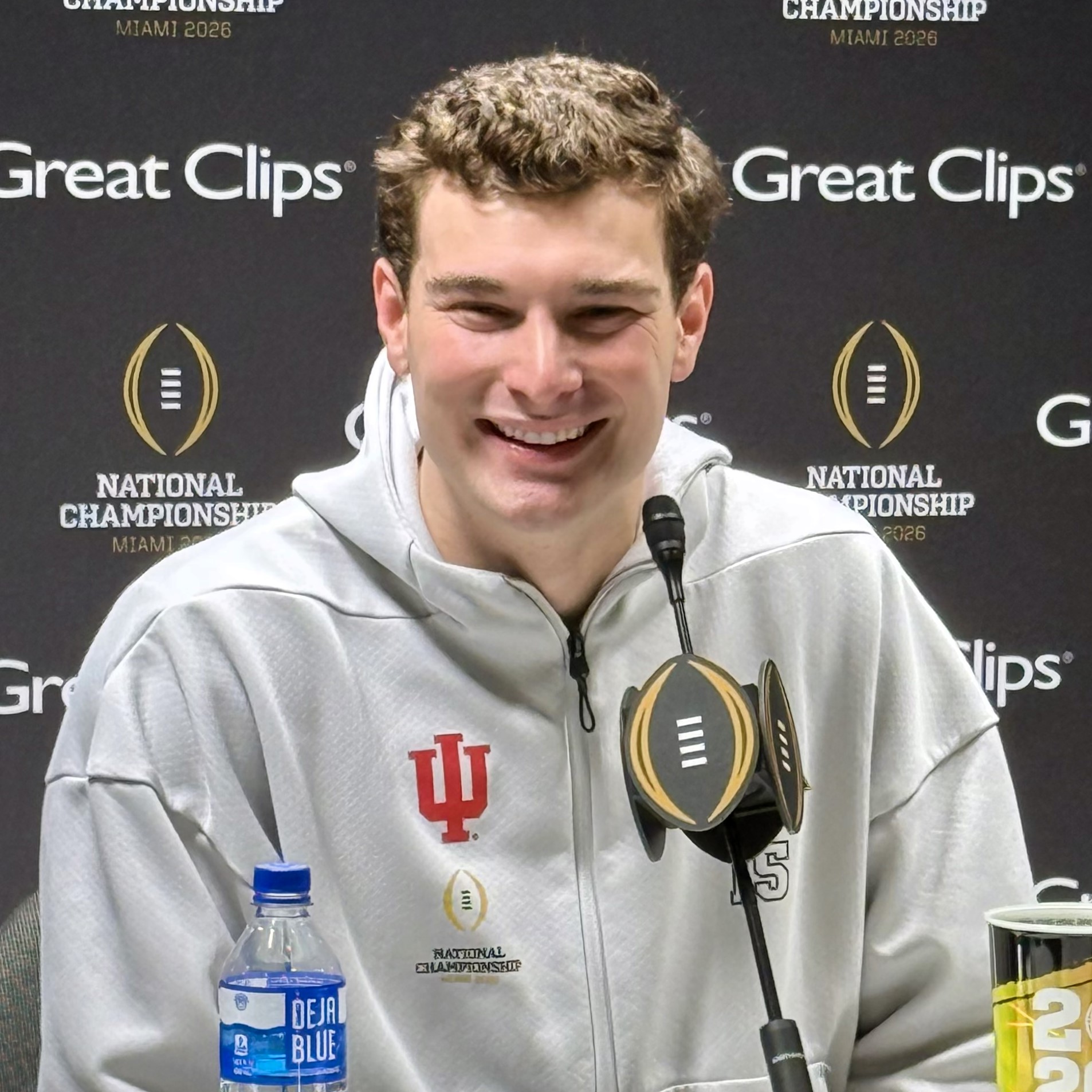
Mendoza is part of the Raiders conversation, but he should not drive the redraft decision. FFN's prospect file lists Fernando Mendoza as an Indiana quarterback connected to Las Vegas, and the roster data treats him as a zero-year player. That is a future variable, not the immediate scoring mechanism for Jeanty.
That distinction matters. Dynasty managers should care about Mendoza because a young quarterback can reshape an offense over time. Redraft managers need a narrower question: can the Cousins bridge keep the offense functional enough for Jeanty's volume to matter this season?
Narrow is good on draft day. It keeps you from stacking uncertainty and calling it upside.
If you are drafting Jeanty in redraft, draft the touch profile. Do not draft a theoretical quarterback transition. The miss is paying for a future offensive story when the weekly scoring path still has to come through the backfield.
The price test is the article
At publication, the PPR board prices Jeanty around ADP 12 and RB9 because the workload is already visible. The mechanism is real: he can win by owning the backfield. The risk is that Las Vegas still has to prove those touches become efficient scoring chances, not just volume in a difficult offense.
There is a playable lane. Jeanty's closing workload says the Raiders can make him fantasy-relevant even if the offense is imperfect. Cousins can help if he creates more stable drives. Brock Bowers gives the passing game a real middle-field answer, which should keep defenses from treating the backfield as the only thing worth stopping.
But that same structure also limits how aggressive you should get. If Bowers owns high-value targets and the Raiders keep leaning pass near the goal line, Jeanty may need volume to do more work than the price admits. If Las Vegas improves mostly through the passing game, the quarterback upgrade helps the offense without necessarily turning Jeanty into a bargain.
This is the line. Draft Jeanty when the room lets the role fall to you. Pass when you have to move him up only because the quarterback story got cleaner.
Final verdict
Jeanty is not a fade. He is not an automatic shove either.
He is a conditional Raiders volume bet: strong enough to draft at fair cost, fragile enough to avoid at a premium. The late workload gives him a real path. The Cousins bridge can make that path easier to trust. Mendoza is a watchlist piece, not a redraft engine.
The commissioner rule holds. Do not score the same improvement twice. Pay for Jeanty's role, not for every version of the Raiders offense that could go right.
Draft Jeanty at fair cost. Pass on the premium chase. That is where exposure starts, and it should also be where it stops.