Fantasy Camp News: When to Stash or Wait
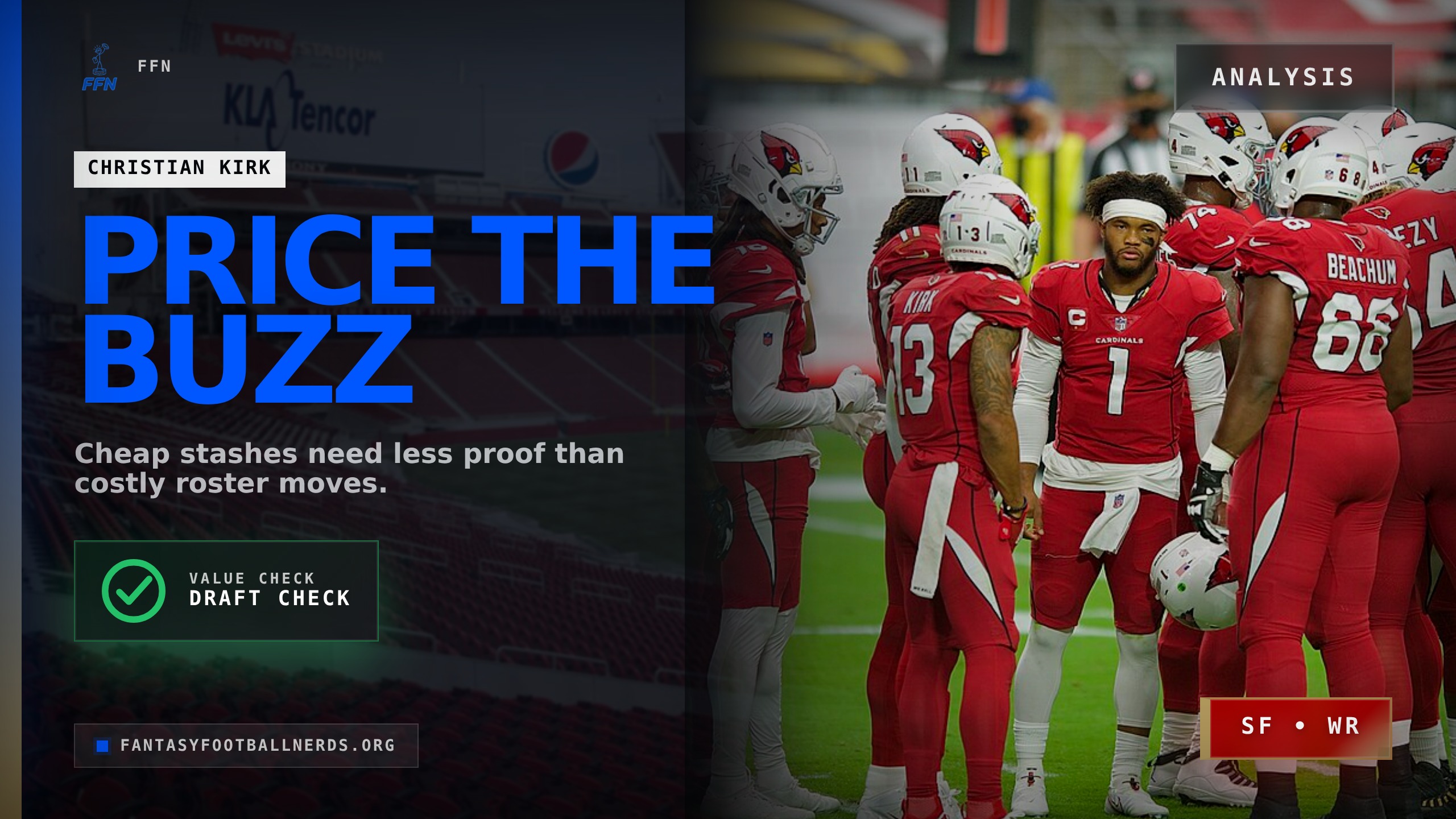
Jordan James is worth a cheap camp stash, while Christian Kirk should stay in the wait tier until San Francisco provides firmer role and health evidence.
Commissioner's Corner articles from Fantasy Football Nerds, grouped in one place for faster archive browsing and SEO discovery.
Jordan James is worth a cheap camp stash, while Christian Kirk should stay in the wait tier until San Francisco provides firmer role and health evidence.
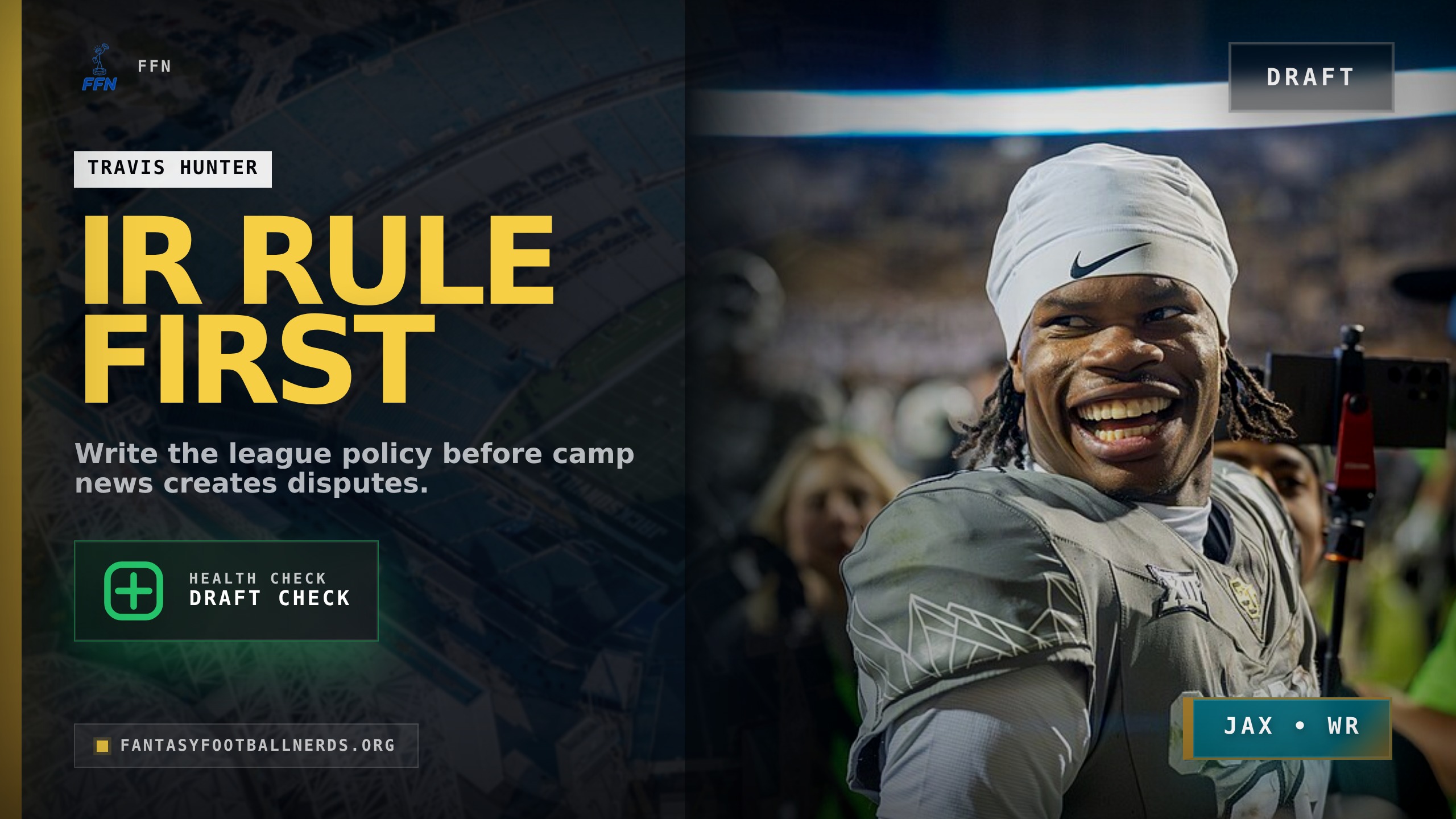
Set the IR trigger, first waiver run and roster-cut clock before Travis Hunter uncertainty becomes a roster loophole or league argument.
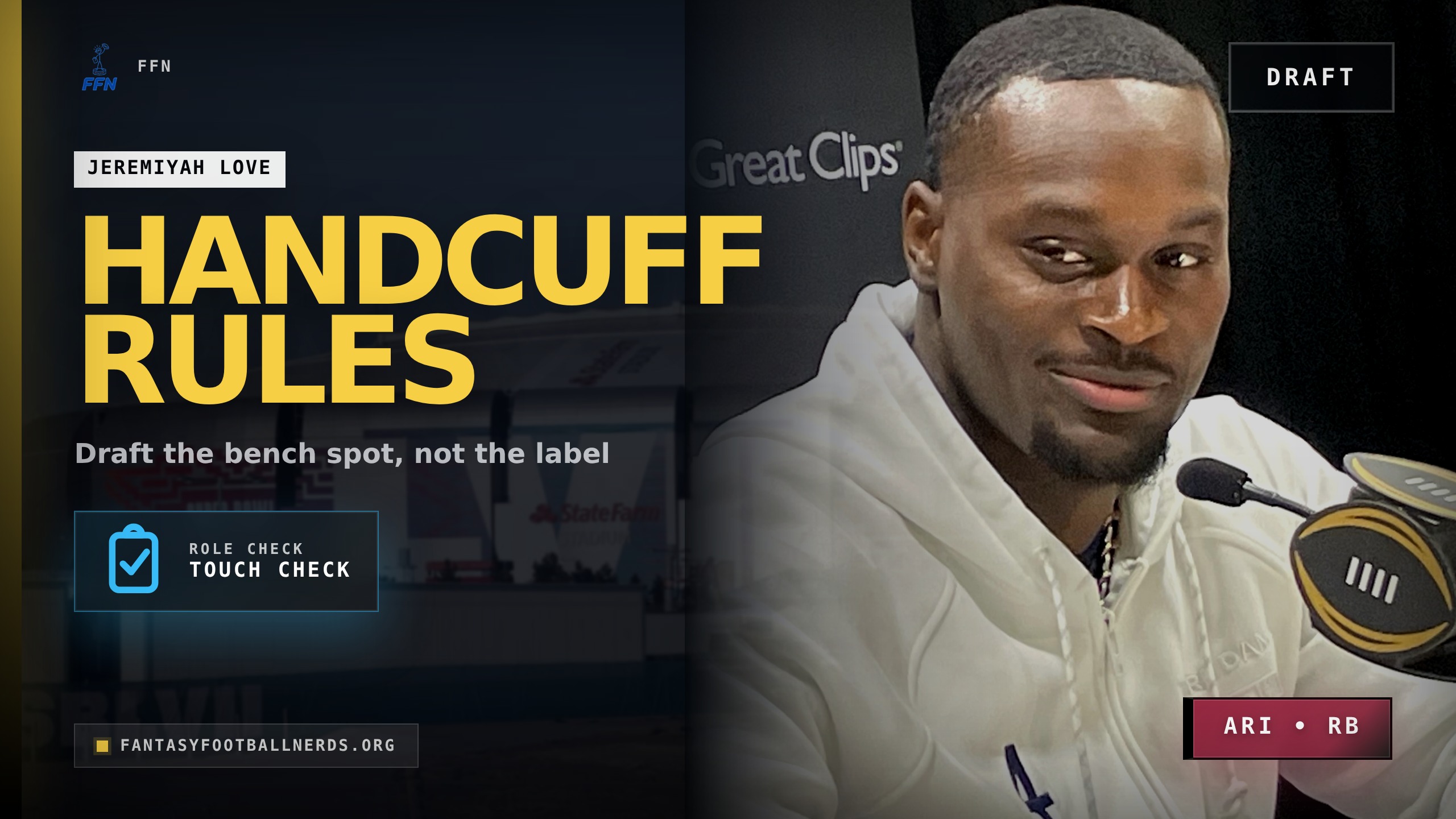
Use De'Von Achane and Jaylen Wright to set a smarter handcuff rule: stash Wright in deeper leagues, but make Arizona prove a role first.
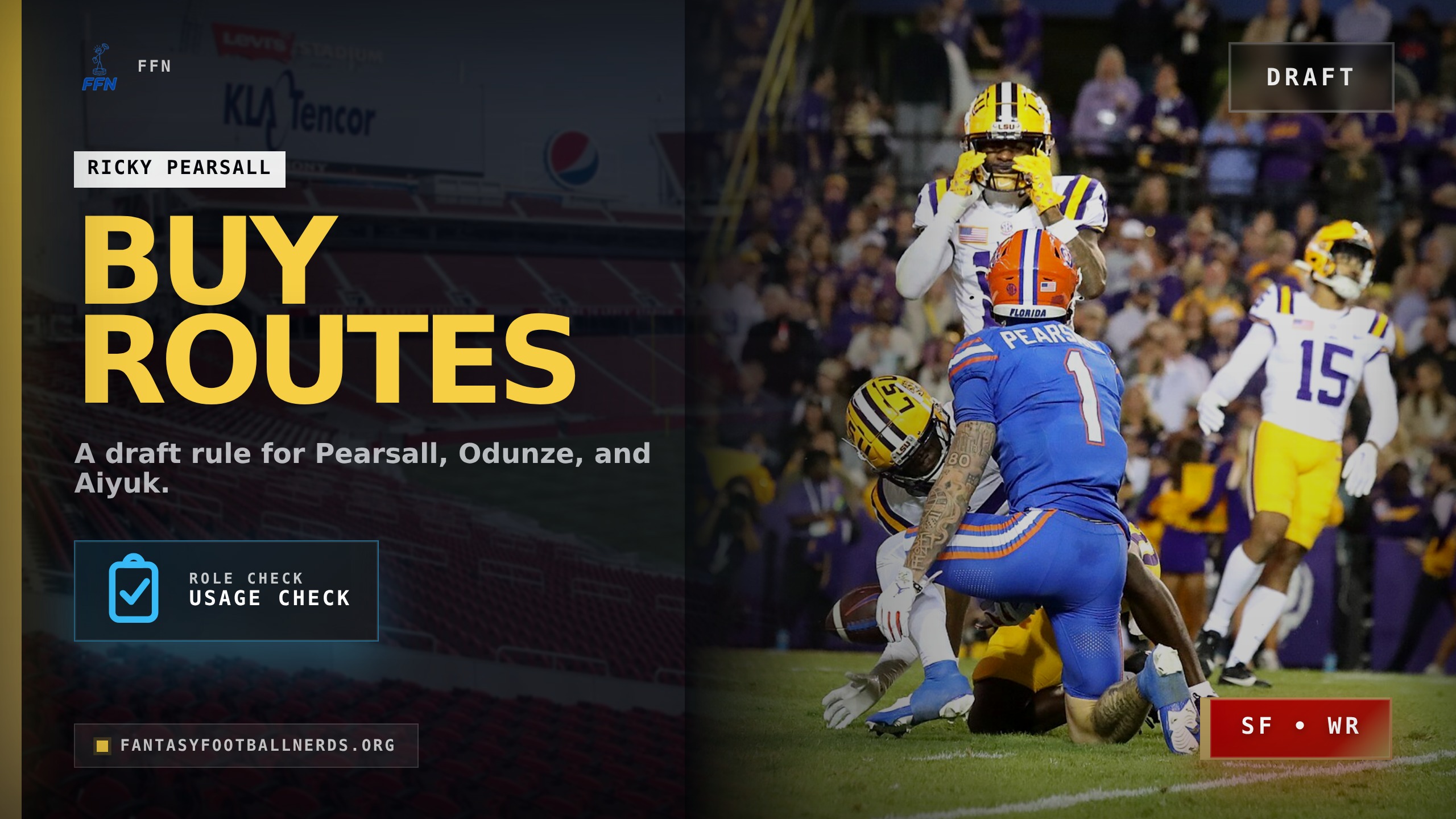
Ricky Pearsall, Rome Odunze, and Brandon Aiyuk need three different draft rules: buy visible routes, price health, and wait for role clarity.
This is where situational analysis beats an ADP-only or projection-only reaction: ask what opportunity changes if the practice report lingers.
For keeper leagues, let the manager carry the role risk instead of forcing a full starter valuation before camp shows protection snaps or goal-line work.
If he slides into a flex-price pocket, especially in reception-heavy formats, he becomes a practical bet on passing-down access and red-zone touch quality.
Commissioners should notice that distinction too, because scoring rules and bench structure decide whether the injury delay is a real strategic cost.
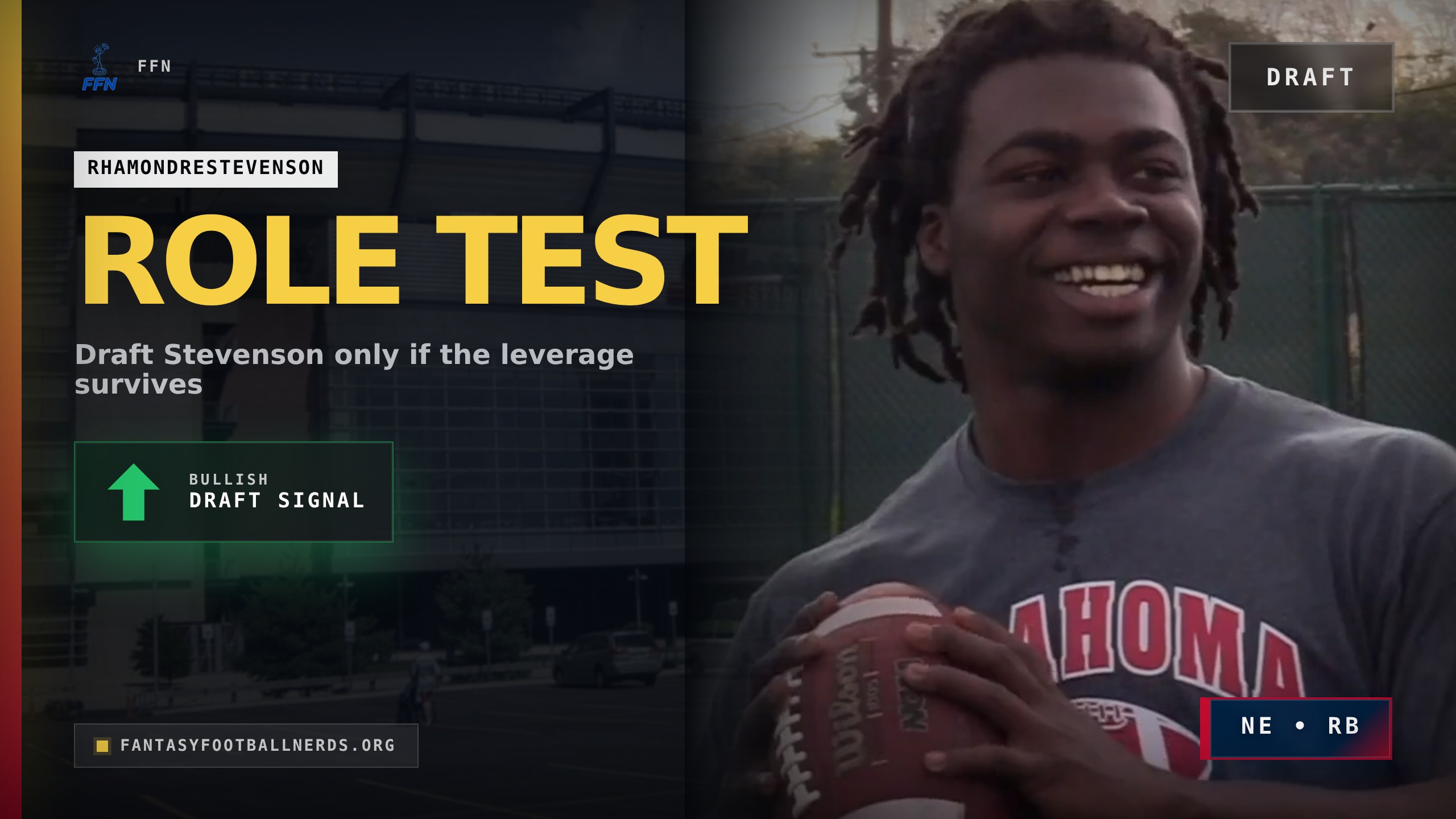
Stevenson can be the first name on the chart and still lose fantasy leverage if another back takes passing downs, hurry-up work, or short-yardage snaps.
A good league should reward managers who identify role growth early, but it should not let them bank every uncertain late breakout without roster pressure.
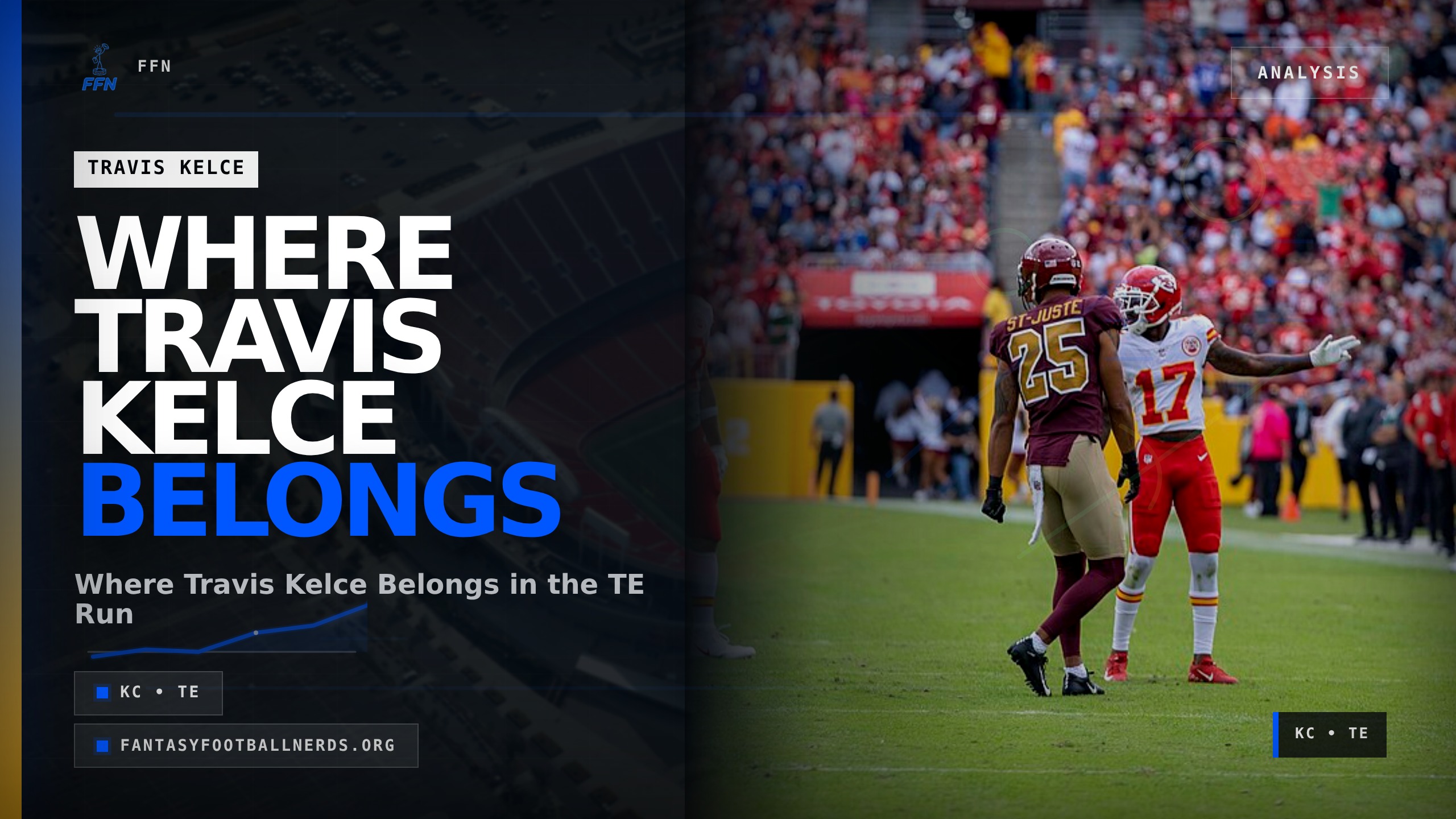
A stronger backfield can let Kansas City play from more scripts, lean on early-down efficiency, and keep Kelce's role valuable without making it oversized.
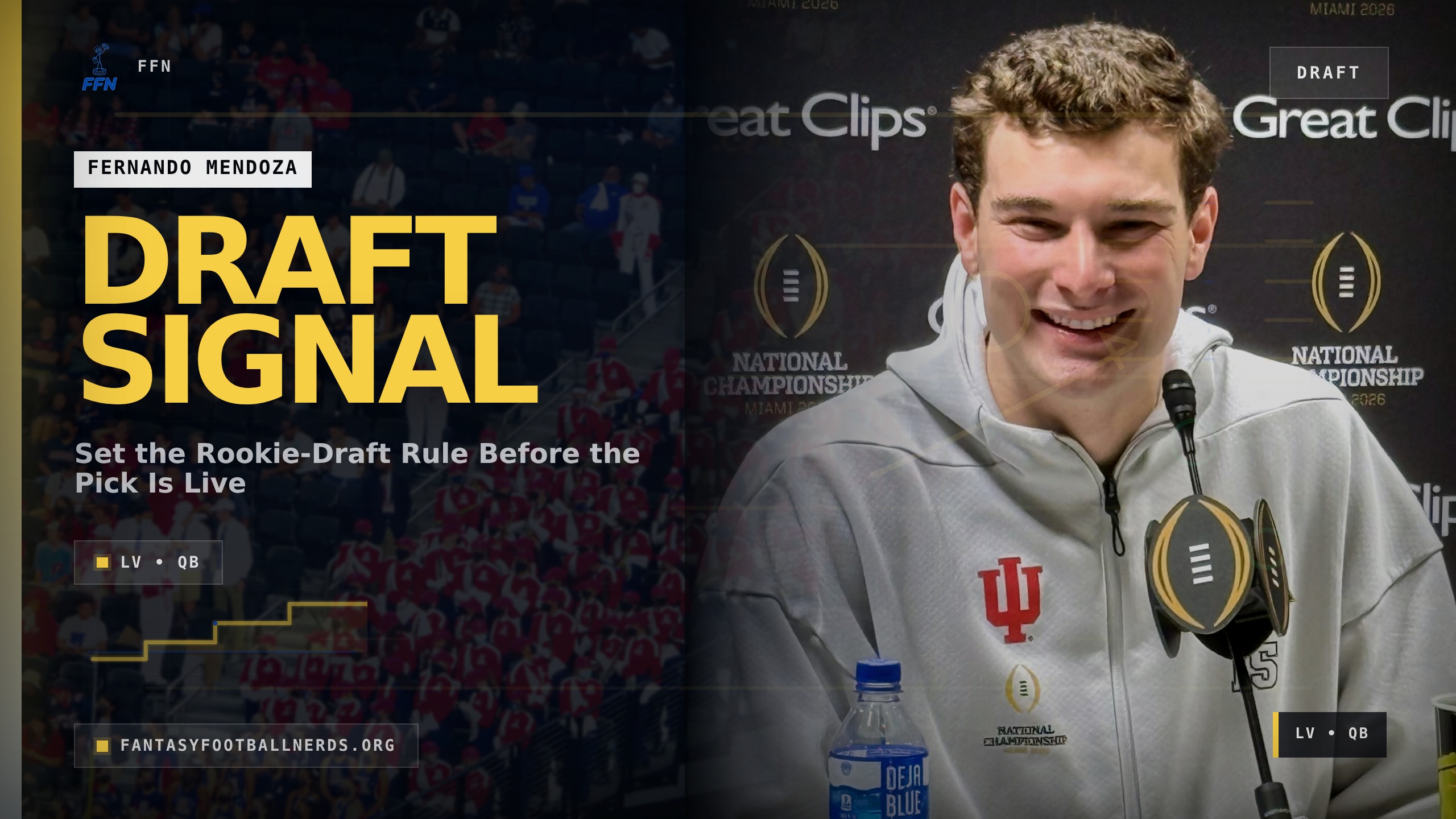
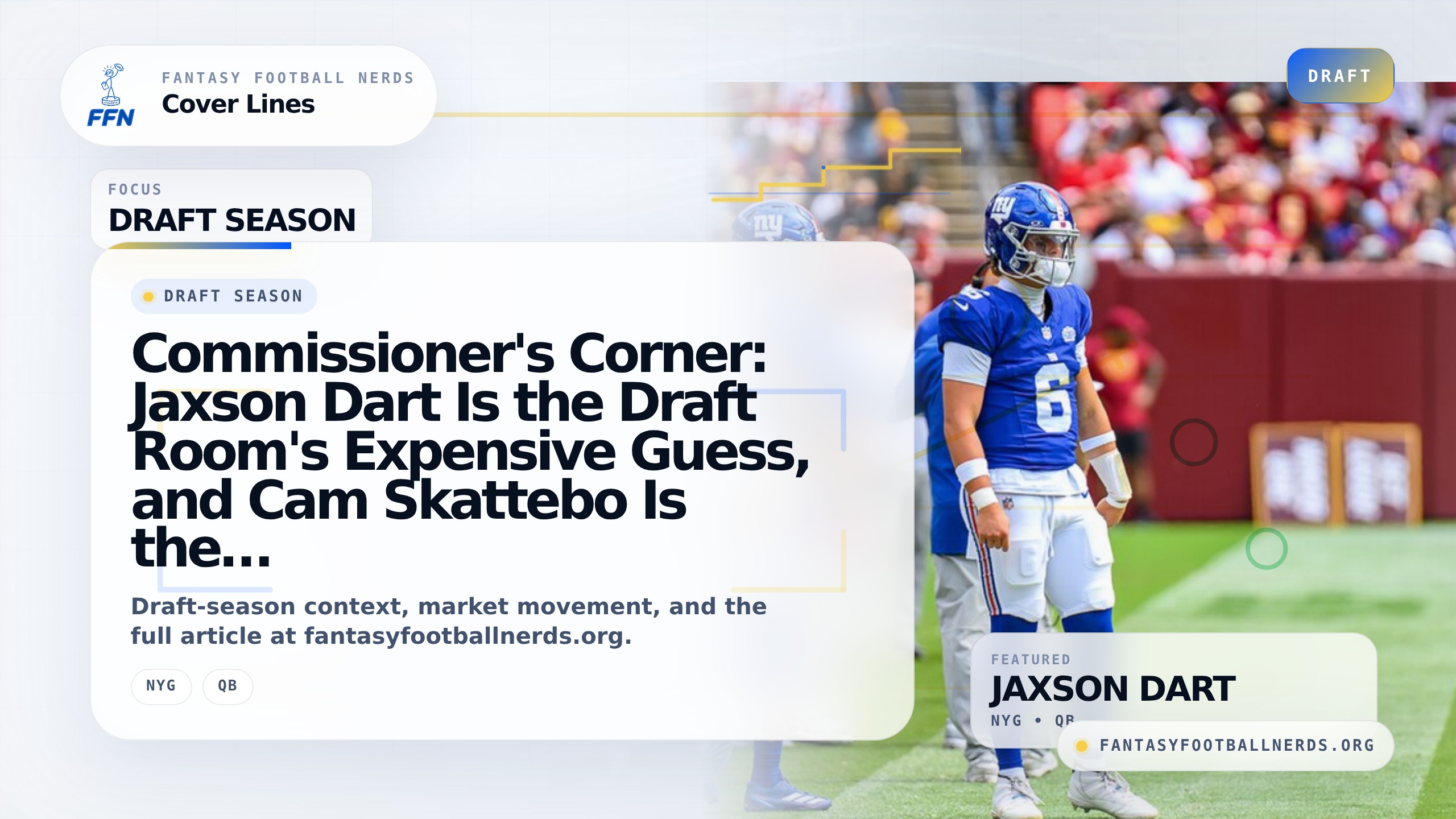
In a shallow one-quarterback league, let the room chase the future starter story unless he falls into a range where the roster spot no longer hurts.
A pass-heavy team can still squeeze a secondary receiver if the first read, tight end answers, backfield targets, and weekly game plan all take their turn.
Brock Bowers gives the passing game a real middle-field answer, which should keep defenses from treating the backfield as the only thing worth stopping.
Reed is still a bet, not a conclusion Reed is the easiest name to promote after the trade, which is exactly why he is the easiest place to overreach.
Draft the part of the Giants offense that already fits the way this team wants to play, then decide whether the quarterback price ever comes back to earth.