
The Wicks trade makes Jayden Reed easier to talk yourself into. It does not make his weekly role solved.
In the broader tracked window, he averaged 4.4 targets with a 17.1% target share.
In the closing sample, Kraft climbed to 7.33 targets and a 23.33% target share.
At publication, Reed sits as WR46 with ADP 119 in FFN's enriched rankings, and FFN's cross-system check showed a 102-spot split on him.
That is the draft move: wait on Reed, then treat him as a conditional bet after the safer wide receiver tier. If his cost still reflects the route uncertainty, he is worth exposure. If the room treats the trade like an automatic target unlock, let someone else pay for the answer the Packers have not given yet.
This is not an anti-Reed argument. Reed has the kind of skill set that can turn one cleaner lane into useful fantasy weeks quickly. The issue is that Green Bay did not lose its whole target tree. It lost one receiver from a room that still has Christian Watson stretching coverage, Tucker Kraft working the middle, Josh Jacobs keeping the offense balanced, and Matthew Golden adding another young wideout path.
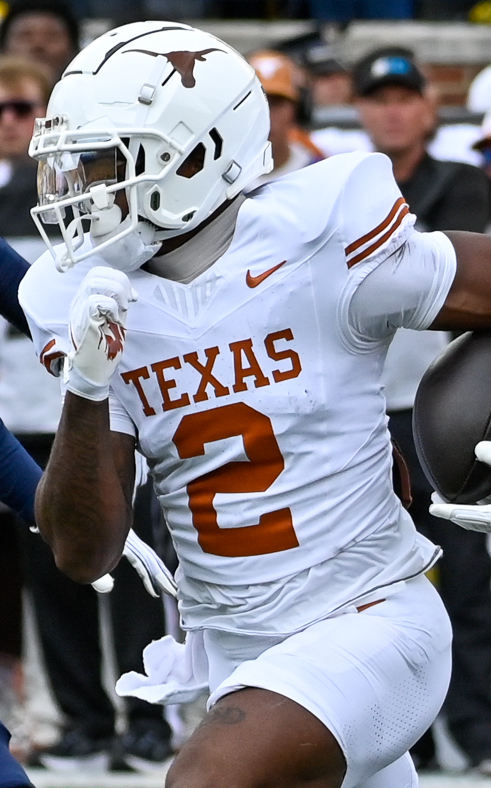
The bet is not "Reed is good." The bet is "Green Bay will finally keep him on the field often enough for the touches to matter every week." The direction of the bet matters more than the style or content of the trade headline. That is a different bet.
The case for Reed is real
Start with the football change. Wicks was traded from Green Bay to Philadelphia on April 13, and that matters because the Packers did not need another body siphoning snaps from a receiver room already built on rotation. Reed does not need Green Bay to become pass-only. He needs the vacancy to become steadier route work instead of just another reshuffle.
What worked for Reed was the way he stayed involved without having to win like a traditional outside alpha. In the broader tracked window, he averaged 4.4 targets with a 17.1% target share. That is not a full-volume profile, but it is enough to care if the Packers attach it to more consistent playing time.
The other reason the case survives is that Reed can make easy offense easier. Motion, slot work, manufactured touches, and quick throws are useful in a Jordan Love offense that does not have to force the ball to one player. If Wicks' exit turns Reed from a package answer into a regular route player, the fantasy payoff can come before the box score screams breakout.
That is where exposure starts. You are not drafting Reed because the depth chart is empty. You are drafting him because one vacancy could turn an efficient part-time role into a weekly role the offense already knows how to use.
The case against Reed is the target traffic
The strongest caution is not price panic. It is target traffic.
Watson still changes how defenses have to play Green Bay. In the broader tracked window, he carried a 22.95% target share and a 31.91% air-yards share, which tells you the vertical role can remain valuable even if the target count moves around. If Watson keeps that lane, Reed needs Green Bay to support two fantasy-relevant receiver roles without the passing game turning into a weekly funnel.
Kraft is the other problem because his role attacks the same part of the field Reed needs to own more often. In the closing sample, Kraft climbed to 7.33 targets and a 23.33% target share. That gives Love a middle-field answer that can absorb the throws drafters want to hand straight to Reed.
That is the part the Wicks headline can hide. Removing one receiver does not remove the quarterback-friendly tight end, the vertical receiver, or the running back structure. Reed can be useful inside that mix and still fail to become the weekly starter his optimistic case needs.
The failure case for being cautious is obvious: if camp usage shows Reed staying on the field across personnel groupings, the market will catch up fast. I would rather react to that proof than draft as if it already happened.
Green Bay can support a bet, not a blank check
The offense is good enough to draft from. Matt LaFleur remains the head coach, Adam Stenavich remains the offensive coordinator, and Green Bay's 2025 tendency profile was closer to balanced than pass-happy. The Packers had a 56.9% neutral pass rate, and the red-zone split was almost even between run and pass.
That balance is important because Jacobs is not just a name in the backfield. His presence keeps Green Bay from needing to turn every vacated receiver look into another wideout target. The Packers can win by spreading answers around, staying efficient, and letting Love choose the clean throw. That is good football. It is not always clean fantasy volume.
Game environment can still create spike weeks. Green Bay showed up in early tracked games with attractive totals and competitive scripts, and that matters for best-ball or bench-upside exposure. But season-long draft discipline has to start with role shape, not just offense quality.
At publication, Reed sits as WR46 with ADP 119 in FFN's enriched rankings, and FFN's cross-system check showed a 102-spot split on him. That is exactly why this should be a debate, not a victory lap. The systems disagree because the football role still has multiple endings.
Golden is traffic, not the main reason to pass
Golden should not hijack the article, but he belongs in the Reed decision. The current Green Bay roster lists him as a second-year wide receiver, and his tracked role showed rising snap share and rising target share down the stretch. That is enough to matter as traffic even if he is not the immediate preferred click.
The move is not to draft Golden over Reed in every room. It is to remember that Wicks leaving did not clear the runway by itself. If Golden earns rotational work, Watson stays active in the vertical lane, and Kraft keeps his middle-field claim, Reed still has to win routes instead of inheriting them.
Golden becomes a deeper bench context piece. Reed remains the better upside swing when the cost is honest. The mistake is paying for Reed as if every other Packers pass catcher has already failed.
Final lean
Reed can win from the Wicks trade. He just has not won enough yet to draft him like the role is settled.
The best version is easy to see: Wicks exits, Reed's snap growth turns into route growth, Watson stretches defenses, Kraft settles into a useful but not dominant target role, and Love gets a reliable weekly answer underneath. That version is worth drafting.
The lean is wait, then buy at the right exposure point. I want Reed after the safer wide receiver tier, where the price still admits he is competing for the target lane. If that discount is there, take the swing. If the market treats the trade like a full unlock, start somewhere cleaner and make Green Bay prove the route change first.