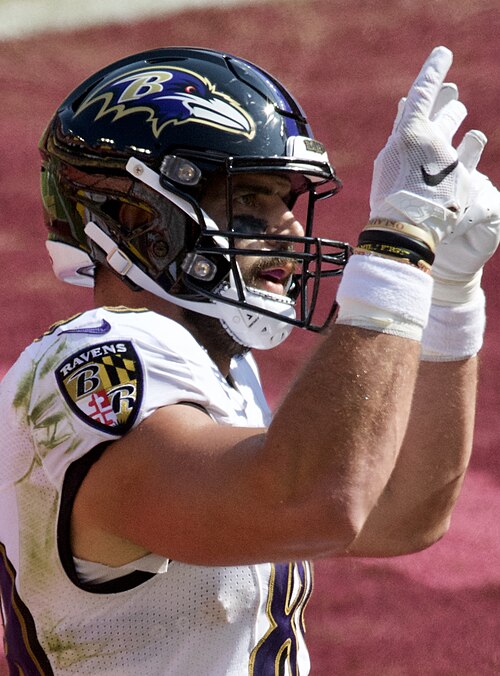
Mark Andrews is not a player to erase. He is a player to price correctly.
In the closing sample, Andrews was at 3.3 targets with a 48 percent snap rate, and FFN's role tracking flagged his snap share as falling.
Baltimore's 2025 tendency profile showed a 53.62 percent pass rate and a 54.84 percent red-zone rush rate.
Condition four: the price has to admit this is conditional At publication, Andrews sits as PPR TE16 with an ADP around 96 and an avoid.
The move is to wait until the safer tight ends are gone, then treat Andrews as a conditional route-and-touchdown bet. If the draft cost assumes his old Baltimore role is already back, pass. If the cost falls far enough that you are buying a veteran with a specific rebound path, he still belongs in the conversation.
The distinction matters because Baltimore is not built to rescue every pass catcher with volume. The offense can be good, efficient, and dangerous while still making Andrews a fragile weekly fantasy play.
Condition one: the route role has to come back first
Andrews still has the part of the profile that keeps tight ends alive. He does not need double-digit targets to matter if Lamar Jackson is giving him middle-field throws and red-zone chances. A trusted tight end in this offense can turn a modest passing day into a usable fantasy week when the routes are stable and the targets arrive in the right areas.
The issue is that the late role shape did not look stable enough to draft blindly. In the closing sample, Andrews was at 3.3 targets with a 48 percent snap rate, and FFN's role tracking flagged his snap share as falling. That is the first gate. If he is playing closer to a part-time role than a lead route role, you are not buying a weekly starter. You are buying a name and hoping the touchdowns cover the missing snaps.
Start the draft decision there. The role has to win before the price does.
A veteran tight end can beat a modest target total when the routes are valuable and the quarterback looks for him on money downs. A limited-snap tight end in a lower-volume passing offense has to be too efficient too often. That is a thinner bet than Andrews' name makes it feel.
So the first rule is simple: do not make Andrews your first tight end plan unless the publication-week role case points back toward real route control. If your roster can live with a conditional starter after the safer tier is gone, he gets more interesting. If you need the position solved cleanly, this is not where I would start.
Condition two: Baltimore has to give him scoring leverage
The Ravens are still a fantasy engine worth respecting. Jackson bends the field. Derrick Henry gives the offense a hammer. Zay Flowers has shown he can be the cleanest passing-game lane when Baltimore condenses the targets. Andrews benefits from that ecosystem when defenses have to honor the run and Jackson can punish broken coverage.
The same ecosystem can also squeeze him. Baltimore's 2025 tendency profile showed a 53.62 percent pass rate and a 54.84 percent red-zone rush rate. That tension defines the bet. The Ravens can score plenty without turning tight end targets into the weekly plan.
Henry makes that more important, not less. Late in the tracked sample, his carry load climbed enough for FFN's role tracking to flag rising carries, rising snap share, and strong recent volume. When the Ravens get close, they have a direct answer that does not require forcing the ball to Andrews.
That does not kill the Andrews case. It defines it. He needs designed access to the valuable downs, not just a general bet that a good offense creates touchdowns. If he is not part of the red-zone menu, the weekly floor gets exposed fast.
The better question is not whether Andrews can still score. He can. The question is whether Baltimore gives him enough routes and scoring chances to survive the weeks when the touchdown does not show. If that answer is unclear, the discount has to do real work.
Condition three: the target tree cannot make the rebound harder
Flowers is the useful contrast because his path is easier to defend. He carried strong snap involvement and strong fantasy output late in the tracked sample, and his role makes sense inside this offense: win enough routes, command enough first-read looks, and give Jackson a receiver lane that does not require the whole passing game to expand.
Andrews has a different problem. The current Ravens roster has Andrews, Flowers, Rashod Bateman, Elijah Sarratt, and Josh Cuevas in the same pass-catching picture. Sarratt is a first-year wide receiver prospect from Indiana assigned to Baltimore, and Cuevas is a tight end prospect from Alabama assigned to Baltimore. They are not proven NFL target earners. They are traffic signals.
Keep the distinction clear. This is not a rookie panic article. Sarratt and Cuevas do not have to become instant fantasy factors to matter. They only have to keep Baltimore experimenting with packages, practice reps, and situational looks while Andrews is trying to prove the old weekly role is still there.
A fragile route role does not need much extra friction to become a bad fantasy bet.
That is why Flowers is the constructive alternative if Andrews is not discounted. At publication, Flowers carries the cleaner PPR profile in FFN's rankings, with a buy label and a much easier football explanation. He is the Ravens pass-game exposure point tied to route volume. Andrews is the tight end bet that needs route repair and touchdown access to line up at the same time.
Both can work in real football. Only one is easier to draft if the price is not helping you.
Condition four: the price has to admit this is conditional
At publication, Andrews sits as PPR TE16 with an ADP around 96 and an avoid label in FFN's rankings. Those numbers are not the argument by themselves; they point back to the same football problem, because the route and scoring roles have not looked clean enough to pay ahead of the rebound.
The problem is the order of operations. You should not pay first and ask for the role rebound later. The route share, scoring access, and target tree all have to make the bet defensible before the pick becomes comfortable.
If Andrews slides after the safer tight end tier, the bet starts to make sense. At that point, you are no longer paying for certainty. You are paying for a veteran who can still win if Baltimore gives him enough routes and high-value targets.
The failure case is real. Andrews could reclaim the money-down work, the new pass catchers could stay peripheral, and Jackson could lean back on him when drives tighten. If that happens, the patient drafter who waited too long will miss the rebound.
But fantasy drafts are not about proving a player is still good. They are about buying the conditions that let the player help you.
That is the Andrews rule for 2026: wait until the safer tight ends are gone, then ask whether the route rebound and scoring path are visible enough to defend. If both answers are yes, take the discount. If the price is still selling the old role, let the name go and buy the cleaner role elsewhere.